
Pests
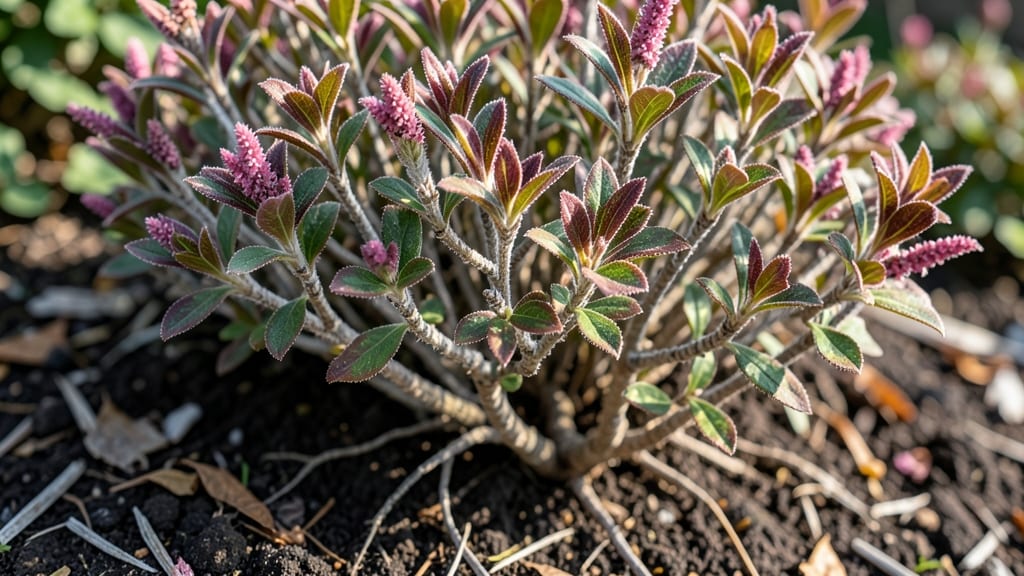
The dappled willow bush is deer resistant because its fuzzy, aromatic foliage and milky sap deter browsing, while its compact growth habit limits accessibility. Planting near high-traffic areas or combining with deer-repellent herbs enhances its protective effects.
The dappled willow bush's natural defenses go beyond just looking unappetizing to deer.
Its silvery-fuzzy leaves create a texture deer avoid, while the bitter-tasting milky sap acts like a built-in deterrent. 🌿 Unlike taller shrubs, its low, rounded shape makes it harder for deer to reach the foliage, especially when planted in clusters.
This makes it a smart choice for garden edges or near vegetable patches where deer are persistent visitors.
For maximum effectiveness, pair it with garlic chives or rosemary, which amplify the repellent effect. Just remember: young plants may need temporary protection until they reach 3-4 feet tall, when their full deer-resistance kicks in.
💡 In This Article
- How Dappled Willow Bush Naturally Repels Deer
- Best Practices for Planting Deer-Resistant Dappled Willow
How dappled willow bush naturally repels deer
The dappled willow bush's first line of defense is its silvery-fuzzy foliage, which creates a texture deer instinctively avoid.
The fine hairs on the leaves (called trichomes) make them feel coarse and unpalatable, similar to how deer reject plants with rough or prickly surfaces like Russian sage or barberry. These trichomes also release a subtle, earthy aroma that deer find unpleasant, acting like a natural repellent. 🌿
The plant's milky sap is another key deterrent—when leaves are damaged, the bitter-tasting latex seeps out, leaving a sticky residue that deer dislike on their mouths.
Studies show deer prefer to browse plants with less than 0.5% tannins, while dappled willow contains 1.2-1.8% tannins in its leaves, making it naturally unappealing. This chemical defense is comparable to how boxwood repels deer through its high tannin content.
Unlike tall shrubs that offer easy access, the dappled willow's compact, rounded growth habit (typically 3-5 feet tall) makes it harder for deer to reach the foliage.
Its horizontal branching pattern creates a dense canopy at deer-browsing height, while its low center of gravity prevents wind damage that could expose tender new growth. This structural advantage is why it outperforms yew shrubs, which deer can easily strip when planted too close to the ground.
Seasonal variations play a role too—the plant's winter interest (retaining silvery foliage) means deer have no seasonal incentive to browse, unlike deciduous shrubs that become more vulnerable in winter.
The slow-release essential oils in its leaves provide year-round protection, with peak repellency during spring and summer when deer are most active. 🦌
For comparison, deer-resistant plants like lavender rely on strong scent, while dappled willow combines texture, chemical defenses, and structural protection into one package. This multi-layered approach is why it's considered one of the most effective native deer-resistant shrubs for North American gardens.
What most gardeners don't realize is that the plant's root system also contributes indirectly—its deep, fibrous roots stabilize the soil, making the area less appealing for deer to forage. This creates a physical barrier effect that complements its chemical defenses. 🌱