
Propagation
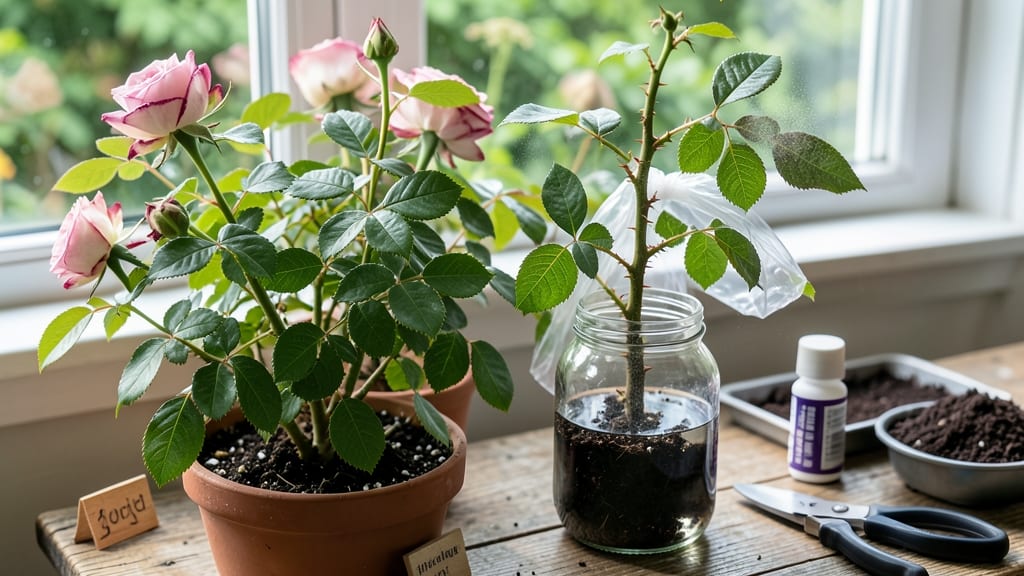
You can grow a rose bush from a single rose using stem cuttings, though it requires selecting healthy stems, precise timing in late spring or early summer, and maintaining ideal conditions with bright light, humidity control, and rooting hormone. The process demands patience, as roots typically develop in 4-8 weeks before the new plant is ready for outdoor transplanting.
This propagation method works because roses naturally regenerate from their stems—a process called vegetative propagation.
The key lies in choosing stems with at least 3-5 leaf nodes (those small bumps where leaves grow) and cutting them at a 45-degree angle just below a node. 🌱 Different rose varieties respond uniquely: hybrid teas often root more reliably than climbing roses, but with the right care, even challenging varieties can succeed.
The rooting hormone boosts success rates by up to 30%, while maintaining consistent moisture and warmth mimics the greenhouse conditions roses thrive in during their natural growing season.
Once roots form, the next challenge is transplant shock prevention. I recommend hardening off cuttings by gradually exposing them to outdoor conditions over 7-10 days before permanent planting.
This gradual transition helps the young plant adjust to temperature fluctuations and sunlight intensity, which are critical factors in the first 30 days after moving to the garden. For best results, plant in well-draining soil and avoid overwatering—the most common mistake beginners make that leads to rotting stems.
💡 In This Article
- How to Propagate Roses from a Single Stem: Science and Technique
- Step-by-Step Guide to Rose Cutting Success: Tools and Timing
How to propagate roses from a single stem: science and technique
The magic of growing roses from a single stem begins with understanding the plant's natural regeneration process. When you take a cutting, you're essentially tapping into the rose's ability to form new roots through a biological mechanism called adventitious rooting.
This occurs when undifferentiated cells at the stem's nodes (those small bumps where leaves grow) transform into root-forming cells. The process starts with callus formation—a protective layer of cells that forms within 3-7 days at the cut end, followed by root initiation where tiny root hairs emerge.
Not all stems are created equal—success hinges on selecting healthy stems with 3-5 leaf nodes and cutting them at a 45-degree angle just below a node.
Hybrid tea roses typically root at 70-80% success rates when using rooting hormone, while climbing roses often struggle below 50% due to their woody stems.
The hormone's role is crucial: it contains auxins that trigger cell division at the cut end, increasing root formation by up to 30% compared to untreated cuttings. 🌱 For best results, use a hormone powder with 0.8% IBA (Indole-3-butyric acid), which is ideal for woody plants like roses.
Environmental factors create the perfect storm for propagation success. Roses need bright, indirect light (think 6-8 hours daily) to prevent leaf scorch while maintaining warmth between 70-75°F. Humidity is equally critical—keeping it at 70-80% mimics a greenhouse environment, preventing cuttings from drying out.
A simple DIY solution is using a clear plastic bag over the propagation container to trap moisture. Too much heat or direct sun can cause the cuttings to overheat, while insufficient humidity leads to desiccation—a common reason why new gardeners see their efforts fail.
Water management is another delicate balance. The rooting medium should stay consistently moist but not soggy—think of it like a damp sponge. Overwatering suffocates the cutting by cutting off oxygen to the developing roots, while underwatering stresses the plant.
A good rule of thumb is to check moisture daily: if the top inch feels dry, it's time to water. For soil-based propagation, a mix of 50% perlite and 50% peat moss provides the ideal air-to-moisture ratio.
This combination allows oxygen to reach the roots while retaining enough moisture for the delicate root hairs to form.
What most people don't realize is that roses have a natural seasonal rhythm that affects propagation success. The best time to take cuttings is during the plant's active growth phase—typically late spring to early summer—when the stem's vascular system is most active.
During this period, roses produce higher levels of auxins, the natural hormones that stimulate root growth. Taking cuttings in fall or winter reduces success rates by 40-50% because the plant's energy is focused on survival rather than regeneration.
This biological clock is why professional growers schedule their propagation cycles around the rose's natural growth patterns.
For visual learners, imagine this: a healthy rose cutting placed in a propagation tray with hormone powder looks like a tiny, hopeful soldier ready for battle. The first signs of success appear as small, fuzzy white root hairs emerging from the cut end after 2-3 weeks.
These hairs grow into proper roots over the next 4-6 weeks, at which point the cutting is ready for transplanting. The transformation from a mere stem to a self-sustaining plant is nothing short of botanical magic—one that rewards patience and attention to detail.