
Container Gardens
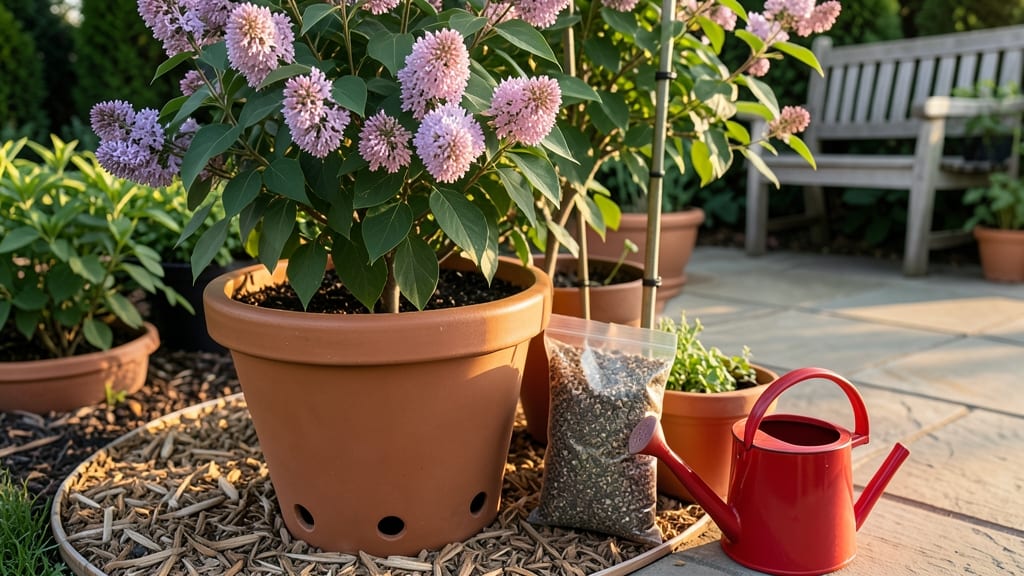
You can grow a lilac bush in a pot by selecting compact varieties like 'Miss Kim' or 'Little Leaf' and using a container that's at least 18-24 inches wide with excellent drainage. Well-draining soil and full sun exposure are essential for healthy growth.
Container gardening opens up possibilities for growing lilacs even in small spaces, but success depends on choosing the right variety and creating ideal growing conditions. 🌿 Dwarf lilacs like 'Miss Kim' stay under 3 feet tall, making them perfect for patio pots, while their fragrant blooms arrive earlier than standard varieties.
The key to thriving potted lilacs lies in mimicking their natural woodland habitat—light, airy soil that drains quickly prevents root rot, which is the biggest threat to container-grown shrubs. I've found that adding perlite or coarse sand to regular potting mix creates that perfect balance between moisture retention and aeration.
Remember that lilacs in containers need more frequent watering than their in-ground counterparts, especially during hot summer months. A 18-inch diameter pot can support a small lilac for several years, but you'll need to fertilize regularly with a balanced, slow-release formula to compensate for the limited root space.
Pruning after flowering helps maintain the bush's shape and encourages next year's blooms—just avoid cutting back into old wood, as lilacs flower on last year's growth.
💡 In This Article
- Best Lilac Varieties for Container Gardening
- Container Gardening Tips for Healthy Lilac Bushes
Best lilac varieties for container gardening
Lilacs thrive in pots when you choose varieties bred for compact growth, like 'Miss Kim' or 'Little Leaf', which stay under 3 feet tall while producing abundant blooms.
These dwarf types have naturally smaller root systems that fit well in containers, unlike standard lilacs that can grow 10-15 feet wide and require ground planting.
The key difference lies in their growth habit—dwarf varieties develop a dense, bushy form that supports themselves without staking, making them ideal for patio pots or balcony gardens.
The fragrance intensity also varies by variety. 'Miss Kim' produces 1-inch purple blooms with a sweet, intoxicating scent that fills small spaces, while 'Little Leaf' offers 2-inch lavender flowers with a more subtle, honey-like aroma.
Both bloom earlier than standard lilacs, often appearing in late April or early May, giving you a head start on summer color. What makes them perfect for containers is their ability to rebloom lightly in late summer, providing extended seasonal interest.
For those with limited space, consider 'Bloomerang', a reblooming variety that produces two flushes of flowers per year—once in spring and again in summer.
Its 4-foot height fits well in 24-inch pots, and the flowers transition from pale pink to deeper shades as they age, creating a beautiful visual progression. The trade-off is slightly slower growth compared to 'Miss Kim', but the extended blooming period makes it worth the wait.
Root size is the critical factor when selecting container lilacs. Standard varieties develop extensive root systems that spread 3-5 feet wide, making them unsuitable for pots. Dwarf lilacs, however, develop a shallow but dense root ball that stays contained in 18-24 inch containers.
This compact root system allows them to absorb moisture and nutrients efficiently from limited soil volume, which is essential for container growth.
Consider the mature size when choosing your pot. A 3-foot tall lilac like 'Miss Kim' needs at least 18 inches of soil depth to support its root system, while larger varieties like 'Bloomerang' require 24 inches.
The wider the pot, the more stable the plant—aim for a diameter at least twice the width of the root ball to prevent tipping in windy conditions. 🌸
Fragrance should also influence your choice. If you're growing near seating areas, opt for heavily scented varieties like 'Katherine Havemeyer' (pale pink blooms) or 'Dwarf French' (lavender flowers). These varieties release their scent more intensely, creating a sensory experience that's hard to match in small spaces.
Just be mindful that strong fragrances may attract bees—place your lilac pot where pollinators can access it without becoming a nuisance.