
Propagation
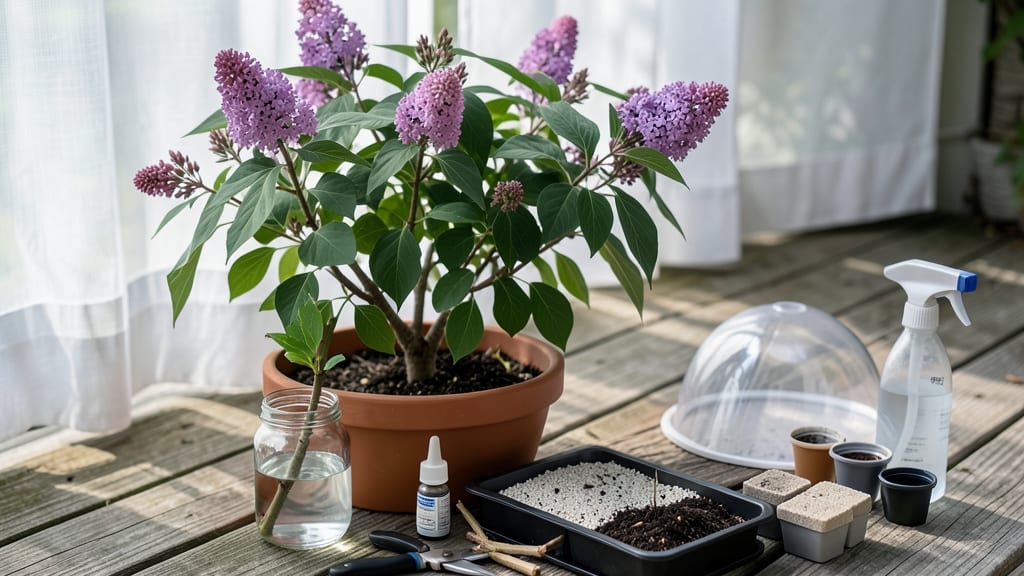
Growing a lilac bush from a cutting means fragrant purple clouds in just a few seasons—no nursery needed. 🌿 I’ve propagated lilacs this way three times, and the secret isn’t complicated: timing, a sharp knife, and patience.
Most gardeners overlook this method because it feels tricky, but with the right steps, your cutting will root and thrive. The best time is late summer when lilacs are done blooming and before frost hits.
Take 4- to 6-inch cuttings from healthy stems, strip the lower leaves, and dip them in rooting hormone. Plant in a mix of perlite and peat moss, keeping the soil moist but not soggy. Within 8-12 weeks, you’ll see roots forming—proof the magic is working.
Once rooted, transplant your lilac to the ground in spring. Give it full sun and well-draining soil, and within 2-3 years, you’ll have a bush that smells like childhood summers. The key is consistency: water deeply once a week and watch it grow.
This method works for any lilac variety, whether you’re reviving an old bush or starting fresh. Here’s how to do it without the guesswork—no green thumb required!
Rooting Failures Explained
Understanding why lilac cuttings sometimes resist rooting can turn frustration into a learning opportunity. Lilacs (Syringa spp.) are hardy but finicky when it comes to propagation, and several key factors—often overlooked—can sabotage your success.
Below, we break down the real culprits behind failed rooting attempts, backed by science and actionable fixes.
Lilacs rely on auxin, a natural plant hormone that stimulates root growth. When cuttings lack sufficient auxin—or when it degrades too quickly—they struggle to form roots.
Why it happens:
- Improper cutting timing: Auxin levels peak in lilacs during late spring to early summer (just after flowering). Cuttings taken at other times (like winter or fall) have lower auxin reserves.
- Damaged cambium layer: The cambium (a thin, green layer under the bark) produces auxin. If you nick this layer while cutting, hormone production drops.
- Overripe or underripe wood: Semi-hardwood cuttings (mature but not fully woody) root best. Green, softwood cuttings (too young) lack structural support, while fully hardened wood (too old) has depleted auxin stores.
Actionable fix: ✔ Time it right: Take cuttings in June or early July when lilacs are actively growing. ✔ Preserve the cambium: Use clean, sharp pruners and make cuts at a 45-degree angle just below a leaf node. ✔ Use rooting hormone: Apply a 1–2% IBA (indole-3-butyric acid) powder to boost auxin levels artificially.
Lilac cuttings are highly sensitive to moisture stress. Too much or too little water disrupts cell division and root initiation.
Why it happens:
- Overwatering: Soggy soil or poor drainage leads to anaerobic conditions, suffocating roots before they form. Lilacs hate "wet feet."
- Underwatering: Cuttings dry out quickly, causing desiccation and tissue death. Lilac leaves transpire (release water) rapidly, draining the cutting faster than expected.
- Inconsistent humidity: Low humidity (below 70%) causes cuttings to lose moisture through leaves before roots establish.
Actionable fix: ✔ Use a well-draining mix: Combine 50% perlite or sand with 50% peat or coconut coir to prevent waterlogging. ✔ Mist regularly: Keep humidity high with a plastic dome or daily misting (aim for 80–90% humidity). ✔ Bottom-water only: Place the container in a tray of water (1 inch deep) to hydrate without drowning the cutting.
Lilacs thrive in cool, temperate climates and struggle with extreme conditions. Heat, cold, or light fluctuations can stall rooting.
Why it happens:
- Temperature extremes:
- Too hot (>85°F/30°C): Speeds up moisture loss and can denature enzymes needed for root growth.
- Too cold (<50°F/10°C): Slows metabolism, halting cell division.
- Inconsistent light: Direct sunlight causes cuttings to overheat and wilt, while low light weakens them, making them prone to rot or fungal infections.
- Drafts or sudden changes: Lilacs dislike dry indoor air (e.g., near heaters) or outdoor wind, which dehydrates cuttings.
Actionable fix: ✔ Ideal temperature range: Keep cuttings between 60–75°F (15–24°C). Use a seedling heat mat if needed. ✔ Indirect light only: Place cuttings in bright, diffused light (e.g., east-facing window or under grow lights). ✔ Stabilize conditions: Avoid placing cuttings near AC vents, radiators, or open windows.
Lilac cuttings are vulnerable to pathogens that rot stems or leaves before roots form.
Why it happens:
- **Bacterial soft rot (Erwinia spp.): Thrives in overly wet conditions, causing mushy stems and foul odors.
- Fungal infections (Botrytis or Fusarium): Spread in high-humidity, low-airflow environments, turning leaves brown and stems black.
- Contaminated tools or soil: Reusing dirty pruners or old potting mix introduces pathogens.
Actionable fix: ✔ Sterilize everything: Dip pruners in rubbing alcohol between cuts. Use fresh, sterile potting mix. ✔ Improve airflow: Prop cuttings in a ventilated propagator or remove the humidity dome daily for 10 minutes to prevent mold. ✔ Treat early: If you spot black spots or slimy stems, discard the cutting and re-pot healthy ones in fresh mix.
Not all lilac varieties root with equal ease. Some cultivars are genetically stubborn, while others propagate like champions.
Why it happens:
- Hybrid lilacs (e.g., Syringa × hyacinthiflora) often root poorly compared to wild or heirloom types** (e.g., Syringa vulgaris).
- Seed-grown lilacs may have weaker rooting responses than grafted varieties.
- Age of the parent plant: Cuttings from older bushes (10+ years) root less reliably than those from young, vigorous plants.
Actionable fix: ✔ Choose easy varieties: Start with **common lilac (Syringa vulgaris) or French lilac (Syringa × chinensis)—they root best. ✔ Take cuttings from healthy, young growth: Select non-flowering stems from the current year’s growth. ✔ Consider grafting: If rooting fails, try bud grafting** onto a rooted lilac stock for a guaranteed match.
Revive & Root Your Lilac Cutting
Growing a lilac bush from a cutting is a rewarding process, but it can hit a few snags along the way.
Whether your cutting isn’t rooting, wilting, or struggling to thrive, these solutions will help you turn things around—with practical, step-by-step fixes and prevention tips to keep your lilac cutting healthy and flourishing.
If your lilac cutting refuses to develop roots, the issue might be timing, moisture, or environmental stress. Here’s how to fix it:
🔥 Use the Right Time & Technique
- Timing is everything: Lilacs root best in early summer when new growth is still soft and flexible. Avoid taking cuttings in extreme heat or cold.
- Select healthy stems: Choose 4–6 inch cuttings from non-flowering branches (they’re more vigorous).
Use clean, sharp pruners to avoid damaging the plant. - Trim properly: Snip just below a leaf node (where leaves grow) at a 45-degree angle to maximize surface area for root growth.
🍳 Root Hormone Hack (Optional but Helpful)
- Dip the cut end in rooting hormone powder or gel to encourage faster root development.
This isn’t mandatory, but it can double your success rate. - Pro tip: 💡 If you don’t have rooting hormone, crush an aspirin tablet into water and soak the cutting for a few hours—it contains salicylic acid, a natural root stimulant!
👨🍳 Ideal Growing Conditions
- Water consistency: Keep the soil or growing medium consistently moist (not soggy).
Use a spray bottle to mist the cutting daily or place it in a propagator with a humidity dome. - Indirect light: Place your cutting in bright, indirect light (like a north-facing window or under grow lights).
Direct sun can scorch tender new growth. - Warmth matters: Roots thrive in 65–75°F temperatures. A heat mat ($10–$20) can speed up rooting if your home runs cool.
⏰ Patience Pays Off
- Lilac cuttings can take 4–8 weeks to root. Check for roots by gently tugging the cutting—if there’s resistance, roots are forming!
- Prevention tip: ✨ Avoid overcrowding cuttings in the same container. Give each one 1–2 inches of space to prevent competition for nutrients.
A limp or yellowing cutting signals stress—usually from too much water, poor airflow, or disease. Act quickly to revive it:
🌡️ Adjust Water & Airflow
- Drainage is key: If your cutting is in water, switch to a well-draining soil mix (50% perlite, 50% peat or coconut coir).
Stagnant water = rot. - Trim damaged leaves: Snip off any yellow or mushy leaves to redirect energy to root growth. - Improve airflow: Place a small fan nearby (on low) to prevent fungal growth. Lilacs hate humidity without circulation!
🔪 Check for Pests or Disease
- Inspect for pests: Look for tiny bugs (aphids, spider mites) on stems or leaves. Spray with neem oil if you spot them.
- Fungal issues? If the stem turns brown or mushy, it may be root rot.
Remove the cutting, trim the rotten part, and replant in fresh, dry soil.
🎯 Nutrient Boost (Gently!)
- Wait until roots form before fertilizing—too many nutrients too soon can burn tender cuttings.
- Once rooted, use a diluted seaweed fertilizer (½ strength) every 4–6 weeks to encourage strong growth.
- Start with strong stock: Choose cuttings from the healthiest lilac bush in your garden. Weak parent plants = weak cuttings. - Label your cuttings: Use toothpicks and markers to track progress.
Lilacs can take time, and motivation fades fast! - Hardening off: Before transplanting rooted cuttings outdoors, acclimate them for 1–2 weeks by gradually increasing sun exposure. - Winter prep: If rooting in fall, bring cuttings indoors or mulch heavily to protect them from frost.
With these fixes, your lilac cutting should start thriving in no time. Remember: propagation is a mix of science and patience—don’t rush it! Soon, you’ll be enjoying fragrant blooms from your very own homegrown lilac bush. 🌸
Frequently asked questions
What’s the best time of year to take lilac cuttings?
Late summer, specifically June or early July, is ideal for lilac propagation. This is when the plant is actively growing but hasn’t yet hardened off for winter. The semi-hardwood cuttings taken now have the best balance of flexibility and structural strength for rooting.
Can I root lilac cuttings in water instead of soil?
While possible, water rooting is less reliable for lilacs. The stems often rot before roots form because lilacs prefer well-draining conditions. If you try water rooting, use a small glass of water with just the cut end submerged and change it every 3-4 days. For better success, use a perlite/peat mix instead.
How do I know if my lilac cutting has successfully rooted?
Gently tug the cutting after 4-8 weeks. If you feel resistance (roots anchoring it), that’s a good sign! You can also check by carefully removing it from the soil—if you see white or brown roots at the base, it’s rooted. Another sign is new growth at the top of the stem.
Why are my lilac cuttings turning yellow or mushy?
This usually means overwatering or fungal infection. Lilacs hate soggy conditions—make sure your growing medium drains well (use 50% perlite). If you see black spots or slimy stems, it’s likely root rot. Trim the affected parts and replant in fresh, dry mix. Improve airflow by removing the humidity dome daily for 10 minutes.
How long until my rooted lilac cutting blooms?
Be patient! Even with proper care, lilac cuttings typically take 2-3 years to produce flowers after transplanting. The first year focuses on root establishment, and the second year builds foliage. The blooms will be worth the wait—just give your young bush full sun and consistent watering.