
Flowers
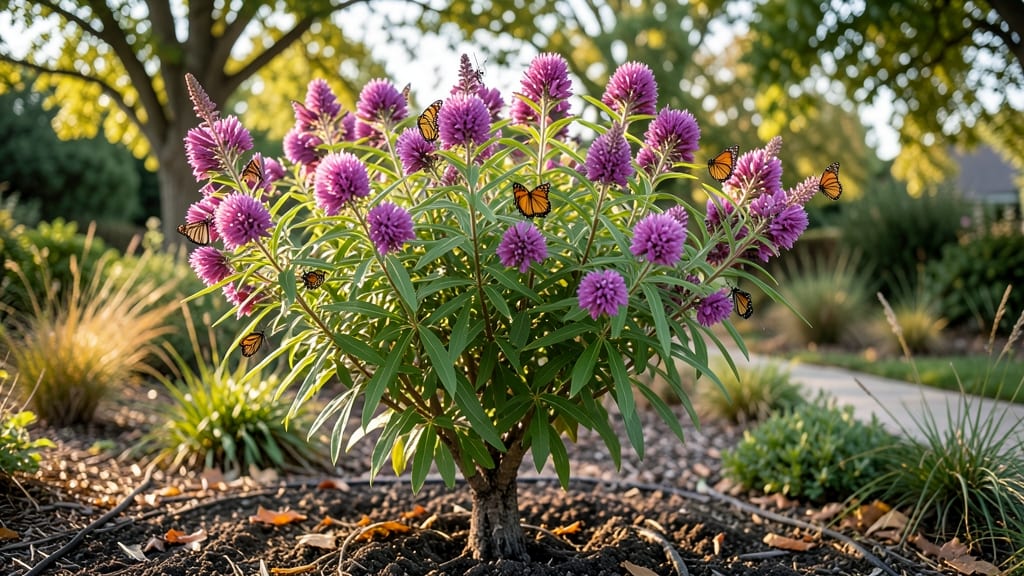
A butterfly on a butterfly bush thrives because these plants produce nectar-rich flowers that attract pollinators like monarchs, swallowtails, and skippers. Planting them in sunny spots with native companions maximizes their appeal, while proper pruning ensures continuous blooms and healthy growth.
Butterfly bushes (Buddleia spp.) are the ultimate pollinator playground because their tubular flowers are perfectly designed to access deep nectar stores that many butterflies can't reach elsewhere. 🌸 The key is planting them where they get at least six hours of direct sunlight daily—this boosts nectar production and flower density.
I've seen gardens with just one bush become instant butterfly hotspots during peak bloom seasons (late summer to early fall), especially when paired with milkweed or coneflowers.
What's fascinating is how these plants work as a multi-stage buffet: early blooms attract egg-laying females, while later flowers provide sustenance for emerging caterpillars and adult butterflies alike.
The secret to keeping them productive? Prune back one-third of the plant in late winter—this removes dead growth and stimulates fresh, vibrant blooms that butterflies can't resist.
💡 In This Article
- Why Butterfly Bushes Are a Butterfly Magnet
- Best Pruning and Planting Tips for Butterfly Bushes
Why butterfly bushes are a butterfly magnet
The secret lies in the butterfly bush's tubular flower structure and ultra-sweet nectar composition. These flowers produce nectar with 20-30% sugar concentration—far richer than many garden flowers—which gives butterflies an energy boost during their short adult lives (typically 2-6 weeks).
The deep throat of the flowers also forces butterflies to brush against pollen-covered stamens, making them highly efficient pollinators. 🌸
Different butterfly species are drawn to specific colors and bloom times. For instance, monarchs prefer the purple and pink varieties that bloom from July through September, while swallowtails are attracted to the white and yellow flowers that appear slightly earlier.
The plant's ability to produce multiple bloom cycles per season creates a continuous food source that aligns perfectly with butterfly emergence patterns after winter dormancy.
What's even more fascinating is the plant's chemical signaling. Butterfly bushes release volatile organic compounds that act like pheromones, creating a scent trail that guides butterflies from miles away. Studies show these compounds are 3-5 times more detectable to butterflies than random garden flowers, making them a navigational beacon.
The flowers' high UV reflectance also creates patterns invisible to humans but clearly visible to butterflies, guiding them to the nectar source.
Consider the lifecycle stages: female butterflies seek out butterfly bushes in spring and early summer to lay eggs on nearby host plants (like milkweed for monarchs), while adult butterflies return to the same bushes in late summer for their final feeding frenzy before migration.
This creates a self-perpetuating ecosystem where the plant and butterflies have co-evolved over centuries. 🦋
Here's what makes the nectar so irresistible:
- Sugar content: 25-30% sucrose (human-grade nectar is typically 15-20%)
- Flower density: A mature bush can produce 10,000+ flowers per season
- Bloom duration: Individual flowers last 3-5 days but new buds open continuously
- Color spectrum: Purple, pink, white, and yellow varieties attract different species
The plant's fast growth rate (up to 3 feet per year) means it quickly becomes a dominant feature in pollinator gardens. When planted in clusters of 3-5 bushes, they create a visual and olfactory "superhighway" that butterflies can't resist. The key is maintaining this growth through proper pruning—without it, the plant becomes woody and less productive. 🌿
What most gardeners don't realize is that butterfly bushes also provide shelter and overwintering sites for some butterfly species. The dense foliage offers protection from predators and harsh weather, making these plants a year-round resource rather than just a seasonal attraction.
This multi-functional benefit explains why they're considered one of the most valuable plants for butterfly conservation efforts.