
Pests and Diseases
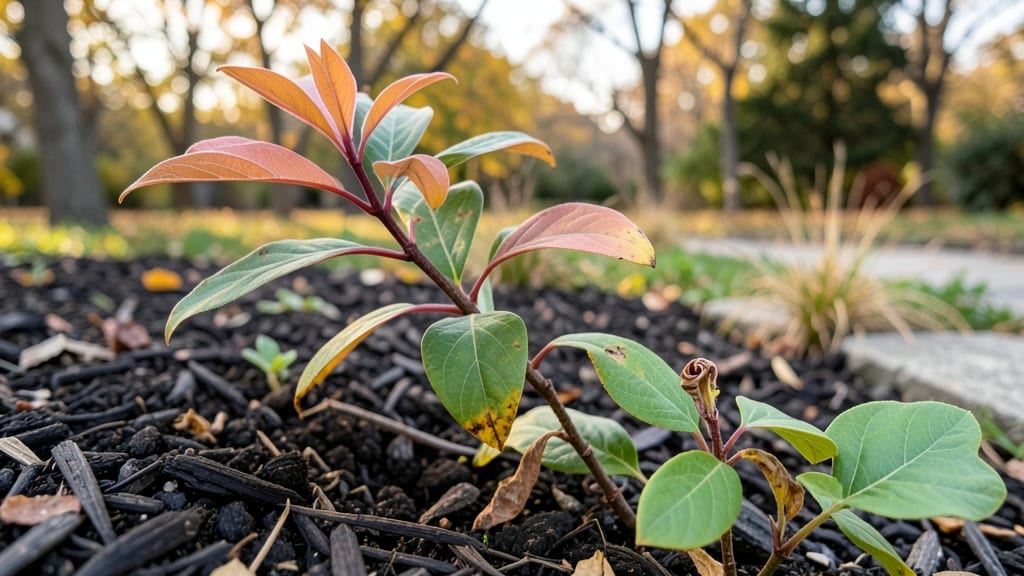
Your burning bush leaves curling could mean fungal blight—or it might just need a drink. 🌿 I’ve seen this happen after a dry spell, and the fix is often simpler than you’d think: check the soil first before jumping to treatments.
The real culprit is usually powdery mildew or spider mites, both of which love dry, stressed plants. Flip those curled leaves over—if you spot tiny webs or white dust, you’ve found your problem. Even if it’s just drought stress, the solution starts with watering deep and consistent.
Once you’ve ruled out pests, focus on prevention: space plants for airflow, water at the base, and mulch to keep roots cool. For fungal blight, a homemade spray of neem oil and water works fast—just mix 1 tablespoon per quart and spray undersides of leaves.
Most cases clear up in 2-3 weeks with the right care. If not, it might be time to prune the worst stems and give your bush a nutrient boost. Let’s get it back to its vibrant red glory!
Root Causes of Leaf Distress
Understanding why burning bush leaves curl is the first step to restoring their health—and your plant’s vibrancy. These leaf deformities are rarely random; they’re often a cry for help from your shrub.
Below, we break down the most common triggers, backed by science, so you can pinpoint the issue and act fast.
Burning bushes (Euonymus alatus) are hardy, but they hate sudden swings in temperature—especially when combined with wind or drought. When nights dip below 30°F (-1°C) or days soar above 90°F (32°C), leaves curl as a protective response.
Why it happens:
- Cold shock: Cold air forces cells to contract rapidly, causing curling and browning edges. This is especially true for young, tender leaves that haven’t fully hardened off.
- Heat stress: High temperatures disrupt photosynthesis by closing stomata (pores) to conserve moisture, leading to puckered, leathery leaves. Add dry wind, and the problem worsens.
- Frost damage: If frost hits unprepared foliage (like new spring growth), ice crystals form in cells, rupturing them and causing a "burned" look with curled, crispy edges.
💡 Pro Tip:
- Mulch heavily in fall to insulate roots from freezing temps.
- Avoid late-season pruning—new growth is more frost-sensitive.
- Water deeply before heatwaves to help leaves regulate temperature.
Burning bushes thrive in moist but well-draining soil, but water stress—whether from drought or soggy roots—triggers curling as a survival tactic.
Why it happens:
- Underwatering: Leaves curl inward to reduce water loss (a process called plasmolysis). The edges may turn brown or brittle as cells dehydrate.
- Overwatering: Poor drainage leads to root rot, cutting off nutrient and water flow. Curling paired with yellowing leaves or a foul smell at the base is a red flag.
- Salt buildup: If you’re using tap water high in chlorine/fluoride or fertilizing too heavily, salts accumulate in the soil, burning roots and causing curling.
💡 Pro Tip:
- Check soil moisture 2–3 inches deep—if dry, water deeply until it drains out the bottom.
- Avoid wetting foliage (especially in humid climates) to prevent fungal infections that mimic drought stress.
- Flush soil annually with rainwater to leach out excess salts.
Fungal blights like anthracnose, powdery mildew, or leaf spot thrive in burning bushes, causing leaves to curl, pucker, or develop dark spots. These pathogens spread via splashing water, wind, or infected tools.
Why it happens:
- High humidity + poor airflow: Fungi love stagnant, damp conditions. Curling leaves trap moisture, creating the perfect petri dish for spores.
- Weakened plant stress: If your bush is already struggling from nutrient deficiency, pests, or environmental stress, it’s more susceptible to fungal takeovers.
- Symptoms to watch for:
- Powdery mildew: White, talc-like coating on curled leaves.
- Anthracnose: Dark, sunken spots with yellow halos.
- Leaf spot: Irregular brown patches that enlarge and curl edges.
💡 Pro Tip:
- Prune for airflow—remove dense, crossing branches.
- Water at the base (avoid overhead sprinkling).
- Apply fungicide (neem oil or copper-based) at the first sign of spots.
Tiny pests like spider mites, scale insects, or aphids drain plant sap, causing leaves to curl, yellow, or develop sticky residue (honeydew). Their damage weakens the bush, making it vulnerable to secondary infections.
Why it happens:
- Spider mites: These microscopic pests inject toxins into leaves, causing curling and stippling (tiny white dots). They thrive in dry, hot conditions.
- Scale insects: These armored pests suck sap, starving leaves and causing them to pucker and drop prematurely.
- Aphids: Clusters of these soft-bodied insects distort new growth, leading to curled, malformed leaves.
💡 Pro Tip:
- Blast off pests with a strong spray of water (disrupts their lifecycle).
- Introduce beneficial insects (ladybugs, lacewings) or use insecticidal soap for severe infestations.
- Prune heavily infested branches and dispose of them in sealed bags.
Burning bushes need balanced nutrients to grow strong. When deprived of key elements, leaves curl as a last-ditch effort to conserve energy.
Why it happens:
- Nitrogen (N) deficiency: Leaves turn yellow between veins (chlorosis) and curl inward. This is common in poor or compacted soil.
- Potassium (K) deficiency: Brown, curled leaf edges (especially in older leaves) signal a lack of this mineral, which regulates water and disease resistance.
- Magnesium (Mg) deficiency: Yellow patches between veins (like nitrogen deficiency but with curled, crinkled edges) indicate a magnesium shortage, often from high soil pH.
💡 Pro Tip:
- Test your soil (pH and nutrient levels) before fertilizing.
- Use a balanced fertilizer (10-10-10) in early spring, then potassium-rich in fall.
- Add compost or Epsom salt (for magnesium) if deficiencies persist.
Even if your bush isn’t sick, external factors can cause curling as a protective reflex.
Why it happens:
- Windburn: Strong, dry winds desiccate leaf edges, causing them to curl and crisp. This is common in exposed landscapes.
- Air pollution: Ozone, sulfur dioxide, or smog damage leaf tissues, leading to curling, stippling, or necrotic spots.
- Soil compaction: Roots struggle to absorb water/nutrients, forcing leaves to curl as a stress response.
💡 Pro Tip:
- Shelter young bushes with a temporary windbreak (burlap or lattice).
- Avoid planting near roads if air quality is poor.
- Aerate compacted soil with a garden fork to improve root health.
Quick Fixes for Curling Leaves
When your burning bush (Euonymus alatus) starts showing signs of curling leaves, it’s often a cry for help from your plant. The good news? Most issues are fixable with the right approach.
Below, we’ve mapped out practical solutions tailored to the most common causes—so you can restore your bush’s health without stress.
If curling leaves are paired with dark spots, powdery residue, or leaf drop, fungal blight (like anthracnose or powdery mildew) is likely the villain. Here’s how to tackle it:
🔥 Step 1: Prune Infected Areas
- 🔪 Snip off curled, spotted, or discolored leaves and a few inches of healthy growth below the damage.
This prevents spores from spreading. - 🗑️ Dispose of pruned material in a sealed trash bag (not your compost pile). - Pro Tip: Sterilize your pruners with rubbing alcohol between cuts to avoid cross-contamination.
🍳 Step 2: Apply Fungicide
- 💡 Organic Option: Mix 1 tsp baking soda + 1 quart water + a few drops of dish soap (as a spreader-sticker).
Spray early in the morning on a calm day. - 💊 Chemical Option: Use a copper-based fungicide or neem oil solution (1 tbsp neem oil + 1 quart water). Reapply every 7–10 days until new growth appears healthy. - ⏰ Timing Matters: Apply fungicide before rain to maximize effectiveness.
🌡️ Step 3: Improve Airflow & Light
- 🌬️ Thin out overgrown branches to allow sunlight and air to circulate.
- 🌞 Ensure 6+ hours of sunlight daily—fungi thrive in damp, shaded conditions.
- 💡 Preventative Tip: Space plants 3–5 feet apart to reduce humidity buildup.
If curling leaves are sticky, speckled, or accompanied by webbing, pests are likely sucking the sap out of your bush.
🕷️ Step 1: Blast Off Pests
- 💦 Spray with water (a strong jet from the hose) to dislodge aphids and spider mites.
- 🧼 Soap Solution: Mix 1 tbsp mild liquid soap + 1 quart water, then spray directly on undersides of leaves (where pests hide).
- 🐛 For Scale Insects: Scrape off visible pests with a soft brush dipped in rubbing alcohol.
🐞 Step 2: Introduce Beneficial Insects
- 🐝 Ladybugs or lacewings devour aphids and mites. Release them at dusk for best results.
- 🕷️ Predatory mites (like Phytoseiulus persimilis) can control spider mite populations.
🌿 Step 3: Prevent Future Infestations
- 🌿 Mulch with wood chips (not fresh grass clippings) to deter pests.
- 🌱 Avoid over-fertilizing with nitrogen—soft new growth attracts pests.
- 💡 Pro Tip: Yellow sticky traps can monitor and reduce pest numbers.
Overwatering, underwatering, or poor drainage can cause leaves to curl inward or outward while feeling leathery or crispy.
💧 Step 1: Adjust Your Watering Routine
| Issue | Fix |
|---|---|
| Overwatering | Let soil dry 2–3 inches deep between waterings. Use a moisture meter if unsure. |
| Underwatering | Water deeply 1–2 times per week (not daily shallow drinks). |
| Poor Drainage | Amend soil with perlite or sand to improve aeration. |
🌱 Step 2: Test & Improve Soil
- 📊 Soil Test: Check pH (burning bush prefers 6.0–7.0). Amend with lime (to raise pH) or sulfur (to lower pH) if needed.
- 💡 Fertilizer Fix: If soil is nutrient-poor, use a balanced 10-10-10 fertilizer in early spring.
Avoid high-nitrogen fertilizers in summer—they stress the plant.
✨ Prevention Tips for Healthy Soil
- 🌿 Mulch with 2–3 inches of organic mulch (like shredded bark) to retain moisture and regulate temperature.
- 🌱 Avoid compacting soil around the base—use a garden fork to aerate if the area feels hard.
Extreme heat, cold, or transplant shock can cause leaves to curl as a protective response.
🌡️ Step 1: Shield from Harsh Conditions
- 🌞 Heat Stress: Provide afternoon shade (use shade cloth if temps exceed 90°F).
- ❄️ Cold Damage: Protect young bushes with burlap wraps in winter if your zone drops below 10°F.
🌱 Step 2: Help with Transplant Shock
- 💧 Water deeply for the first 2–3 weeks after transplanting.
- 🌿 Avoid fertilizing for 4–6 weeks—focus on root establishment first.
- 🌱 Prune lightly to reduce stress on the plant.
💡 Long-Term Care
- 🌿 Gradually acclimate potted burning bushes to outdoor conditions before planting.
- 🌱 Plant in well-draining soil and avoid low-lying areas where cold air pools.
Final Thought: Most curling leaf issues are reversible with prompt action. Start with pruning and fungicide if blight is suspected, pest control if bugs are present, or soil/water adjustments if environmental factors are to blame. Monitor your bush weekly—healthy leaves should unfurl within 2–4 weeks of treatment! 🌿✨
Frequently asked questions about burning bush leaf curling
Why do some leaves curl while others stay flat on my burning bush?
New growth is often the first to show stress symptoms because it's most sensitive. Check if the curled leaves are on younger branches—this usually means pests (like spider mites) or environmental factors (heat/wind) are the culprits. Older leaves curling typically signals nutrient deficiencies or fungal issues.
Is it safe to prune off all the curled leaves at once?
No—never remove more than 30% of the foliage at once, as this stresses the plant further. Instead, prune gradually over 2-3 weeks, focusing on the most severely affected leaves. Sterilize your tools with rubbing alcohol between cuts to prevent spreading diseases.
How can I tell if my bush has spider mites vs. powdery mildew?
Flip the curled leaves over: spider mites leave tiny white webs and speckling, while powdery mildew shows as white, powdery patches. For mites, use a magnifying glass—you'll see moving dots. Mildew often appears first on undersides of leaves in humid conditions.
Will my burning bush recover completely if I fix the problem?
Yes, but recovery depends on how early you act. If caught early (first signs of curling), your bush can fully recover in 4-6 weeks. For severe cases, expect new growth to be healthier, but some leaves may remain curled. The key is consistent care after treatment.
Can I use the same fungicide spray on my burning bush and other plants?
Only if the fungicide is labeled for broad-spectrum use and safe for all your plants. Neem oil is generally safe for most ornamentals, but copper-based sprays can harm sensitive plants like azaleas. Always test on a small area first and research compatibility with your specific plant collection.