
Diseases
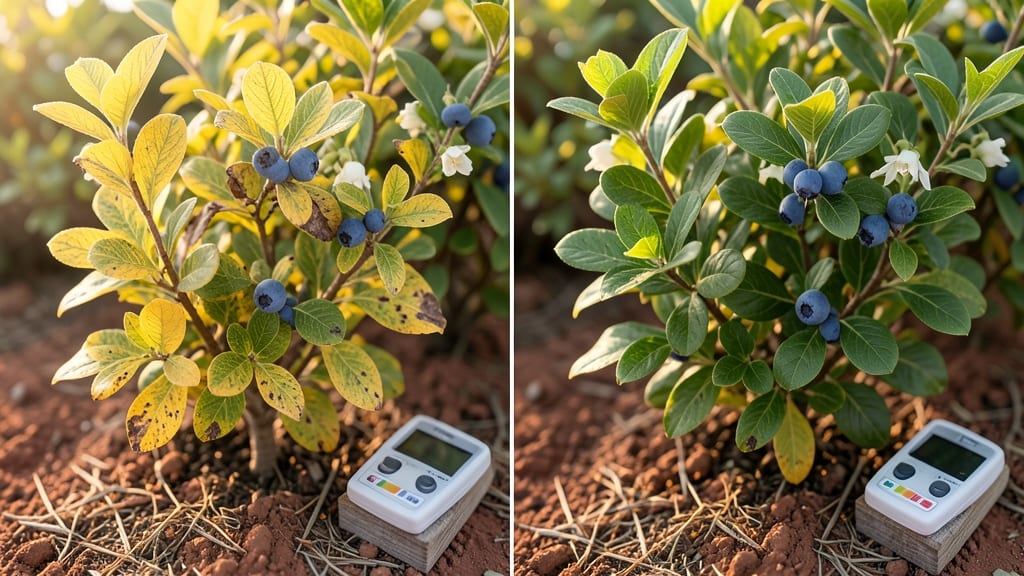
Your blueberry bush turning yellow isn’t a death sentence—it’s a call for action. 🌿 I’ve nursed back more than a few of these with iron deficiency fixes that work in weeks, not seasons. The yellowing leaves? That’s your plant screaming for help, usually from soil pH or nutrient imbalance.
Most gardeners overlook the simplest culprit: soil pH. Blueberries crave acidic soil (pH 4.5–5.5), and if yours is too alkaline, iron becomes locked away. A quick soil test (available at garden centers for under $20) reveals the truth.
Other times, it’s overwatering or root rot—both of which turn leaves yellow while stems stay green.
Fix it fast with 3 simple steps: amend soil with sulfur or peat moss, adjust watering to keep soil moist but not soggy, and prune affected branches to redirect energy.
Within 4–6 weeks, those yellow leaves will turn a vibrant green again, and your bushes will be back to producing those sweet, juicy berries.
Prevention is easier than cure: test soil annually, mulch with pine needles to maintain acidity, and avoid overwatering. Your blueberries will thank you with years of bountiful harvests—no more yellow warnings.
Root Causes Behind Yellowing Leaves
When your blueberry bush starts turning yellow, it’s often a cry for help—specifically, a sign that something vital is off-balance. 🌿 Understanding the why behind the yellowing is the first step toward reviving your plant.
Below, we break down the most common culprits, backed by science, so you can diagnose and act with confidence.
Blueberries are heavy feeders, especially when it comes to micronutrients like iron, manganese, and zinc. Yellowing leaves—particularly on younger growth (a condition called interveinal chlorosis)—are often a red flag that your bush isn’t getting enough of these essential elements.
- Iron Deficiency (Most Common): Iron is crucial for chlorophyll production. When soil pH is too high (above 6.5), iron becomes locked up and unavailable to roots. Blueberries thrive in acidic soil (pH 4.5–5.5), so alkaline conditions can starve them of this nutrient. 🌡️ Look for: Yellow leaves with green veins (classic chlorosis) on new shoots.
- Manganese or Zinc Deficiency: These trace minerals often go hand-in-hand with iron issues. Poor soil structure, over-fertilization with phosphorus, or compacted roots can limit their uptake. Signs: Yellowing between veins, stunted growth, or brown spots on leaves.
💡 Pro Tip: Test your soil’s pH and nutrient levels with a home kit or send a sample to a lab. If pH is the issue, lower it gradually (never drop below 4.0) using sulfur or peat moss—never quick fixes like vinegar, which can harm roots.
Blueberries are not drought-tolerant, but they hate soggy roots. Water stress—whether from overwatering or underwatering—can trigger yellowing leaves as the plant struggles to transport nutrients.
- Overwatering or Poor Drainage: Roots deprived of oxygen (from waterlogged soil) can’t absorb nutrients efficiently. Signs: Yellowing leaves paired with drooping or mushy stems, especially in heavy clay soils. 🌧️
- Underwatering or Drought Stress: Blueberries need 1–1.5 inches of water per week. When soil dries out, leaves may yellow or curl as the plant conserves moisture. Check: Stick your finger 2 inches into the soil—if it’s dry, it’s time to water.
- Fungal Infections from Wet Foliar: Yellowing + spots or mold on leaves? Overhead watering can promote leaf spot diseases (like Botrytis or Anthracnose), which weaken the plant and cause discoloration.
🎯 Fix It: Improve drainage with organic matter (compost or pine bark), water at the base of the plant, and avoid letting soil stay soggy for more than 24 hours.
Pests and pathogens don’t just eat your blueberry bush—they stress it, leading to nutrient deficiencies and yellowing leaves as a secondary effect.
- Spider Mites or Aphids: These sap-sucking pests drain the plant’s energy, causing leaves to yellow, wilt, or develop stippling (tiny white dots). 🕷️ Look for: Fine webbing (mites) or sticky residue (aphids).
- Root Rot (Phytophthora): A fungal infection thriving in wet, compacted soil that rotts roots, cutting off nutrient uptake. Signs: Yellowing leaves + black, mushy roots when dug up.
- Bacterial Leaf Spot: Causes irregular yellow/brown spots with water-soaked edges. Spreads via splashing water or infected pruners.
🔥 Act Fast: Isolate infected plants, prune affected foliage (sterilize tools with rubbing alcohol), and treat with neem oil (for pests) or copper fungicide (for diseases). For root rot, improve drainage immediately.
Blueberries are temperamental about their environment. Extreme heat, cold snaps, or sudden sun exposure can shock the plant into dropping nutrients or damaging leaves.
- Heat Stress: Temperatures above 90°F (32°C) can cause leaf scorch, turning edges yellow or brown. Blueberries also drop fruit in extreme heat. 🔥
- Cold Damage: Late frosts (<32°F/0°C) can burn new growth, causing yellowing or blackened tips. Evergreen leaves may also yellow if winter winds desiccate them.
- Sunburn (Transplant Shock): Moving a blueberry bush to a sunnier spot without acclimating it can lead to bleached or yellow patches on leaves.
🌿 Adjust Their Habitat:
- Provide afternoon shade in hot climates (use shade cloth if needed).
- Mulch heavily with pine straw to protect roots from temperature swings.
- Acclimate newly transplanted bushes to full sun over 2–3 weeks.
Yellowing leaves are rarely a death sentence—they’re your bush’s way of saying, “Fix this, and I’ll bounce back!” 🚀 The key is identifying the root cause (literally and figuratively) and addressing it before the problem spreads. Next up: 3 actionable steps to restore your blueberry bush’s health.
Fixing Yellowing Blueberry Bushes
Revitalizing your blueberry bush starts with identifying the root cause—whether it’s iron deficiency, nutrient imbalance, or environmental stress. Below are practical, step-by-step solutions tailored to each issue, plus prevention tips to keep your plants thriving. Let’s turn that yellow back to vibrant green!
Yellowing leaves with green veins? This classic sign of iron chlorosis means your blueberry bush isn’t absorbing enough iron, often due to high soil pH or poor root health.
🔥 Step 1: Test and Lower Soil pH Blueberries love acidic soil (pH 4.5–5.5).
If your soil is too alkaline, iron becomes unavailable. - 📊 Test your soil: Use a home pH kit or send a sample to a local extension office. - 🍋 Add sulfur or peat moss: Mix 1–2 pounds of elemental sulfur per 100 sq ft into the top 6 inches of soil.
For peat moss, apply 2–3 inches and till it in. - ⏰ Wait 2–3 months: pH changes take time—re-test before reapplying.
🍳 Step 2: Apply Iron Supplements
If the pH is correct but chlorosis persists, give your bush a quick iron boost:
- 💧 Chelated iron spray: Mix 1 tbsp of chelated iron (like Ironite or Sequestrene) with 1 gallon of water and spray leaves every 2 weeks until new growth appears.
- 🌱 Soil drench: For stubborn cases, dissolve 1 tsp of Epsom salt (magnesium sulfate) in 1 gallon of water and water the base of the plant. (Note: Epsom salt helps with magnesium too!)
👨🍳 Step 3: Improve Root Health
Poor drainage or compacted soil can starve roots of oxygen and nutrients.
- 🔪 Aerate the soil: Use a garden fork to loosen soil around the bush’s drip line (the area under the outer branches).
- 🌿 Mulch properly: Apply 2–3 inches of pine needles or wood chips (acidic mulch) to retain moisture and slowly release nutrients.
Yellowing leaves that aren’t just chlorosis? Check for nitrogen, phosphorus, or potassium deficiencies.
| Symptom | Likely Cause | Solution |
|---|---|---|
| Yellow lower leaves | Nitrogen deficiency | Apply 5-10-10 fertilizer (high nitrogen) or composted manure. |
| Purple stems/leaves | Phosphorus deficiency | Use bone meal or a 10-20-20 fertilizer and water deeply. |
| Brown leaf edges | Potassium deficiency | Mix 1 tbsp of potassium sulfate into water and spray foliage monthly. |
💡 Pro Tip: Over-fertilizing can burn roots! Follow package instructions and water thoroughly after applying.
Heat, drought, or poor drainage can turn leaves yellow—even if nutrients are fine.
💦 Hydration Fix
- 🌧️ Deep watering: Water 1–2 inches per week (more in extreme heat). Use a soaker hose to avoid wetting leaves (fungus risk!).
- 🚰 Drainage check: If soil stays soggy, amend with perlite or coarse sand to improve airflow.
🌿 Shade and Wind Protection
- 🌳 Partial shade: If your bush is in full sun, provide afternoon shade in hot climates.
- 🪵 Windbreaks: Use burlap screens or tall plants to shield bushes from harsh winds.
Once your blueberry bush is back to green, keep it thriving with these easy maintenance habits: - 📅 Annual pH check: Test soil every spring and adjust if needed. - 🍂 Fall feeding: Apply acid-loving plant fertilizer (like cottonseed meal) in early fall. - 🪴 Prune smartly: Remove dead or crossing branches in late winter to improve airflow. - 🐞 Pest patrol: Watch for spider mites or aphids—they stress plants!
Spray with neem oil if spotted.
🎯 Remember: Patience is key! Some fixes (like pH adjustment) take weeks to months to show results. Monitor your bush, adjust as needed, and soon you’ll be harvesting juicy, healthy blueberries again! 🫐
Frequently asked questions
Why are my blueberry bush leaves yellowing but the veins stay green?
This is classic iron chlorosis, where your bush can't absorb iron due to high soil pH (above 6.5). Blueberries need acidic soil (pH 4.5–5.5) for iron uptake. Test your soil and amend with elemental sulfur or peat moss to lower pH gradually. A foliar spray of chelated iron can provide quick relief while you adjust the soil.
Can I fix yellowing blueberry leaves with just Epsom salt?
Epsom salt (magnesium sulfate) helps with magnesium deficiency but won't fully replace iron for chlorosis. For best results, combine it with chelated iron. Mix 1 tsp Epsom salt + 1 tbsp chelated iron in 1 gallon of water and spray leaves every 2 weeks. Focus on young leaves where symptoms first appear.
Is yellowing always a nutrient problem, or could it be pests?
Not always! Check for spider mites or aphids—they drain nutrients and cause yellowing with tiny white dots or sticky residue. For mild infestations, spray with neem oil. Severe cases may need insecticidal soap. Also inspect roots for root rot (black, mushy roots) from overwatering.
How long does it take to see improvement after fixing soil pH?
With proper pH adjustment, you'll typically see new green growth in 4–6 weeks. Older yellow leaves won't turn green again, but new shoots should be vibrant. Monitor progress and re-test soil in 2–3 months—pH changes take time. Patience pays off as roots recover and nutrient uptake improves!
Will yellow leaves affect my blueberry harvest this year?
Mild yellowing may not stop fruit production, but severe nutrient deficiencies or disease can reduce yield. Focus on fixing the root cause immediately. If leaves are only yellowing on new growth (chlorosis), your existing fruit should still develop. For best results, address the issue before next season's flowering.