
Light Requirements
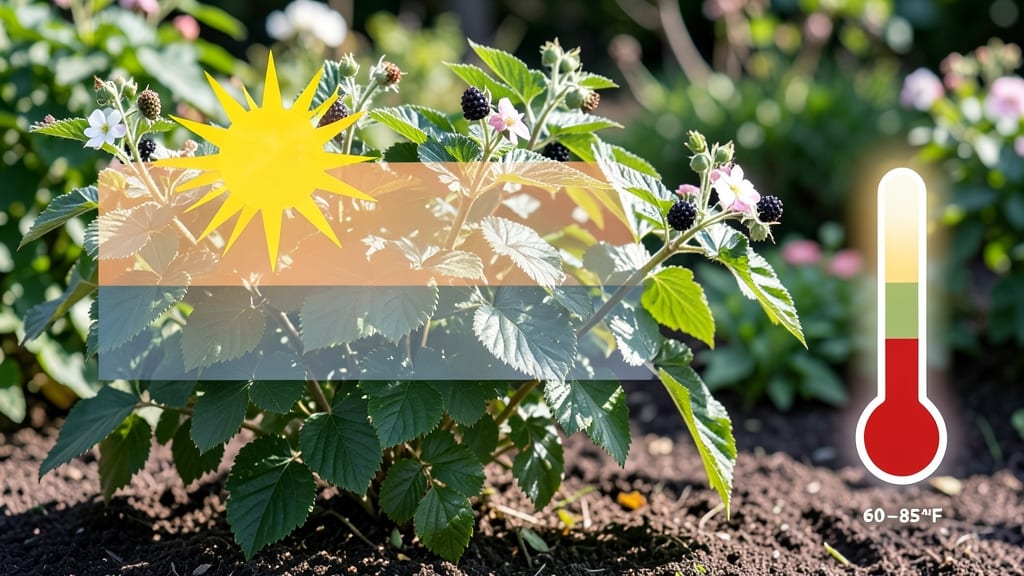
The blackberry bush sun requirements demand at least 6 to 8 hours of full sun daily to produce sweet, plump berries 🫐—any less, and you’ll end up with small, tart fruit or no harvest at all.
If your blackberries are sparse or your canes look weak, it’s probably not your soil or watering routine—it’s the sunlight. Too little means fewer berries, while too much can scorch leaves and stress the plant, especially in hotter climates like USDA Zone 6a.
But here’s the good news: blackberries are tougher than you think. With the right placement—like a south-facing spot or a raised bed—you can hit that sweet spot between sun exposure and shade relief, even in tight spaces.
In this guide, I’ll break down exactly how many hours of sun your blackberry bushes need, how to spot sunlight problems, and where to plant them for the best fruit every season.

How many hours of sun do blackberry bushes need for maximum fruit production?
Blackberry bushes thrive when they receive the right amount of sunlight, but too little or too much can drastically reduce fruit production. Most varieties need 6 to 8 hours of direct sunlight daily to develop sweet, plump berries and strong canes.
However, the exact needs vary between thornless and traditional varieties, and seasonal adjustments are key for consistent yields. Understanding these nuances will help you avoid common mistakes like leaf scorching or poor fruit set.
If you're planting blackberries in your garden, location matters more than you think. A spot with morning sun and afternoon shade works for some varieties, while others demand full sun all day. I’ve seen gardeners struggle with underperforming bushes simply because they assumed "full sun" meant any sunny spot.
Let’s break down the specifics so you can give your blackberries the perfect light conditions for a bountiful harvest.
🌱 Pro Tip: Use a sunlight tracker or app for a week to measure how much light your chosen spot actually gets. Many gardeners overestimate sunlight exposure, leading to disappointed harvests.
Traditional thorny varieties like Cheyenne or Navaho demand the most sunlight—6 to 8 hours daily—to produce their signature large, flavorful berries. These bushes thrive in south-facing locations where they can soak up morning light and avoid the harsh afternoon sun in hot climates.
I’ve grown these varieties in USDA Zone 7, and they reward me with heavy fruit loads when placed correctly.
Thornless varieties, such as Natchez or Ouachita, are more flexible and can handle 5 to 7 hours of sun. They’re ideal for gardeners with limited full-sun spots or those who prefer easier harvesting.
In my experience, these bushes perform well in east-facing beds where they get gentle morning light and afternoon shade. This flexibility makes them perfect for urban gardens or small backyards.
For floricane varieties like Apache or Prime-Ark Freedom, consistency is key. These bushes produce fruit on both old and new canes, so they need uninterrupted sun exposure to fuel two harvests: one in spring and another in fall.
If you’re growing these, avoid moving them once established—they can become stressed and drop fruit.
Dwarf varieties, such as Arapaho or Chester, are great for containers or small spaces but still need 4 to 6 hours of sunlight. These bushes are perfect for balconies or patios where full sun isn’t an option.
I’ve successfully grown them in partial shade with a reflective surface nearby (like a white wall) to bounce extra light onto the leaves. This trick can boost fruit production even in shadier conditions.
💡 Seasonal Tip: In summer, blackberries in hot climates (Zones 8-10) may benefit from afternoon shade to prevent leaf scorching. Use a lightweight shade cloth (30%) if your bushes start showing brown, crispy edges. This protects the plant while still allowing enough light for photosynthesis.
Measuring sunlight accurately is easier than you think. Use a sunlight tracker or simply observe your garden throughout the day. Mark the start and end times the spot receives direct light, then calculate the total hours.
For example, if sunlight hits your bush from 8 AM to 4 PM, that’s 8 hours. However, if clouds or nearby structures block light for 2 hours, you’re really looking at 6 hours—which may be too little for traditional varieties.
Common mistakes include planting blackberries in west-facing locations where they
Signs your blackberry bush isn’t getting enough (or too much) sunlight
Blackberry bushes thrive in full sun, but when they don’t get the right amount, their health and fruit production suffer. Pale, leggy canes and small, underdeveloped berries are classic signs of insufficient sunlight.
Even worse, too much harsh sun can cause leaf scorch and stunted growth. Let’s identify these issues and fix them before your harvest suffers.
First, check your leaf color. Healthy blackberry leaves should be a vibrant green. If they’re yellowing or pale, your bush needs more sun. Conversely, brown or crispy edges mean it’s getting too much direct sunlight, especially during hot afternoons.
These visual clues help you adjust placement or provide shade quickly.
🌱
🌞 Blackberry Sunlight Quick Fixes
- Relocate to sunnier spot (south-facing)
- Prune nearby shade-causing plants
- Use reflective surfaces (white walls)
- Add dappled shade (lattice or cloth)
- Water deeply in mornings
- Avoid midday sun exposure
Your fruit size is another dead giveaway. Blackberries grown in partial shade often stay small and tart, while those in full sun develop into juicy, plump berries. If your harvest is sparse or underwhelming, move your bush to a sunnier location immediately—ideally with 6-8 hours of direct sunlight daily.
Don’t ignore your cane health either. Weak, thin canes with few lateral branches signal light deprivation. Healthy blackberry canes should be thick and sturdy, with multiple fruiting laterals. If your canes are struggling, consider pruning back overgrown branches to redirect energy toward stronger growth.
For container-grown blackberries, sunlight needs are even more critical. Rotate pots regularly to ensure even sun exposure, and place them where they receive unobstructed morning sun. If your balcony or patio lacks direct sunlight, consider grow lights to supplement during cloudy days.
Finally, observe your bush’s growth pattern. Blackberries grown in too much shade often produce long, weak canes that flop over, while those in excessive sun may develop burnt patches on leaves.
Adjusting shade or sun exposure now will help your bush recover and produce a bountiful harvest next season. 🫐