
Picking
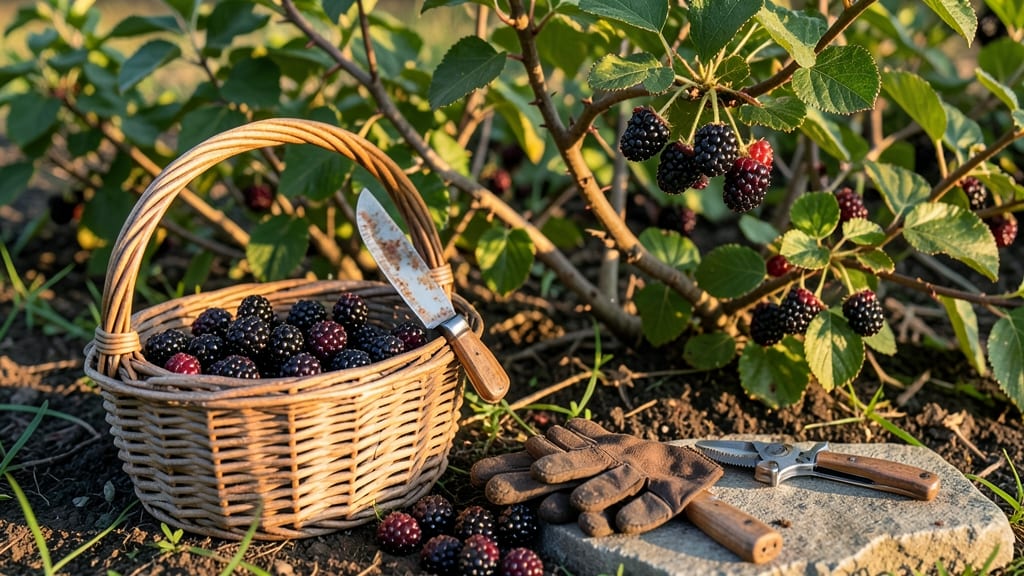
Harvesting your blackberry 🫐 bush at the right time means the difference between sweet, juicy berries and tart, mealy disappointments.
Picture this: you’ve waited months for your blackberries to ripen, only to pick them too soon and end up with underripe fruit that’s barely edible. Or worse, you wait too long and end up with berries so soft they fall apart in your hand.
Timing your harvest is everything, and the good news is, there are clear signs to watch for.
In this guide, I’ll walk you through the exact cues to look for—like color, texture, and even how the berries separate from the stem—so you never miss peak ripeness again.
You’ll also learn how to handle your blackberry bushes like a pro, from the best time of day to pick to the tools that make harvesting easier (and less painful).
Plus, I’ll share my top tips for extending your harvest season, so you can enjoy fresh blackberries for as long as possible. Whether you’re a first-time grower or a seasoned gardener, these strategies will help you maximize your yield and keep your bushes healthy for years to come.

How to identify perfectly ripe blackberries for harvesting
Picking blackberries at their peak ripeness means the difference between bursting sweetness and tart disappointment. These berries ripen quickly, so knowing the exact visual and tactile cues saves you from harvesting too early or too late.
I’ve learned that color, texture, and stem separation are the three key signals to watch for—each telling a different story about your berry’s readiness.
First, let’s talk color changes. Most blackberry varieties transition from green to deep black or purple when fully ripe. However, some heirloom types like Chehalem or Triple Crown might stay slightly reddish—don’t judge ripeness by color alone.
Instead, combine color with other clues to avoid mistakes. For example, a fully black berry that’s still hard likely needs more time on the vine.
| Ripeness Cue | What to Look For | Action |
|---|---|---|
| Color | Deep black/purple (or variety-specific hue) | Check other cues before picking |
| Texture | Slightly soft, yields gently when squeezed | Ready to harvest |
| Stem Separation | Detaches easily from the plant | Pick immediately |
| Glossiness | Shiny, fully expanded berries | Peak flavor window |
| Climate Impact | Cooler regions = slower ripening | Adjust timing by 1-2 weeks |
Texture is where many gardeners trip up. A ripe blackberry should feel plump but slightly soft—almost like a ripe peach. Gently squeeze a berry between your thumb and forefinger: if it yields slightly without being mushy, it’s ready.
Overripe berries will feel mushy or leak juice when pressed, signaling they’ve passed their prime. Pro tip: Morning harvests often yield firmer, fresher berries because cooler temps slow overnight softening.
Here’s where the stem separation test becomes your best friend. Gently grasp a berry and give it a light tug—if it detaches cleanly from the stem, it’s ripe. If the stem resists or breaks off, leave it on the bush for another day or two.
This test works especially well for floral or primocane varieties, which ripen faster than traditional summer-bearing types. I’ve found that early-morning checks work best because dew can sometimes make stems stickier, giving false results.
Climate plays a huge role in ripening timing. In warmer southern climates (like USDA Zone 8+), blackberries may ripen 2-3 weeks earlier than in cooler northern regions (Zone 5-6).
For example, Arapaho berries in Arizona might be ready by late May, while the same variety in Michigan won’t peak until mid-July. Pay attention to your local last frost date and adjust expectations accordingly—blackberries need 100-120 frost-free days to mature fully.
Variety also dictates ripeness cues. Summer-bearing varieties (like Natchez) produce all their fruit in one 6-8 week window, while everbearing or primocane types (such as Apache) offer two harvests: one on floral canes in summer and another on primocanes in fall.
For everbearing types, the first flush tends to be sweeter, so prioritize those berries first. I’ve noticed that fall-ripening primocanes often develop a reddish tint before turning fully black—don’t wait for them to turn jet black like summer berries.
One common mistake I see is picking berries based on size alone. While ripe blackberries are usually 1-2 inches wide, some varieties (like Ouachita) stay small but pack intense flavor. Instead, focus on color uniformity and glossiness.
A dull, matte berry might be underripe or stressed by drought or pest damage. If your berries look speckled or shriveled, check for bird damage or spider mites, which can stunt ripening.
To extend your harvest window, consider shading cloth for late-season berries. When temps hit 90°F+, blackberries can sunburn or split, making them unmarketable. A 30-50% shade cloth can buy you an extra 1-2 weeks of harvestable fruit.
I’ve also found that drip irrigation during dry spells prevents berries from drying out on the vine, keeping them plump and flavorful longer.
Finally, remember that blackberries continue to ripen off the vine—but only if they’re already ripe at harvest. If you pick them too early, they’ll never reach peak sweetness.
Store freshly picked berries in the fridge for up to 3 days or freeze them immediately for later use. For the best flavor, though, enjoy them within
Best practices for harvesting blackberries without damaging the bush
Harvesting blackberries at the right time ensures peak flavor and maximum yield, but it’s easy to damage the thorny canes if you’re not careful. The key is timing your harvest and using the right techniques to protect both your berries and your plants.
I’ve learned that harvesting in the morning gives you the freshest fruit, while afternoon picking can lead to softer berries that bruise easily.
Before you start, gather your tools: a pair of sharp pruning shears, a large container for berries, and thick gardening gloves to protect your hands from thorns. I always keep a small bucket of water nearby to rinse off any dirt or debris that might cling to the berries.
Remember, blackberries are delicate, so handle them gently to avoid crushing or tearing the fruit.
Step-by-Step Guide to Harvesting Blackberries
- 1 Choose the right time: Harvest early morning when berries are cool and firm. Avoid picking after rain or in the heat of the day, as this can cause bruising.
- 2 Inspect for ripeness: Look for deep black or purple berries that are plump and glossy. Gently tug to check if they detach easily from the stem—this is a sign they’re ready.
- 3 Use the right tools: Wear thick gloves and use sharp pruning shears to snip clusters of berries. Avoid pulling entire branches, as this can damage the plant.
- 4 Handle berries gently: Place them in a large container lined with paper to prevent bruising. Avoid stacking berries too high, as this can crush the bottom layers.
- 5 Post-harvest care: After picking, water the plant deeply and remove any damaged or diseased canes. Mulch around the base to retain moisture and protect roots.
One of the biggest mistakes I’ve seen is picking blackberries when they’re still slightly green or red. These underripe berries won’t ripen off the bush, so you’ll end up with a sour, mealy texture.
On the flip side, waiting too long can lead to overripe berries that are mushy and attract pests like birds and insects. Aim for that sweet spot where the berries are fully colored, plump, and just starting to soften slightly.
After harvesting, store your blackberries in the refrigerator for up to a week, or freeze them for longer storage. I like to spread them out on a tray to freeze individually, so they’re easy to grab for smoothies or baking later.
Keeping your blackberry bushes healthy post-harvest is crucial—prune out any dead or weak canes and fertilize lightly to encourage next year’s growth.
If you’re dealing with thorny varieties, consider investing in a pair of long-handled pruners to keep your hands safe. I’ve also found that harvesting in stages—picking a few clusters at a time—helps prevent overloading the plant and encourages more fruit to ripen.
With these tips, you’ll enjoy a bountiful harvest without stressing your blackberry bushes.