
Diseases
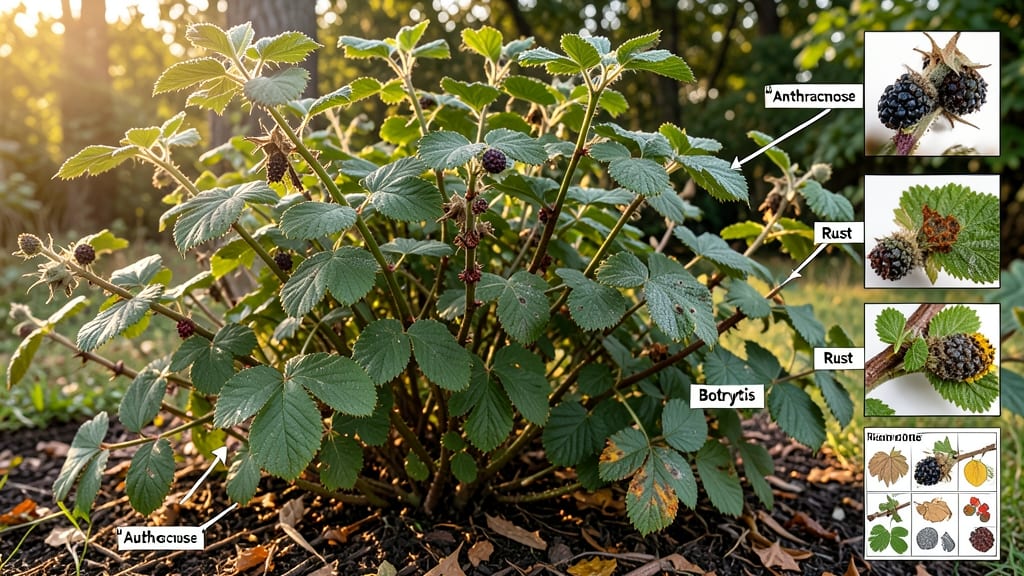
Blackberry bush diseases with pictures can turn your thriving brambles into a shadow of themselves—unless you catch them early. 🌿 I’ve spent years watching cankers spread like dark stains on stems or leaves curl into crispy messes, and I’ve learned which organic fixes actually work (spoiler: copper spray isn’t the only answer).
The worst offenders—like anthracnose or botrytis blight—start with tiny spots that multiply when humidity hangs in the air. Pruning out infected canes in late winter (before buds swell) stops them from spreading, but you’ll also need to adjust how you water and space your plants.
The goal? Keep airflow moving so moisture doesn’t turn into a disease buffet.
By the time you see rust-colored spores or blackened cankers, it’s too late for quick fixes. But with the right mix of pruning, fungicides, and cultural tweaks, you’ll save next year’s crop—and maybe even get those berries back before summer’s over.
This guide shows you exactly what to look for, step by step. No more guessing whether that spot is harmless or a death sentence for your bushes.
Root Causes of Blackberry Ailments
Understanding why blackberry bushes fall prey to diseases is the first step in preventing them. These issues often stem from a mix of environmental stress, microbial invaders, and poor cultural practices. Let’s break down the key culprits and why they wreak havoc on your berry bushes.
Fungal diseases like anthracnose and powdery mildew thrive when blackberry bushes are kept too wet. Here’s why:
- Excess Moisture: Blackberries love well-drained soil, but standing water or overhead irrigation creates the perfect breeding ground for fungi.
Spores splash onto leaves and cankers, leading to infections. - Poor Air Circulation: Dense foliage or crowded canes trap humidity, slowing evaporation and promoting fungal spread. - Temperature Fluctuations: Cool, damp mornings followed by warm afternoons mimic the ideal conditions for fungal spores to germinate and infect plant tissues.
Actionable Fix: Space canes properly (3–4 feet apart) and water at the base—never the leaves—to keep the environment less hospitable for fungi.
Insects like Japanese beetles, spider mites, and thrips don’t just eat blackberry leaves—they create entry points for diseases. Here’s how:
- Physical Injury: Chewing insects tear open plant tissues, allowing bacteria and fungi to invade.
For example, blackberry rosette virus spreads via aphids feeding on infected plants. - Sap Feeding: Pests like mites suck plant juices, weakening the bush’s immune response and making it more susceptible to secondary infections. - Honeydew Buildup: Some pests (e.g., aphids) excrete sticky honeydew, which attracts sooty mold—a fungal growth that smothers leaves and blocks sunlight.
Actionable Fix: Use neem oil or insecticidal soap to control pests early, and prune damaged canes to remove breeding grounds.
Blackberries are hardy, but sudden temperature swings or harsh conditions stress them out, leaving them vulnerable to disease:
- Late Spring Frosts: New growth is especially sensitive.
Frost damage can kill emerging leaves, creating wounds where pathogens like bacterial canker can take hold. - Heat Stress: Prolonged heatwaves (above 90°F) weaken cell walls, making plants more prone to fruit rot and leaf spot diseases. - Poor Soil Drainage: Waterlogged soil from heavy rains or clay soil cuts off oxygen, leading to root rot (often caused by Phytophthora fungi).
Actionable Fix: Mulch with straw to regulate soil temperature, choose frost-resistant varieties, and test soil drainage before planting.
Imbalances in soil nutrients can cripple a blackberry bush’s defenses:
- Nitrogen Excess: Too much nitrogen promotes lush, soft growth that’s prone to fungal infections like powdery mildew.
- Potassium Deficiency: Low potassium weakens cell walls, making plants more susceptible to bacterial diseases.
- Micronutrient Imbalance: Lack of magnesium (a key player in chlorophyll) or zinc can stunt growth, leaving bushes vulnerable to stress-related diseases.
Actionable Fix: Conduct a soil test every 2–3 years and amend with compost or balanced organic fertilizer (10-10-10) to avoid extremes.
Blackberries need regular maintenance, but improper pruning or neglect can invite diseases:
- Dead or Diseased Canes Left Behind: Old, infected canes harbor pathogens like blackberry rust and botrytis blight, spreading spores to healthy growth.
- Overcrowding: Too many canes compete for resources, reducing airflow and increasing humidity—ideal for fungal growth.
- Dirty Tools: Pruners contaminated with old sap or spores can transfer diseases between cuts.
Actionable Fix: Sterilize tools with rubbing alcohol, prune in late winter (before new growth), and remove all debris from the bed.
Sometimes, the problem starts below the surface:
- Old Plant Debris: Leaving last year’s blackberry leaves or fruit on the ground can harbor overwintering fungi like Botrytis.
- Irrigation Water: Using untreated water from ponds or streams may introduce bacterial leaf spot or powdery mildew spores.
- Compost Contamination: Fresh manure or improperly composted materials can introduce harmful pathogens to the soil.
Actionable Fix: Practice crop rotation (avoid planting berries in the same spot yearly) and use sterilized compost or well-aged manure.
Quick Fixes for Blackberry Bush Ailments
When your blackberry bushes show signs of distress, acting fast can mean the difference between saving your harvest and losing the plant entirely. Below are practical, organic solutions tailored to each common disease, along with prevention tips to keep your bushes thriving. No harsh chemicals—just nature’s remedies and smart gardening!
Fungal diseases like powdery mildew (white powdery patches) and anthracnose (dark spots on leaves/berries) thrive in damp, shady conditions. Here’s how to combat them:
🔥 Treat Powdery Mildew
- Prune for Airflow 🌬️
- Remove crowded or diseased canes to improve circulation. Thin out branches so sunlight reaches the center of the bush.
- Pro Tip: 💡 Prune in early morning when humidity is lower to avoid spreading spores.
- Neem Oil Spray 🌿
- Mix 1 tbsp neem oil + 1 tsp mild soap + 1 quart water in a spray bottle.
- Apply every 7–10 days until symptoms fade. Neem disrupts fungal growth without harming bees.
- Baking Soda Solution 🧂
- Stir 1 tbsp baking soda + 1 tsp oil + 1 quart water. Spray directly on leaves (avoid berries).
- Why it works: Raises leaf pH, making it inhospitable for fungi.
🍳 Stopping Anthracnose Spread
- Remove Infected Parts ❌
- Snip off spotted leaves or canes and dispose of them in the trash (not compost). Fungi survive in organic matter!
- Copper Fungicide (Organic Option) 🛡️
- Use a copper-based spray (like CuFix) before symptoms appear in spring. Reapply after rain.
- Improve Drainage 💧
- Ensure the soil isn’t soggy. Amend with compost or perlite if drainage is poor.
Bacterial diseases (like cane blight or berry rot) cause oozing lesions and mushy fruit. These are trickier but beatable:
👨🍳 Treating Cane Blight
- Sterilize Pruners ⚗️
- Wipe blades with rubbing alcohol between cuts to prevent spreading bacteria.
- Hydrogen Peroxide Spray 🧪
- Mix 1 tbsp 3% hydrogen peroxide + 1 quart water. Spray every 5 days until new growth appears.
- Plant Resistant Varieties 🌱
- Swap susceptible types (like ‘Triple Crown’) for disease-resistant blackberries like ‘Chester’ or ‘Natchez’.
🥘 Preventing Fruit Rot
- Thin Canes Early 🌿
- Remove weak or crossing canes in late winter to reduce humidity in the bush.
- Post-Harvest Cleanup 🧹
- Rake up fallen berries and debris immediately—they harbor bacteria.
- Companion Planting 🌸
- Interplant with garlic or chives (natural antibacterials) to deter pathogens.
Sometimes, pests or poor soil invite diseases. Here’s how to tackle them:
🔪 Controlling Spider Mites 🕷️
- Blast Off with Water 💦
- Spray bushes with a strong hose stream to knock off mites (do this early morning).
- Insecticidal Soap 🧼
- Use 1 tbsp castile soap + 1 quart water. Spray every 3–4 days until mites vanish.
⏰ Reviving Root Rot
- Drainage Overhaul 🚧
- Dig a moat around the bush to divert excess water. Add gravel or sand to heavy soil.
- Beneficial Fungi 🍄
- Apply mycorrhizal fungi (like MycoApply) to help roots recover.
- 💡 Space Plants Properly: Give bushes 4–6 feet apart for airflow.
- ✨ Mulch Smartly: Use straw or wood chips (not thick layers) to retain moisture without suffocating roots.
- 🎯 Rotate Crops: Avoid planting blackberries in the same spot every year (wait 3+ years).
- 🔥 Solarize Soil (Advanced): Cover beds with clear plastic for 4–6 weeks in summer to kill pathogens.
Final Reminder: 🌱 Act fast—most fungal/bacterial issues are easier to treat in early stages. With these fixes, your blackberry bushes will bounce back stronger than ever!
Frequently asked questions
What are the most common signs of blackberry diseases I should watch for?
Look for dark spots on leaves (anthracnose), powdery white patches (mildew), or oozing cankers on stems (bacterial infections). Berries may develop moldy gray rot or rust-colored pustules. Check undersides of leaves too—many fungal spores hide there until they spread.
Can I still save my blackberries if they already have fruit rot?
Remove all infected berries immediately to stop the spread. For mild cases, pick healthy berries first and destroy the rotten ones. If the infection is severe, prune affected canes and apply copper fungicide to prevent further damage. Next year, choose disease-resistant varieties like 'Chester' or 'Natchez'.
How do I know if my blackberry bush has spider mites or just dry leaves?
Spider mites leave tiny yellow stippling on leaves (visible with a magnifying glass) and fine webbing in leaf crevices. Dry leaves usually turn uniformly brown. Tap leaves over white paper—moving specks confirm mites. Treat with neem oil or insecticidal soap if confirmed.
Is it safe to compost blackberry leaves with fungal diseases?
No, never compost diseased plant material. Fungal spores survive composting and can reinfect your garden. Instead, bag infected leaves in plastic trash bags and dispose of them in yard waste. Burn them if possible, or bury deep in your compost pile with high heat (above 140°F) for at least 3 months.
When is the best time to prune diseased blackberry canes?
Prune in late winter (just before buds swell) to remove infected canes before new growth begins. Sterilize pruners with rubbing alcohol between cuts. Avoid pruning during wet weather—spores spread more easily when humidity is high. Always dispose of diseased canes in the trash, not your compost.