
Pruning
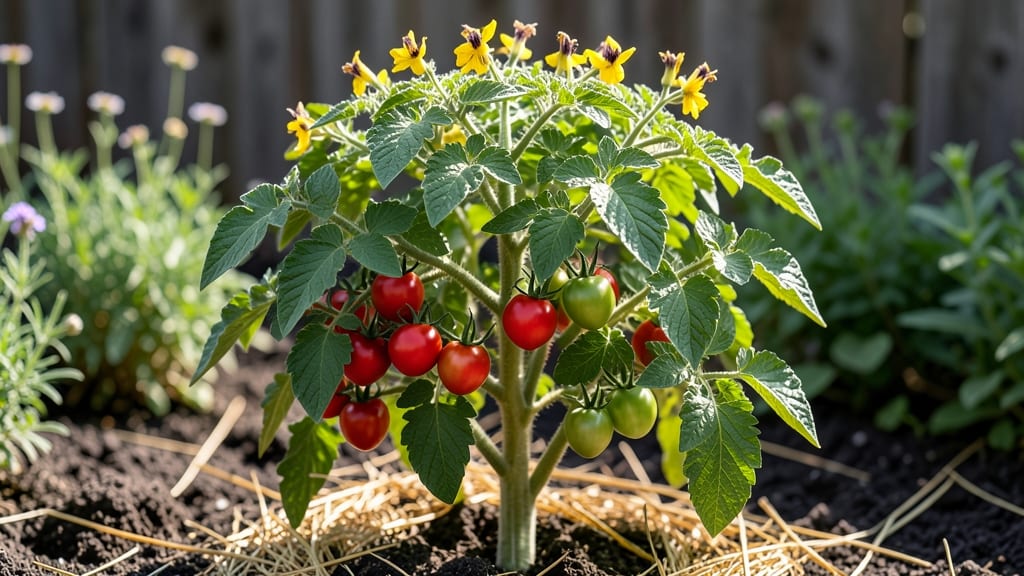
Compact bush tomatoes don't have to mean small harvests. 🌱 The secret to better bush tomato size lies in pruning at the right time and in the right places—something that transformed my backyard from scraggly plants to productive, manageable bushes last summer.
Start with the right variety—bush tomatoes like 'Tiny Tim' or 'Patio Princess' are bred for compact growth, but even indeterminate types can be shaped with pruning.
The key is timing: pinch off suckers (those little shoots between the stem and branches) when they're 1-2 inches long, and trim back leggy growth to encourage bushier, sturdier plants. Too much pruning too late? You'll stunt fruit production.
With proper spacing (18-24 inches apart) and a sturdy cage or stake, your plants stay upright and strong. Feed lightly with a balanced fertilizer—too much nitrogen leads to leafy monsters with few tomatoes.
Within weeks, you'll see thicker stems, more branches, and clusters of plumper, sweeter fruit than you'd expect from "bush" varieties.
Even experienced gardeners over-prune or ignore spacing—both mistakes lead to weak plants. Focus on 3-4 main stems per plant, and always prune in the morning when the plant is hydrated. The payoff? A tidy, high-yielding bush that's easier to maintain than its sprawling cousins.
📚 In This Guide
- What you need
- Instructions
- Tips and common mistakes
- Wrapping up and next steps
What you need
- ● Bush tomato plants: Choose compact varieties like 'Tiny Tim,' 'Patio,' or 'Bush Early Girl' (3-5 plants per container or 1-2 plants per 12-inch pot).
- ● Well-draining potting mix: 10-15 gallons of high-quality, organic mix (e.g., 60% peat moss, 30% perlite, 10% compost).
- ● Containers or garden bed: For containers: 5-gallon pots or larger (minimum 12" diameter/depth per plant).
- ● For in-ground: Full sun (6+ hours/day) and loose, fertile soil (pH 6.0-6.8).
- ● Pruning shears: Sharp, bypass-style shears (sterilized with rubbing alcohol).
- ● Garden gloves: Lightweight, breathable pair to protect hands.
- ○ Stakes or cages: 2-3 ft tall (optional but recommended for support).
- ● Fertilizer: Balanced, water-soluble fertilizer (10-10-10 or tomato-specific, diluted to half-strength).
- ● Pruning spray: 70% isopropyl alcohol or copper fungicide to prevent disease.
- ● Mulch: Straw or shredded leaves to retain moisture and suppress weeds.
- ● Grow lights: LED full-spectrum lights (for indoor setups, 12-16 hours/day).
- ● pH test kit: To monitor soil acidity (aim for 6.0-6.8).
- ● Tomato cages with ties: For easier pruning access.
Step-by-step pruning guide for compact bush tomatoes
Here’s how I transform leggy tomato plants into sturdy, high-yielding bushes—without sacrificing flavor or health.
✂️ Step 1: Identify and Remove Suckers Early
Suckers are the small shoots that form in the V-shaped junction between the main stem and branches. Pinch them off when they’re no bigger than a pencil eraser—this is when they’re easiest to remove without damaging the plant. I use my thumb and forefinger to snap them cleanly, avoiding any lingering stubs that could rot.
Wait until the plant has 3-4 main stems before starting. These stems should be 12-18 inches tall and spaced evenly up the main trunk. If you prune too early, the plant won’t have enough energy to support the remaining branches. Watch for new suckers every 5-7 days—they grow fast in warm weather.
✂️ Step 2: Prune for Airflow and Light Penetration
Once the plant reaches 4-5 feet tall, focus on creating an open, bushy structure. Remove any branches growing inward or crossing each other—they’ll compete for sunlight and spread disease. Use clean, sharp pruners to make cuts just above a leaf node or outward-facing leaf.
Leave 3-4 main stems and trim side branches to 12-18 inches long. This encourages the plant to put energy into fruit production rather than excessive foliage. You’ll see a denser canopy with fewer gaps where pests or fungal spores can hide. Prune on a dry morning to reduce the risk of infection.
☀️ Step 3: Balance Growth and Fruit Production
When flowers appear, shift your focus to preserving fruit-bearing branches. Remove any leaves below the first 12 inches of the plant—these block light and air from reaching lower fruits. Trim leaves that shade clusters, but leave 2-3 leaves per stem above each fruit cluster to support photosynthesis.
Stop pruning once the plant hits 5-6 feet tall or when flowers appear in the upper third of the plant. Over-pruning at this stage can reduce yields. Watch for yellowing leaves or stunted growth—these are signs you’ve removed too much foliage. A healthy bush tomato should have a mix of green leaves and fruit clusters at every level.
⏰ Step 4: Late-Season Maintenance for Longer Harvests
As the season progresses, prune aggressively to remove diseased or yellowing leaves. Cut back any branches that have finished fruiting to redirect energy to new growth. In late summer, trim the plant back by 1/3 of its height to stimulate a final flush of flowers and fruit.
This final pruning works best when temperatures drop below 85°F. Avoid heavy pruning during heatwaves—plants struggle to recover when stressed. You’ll see new shoots emerge within 10-14 days, followed by a second wave of tomatoes. Keep an eye out for green shoulders on nearly ripe fruit—these indicate the plant is still putting energy into growth.
🌿 Step 5: Post-Harvest Cleanup
After the last harvest, trim the plant back to 6-12 inches tall to make cleanup easier. Remove all remaining fruit, even if it’s small or underripe—this prevents disease and pests from overwintering in the garden. Dispose of pruned material in the trash, not the compost, to avoid spreading fungal spores.
Disinfect your pruners with a 10% bleach solution (1 part bleach to 9 parts water) before storing them for next season. This simple step saves you from dealing with bacterial or fungal issues in future plantings. A well-pruned tomato plant will reward you with 30-50% more fruit and a tidier, more manageable bush.
Tips & tricks for perfect compact tomato bushes
Transforming leggy tomato plants into productive, compact bushes takes precision—and these pro tips will help you avoid common pitfalls while maximizing fruit production.
Timing is Everything: The 5-7 day window between sucker appearances is critical. I check my plants every 3-4 days during warm spells (above 75°F) to catch suckers at that pencil-eraser size. Larger suckers require more aggressive pruning and can stress the plant. Use a small notebook to track your last pruning date—this keeps you consistent.
Tool Selection Matters: Never use dull pruners—they crush stems and invite infection. Invest in bypass pruners with sharp blades and clean them with rubbing alcohol between cuts. For suckers, my thumb-and-finger technique works best, but for thicker branches, I use pruners to make clean cuts just above leaf nodes. This promotes faster healing and reduces disease risk.
Environmental Awareness: The 85°F temperature threshold for late-season pruning isn't arbitrary—it's when tomato plants recover most efficiently. If your summer stays consistently above this, wait until evening hours when temps dip naturally. Humidity also plays a role: prune on mornings when dew has dried but before midday heat sets in. This minimizes stress on the plant.
Visual Cues for Pruning: Healthy tomato plants have a balanced look with 3-4 main stems and side branches that form a natural pyramid shape. When pruning, aim for 12-18 inch side branches—this creates the ideal balance between sunlight exposure and fruit production. Look for branches that grow outward rather than inward; these will produce more accessible fruit and better air circulation.
Pro Tips for Better Bush Tomato Size
- Transforming leggy tomato plants into productive, compact bushes takes precision—and these pro tips will help you avoid common pitfalls while maximizing fruit production.
- Timing is Everything: The 5-7 day window between sucker appearances is critical.
- Tool Selection Matters: Never use dull pruners—they crush stems and invite infection.
Frequently asked questions
Got questions about growing bush tomatoes with perfect size and yield? You’re not alone! Here are answers to the most common queries to help you master compact growth and maximize your harvest.
How often should I prune bush tomatoes for better size?
Prune bush tomatoes lightly every 1-2 weeks during the growing season (spring to early fall). Focus on removing suckers (side shoots) and lower leaves to redirect energy to fruit production. Avoid over-pruning—just 10-20% of foliage at a time keeps plants healthy and compact.
When is the best time of day to prune bush tomatoes?
Prune in the early morning when temperatures are cool (below 75°F/24°C). This reduces stress on plants and prevents sunscald on exposed stems. Avoid pruning in the heat of the day—it can shock the plant and slow recovery.
Will pruning bush tomatoes actually make them bigger or just more compact?
Pruning doesn’t increase fruit size directly, but it optimizes growth by improving airflow, reducing disease, and focusing energy on fewer, larger fruits. For bigger tomatoes, pair pruning with balanced fertilization (high in potassium and phosphorus) and proper watering.
Can I use the same pruning techniques for both bush and indeterminate tomatoes?
No! Bush tomatoes are self-contained and don’t need heavy pruning like indeterminate varieties. For bush tomatoes, stick to light suckering and leaf removal. Indeterminate tomatoes benefit from regular top pruning to control height and improve fruit access.
What should I do if my bush tomatoes stop growing after pruning?
If growth stalls, check for over-pruning, pests, or nutrient deficiencies. Apply a balanced fertilizer (10-10-10) and ensure consistent watering (1-1.5 inches per week). If yellowing leaves appear, test soil pH—bush tomatoes thrive in 6.0-6.8 pH. A light trim of dead leaves can also encourage new growth.
Pro Tip:
Use sharp, sterilized pruners (or clean scissors) to avoid damaging stems. Dip cuts in cinnamon powder or copper fungicide to prevent infections—especially in humid climates!
Wrapping up and next steps
Growing bush tomatoes with optimal size and yield is totally within your reach—just a little pruning and patience go a long way! 🌱 By mastering the techniques shared here, you’ll enjoy bigger, healthier plants and a bountiful harvest.
Start small, stay consistent, and soon you’ll be the proud gardener of perfectly sized bush tomatoes.
Ready to take the next step? Grab your pruners and give it a try! If you’re new to gardening, why not share your progress with fellow gardeners for extra tips and motivation? Happy growing! 🌟