
Planting
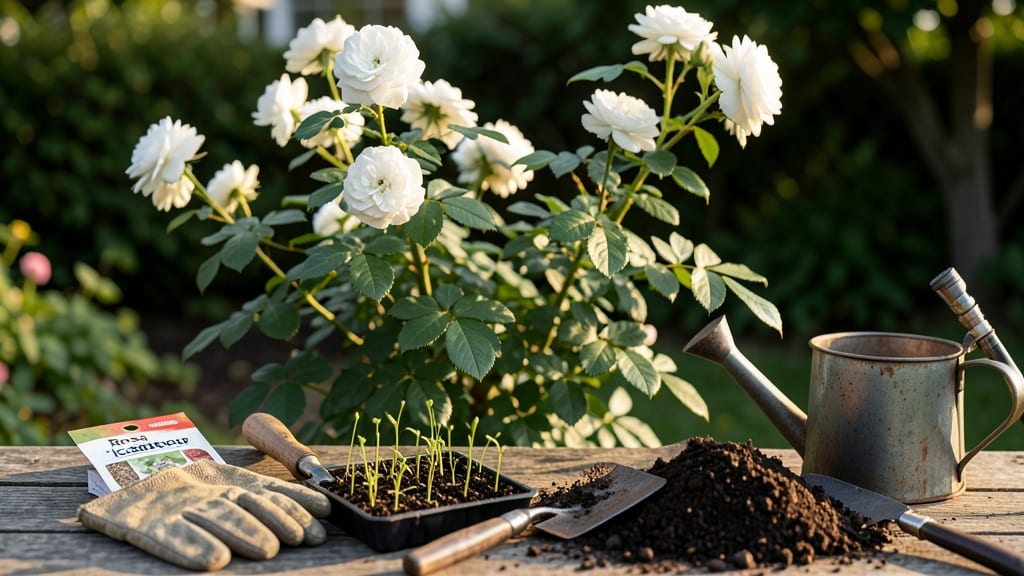
Growing white rose bush seeds unlocks the sweetest reward: fragrant blooms that transform your yard into a romantic escape. 🌹 I learned the hard way that patience is key—these seeds need 6-8 weeks of cozy soil before they even peek through, but the wait pays off with disease-resistant bushes that thrive for years.
The secret starts with selecting seeds from heirloom varieties, which hold their scent and color better than hybrids.
Your first step is creating the perfect environment: a mix of 50% compost and 50% perlite keeps roots happy while preventing rot. Plant seeds just ¼-inch deep in small pots, keep them in 70-75°F soil, and mist daily—no overhead watering!
Within 2-3 weeks, you’ll spot those first tiny leaves, signaling it’s time to move seedlings to brighter light. The real magic happens when you transplant them outdoors after the last frost, where they’ll reward you with first blooms in 1-2 years.
📚 In This Guide
- What you need
- Instructions
- Tips and common mistakes
- Wrapping up and next steps
What you need
- ● White rose bush seeds: Choose high-quality, non-hybrid seeds (hybrids often don’t grow true from seed). Aim for 10–20 seeds if you want multiple plants.
- ● Seed-starting trays or small pots: Use biodegradable or plastic trays with drainage holes (2–3 inches deep). For individual pots, 3–4 inch diameter works best.
- ● Seed-starting mix: A lightweight, sterile potting mix (avoid garden soil—it’s too dense). Look for a blend labeled for seedlings.
- ● Grow lights or sunny windowsill: Roses need 6–8 hours of light daily. A full-spectrum LED grow light (or a south-facing window) is ideal.
- ● Spray bottle: For gentle watering to keep seeds moist without disturbing them.
- ○ Plastic wrap or humidity dome: Helps retain moisture while seeds germinate (optional but recommended for beginners).
- ● Plant labels & marker: Track varieties—rose seedlings look very similar early on!
- ● Heating mat: Speeds up germination (keep soil at 70–75°F).
- ● Fertilizer (diluted): A balanced, water-soluble fertilizer (e.g., 10-10-10) can be added 2–3 weeks after sprouting.
- ● Pruning shears: For trimming leggy seedlings later.
- ● Outdoor hardening-off supplies: If transplanting outside, have shade cloth and stakes ready.
How to cultivate white rose bushes from seeds to fragrant blooms
Here's the method I've perfected over seasons—turning delicate seeds into robust, fragrant bushes.
🌱 Step 1: Stratify Seeds for Successful Germination
White rose seeds need cold stratification to break dormancy. Place seeds in a paper towel lightly moistened with water, then fold and seal in a plastic bag. Store in your refrigerator's crisper drawer for 6-8 weeks—this mimics winter's natural chilling period. Check weekly to ensure the towel stays damp but not soggy.
After the stratification period, you'll notice the seeds begin to swell slightly. This is your signal they're ready for planting. I like to label the bag with the date to track the timing precisely. Skipping this step results in poor or uneven germination, so don't rush this process.
🌱 Step 2: Sow in Light, Well-Draining Soil Mix
Use a sterile seed-starting mix in 4-inch pots—white roses dislike compacted soil. Fill each pot to 1 inch below the rim, then press gently to settle. Plant 2-3 seeds per pot at a depth of ¼ inch, just below the surface. Cover lightly with additional mix to protect the seeds from drying out.
Moisten the soil with a spray bottle until it's evenly damp but not waterlogged. Place the pots in a humidity dome or cover with plastic wrap to retain moisture. Keep them in a warm location (70-75°F)—a seedling heat mat helps maintain consistent warmth. Germination typically takes 3-6 weeks, so patience is key.
☀️ Step 3: Provide Gentle Light and Prevent Leggy Growth
Once seedlings emerge, remove the humidity dome immediately to prevent damping-off. Place them under bright, indirect light for the first week—direct sun can scorch tender new leaves. After a week, gradually introduce morning sunlight for 2-3 hours daily, increasing exposure by 1 hour each week until they tolerate full sun (6+ hours).
Watch for leggy growth—thin, pale stems reaching toward the light. This happens when seedlings don't get enough light. If you see this, move the pots within 2 inches of a south-facing window or install a grow light (12-14 hours daily). Strong seedlings have deep green leaves and compact stems—this is your goal.
🪴 Step 4: Transplant and Harden Off Before Outdoor Planting
When seedlings develop 3-4 sets of true leaves (about 8-12 weeks after sowing), they're ready to transplant. Choose a partially shaded spot for the first few days outdoors. Dig holes twice as wide as the root ball but only as deep—planting too deep can suffocate the roots. Space plants 3-4 feet apart to allow for future growth.
Harden off seedlings over 2 weeks by gradually increasing outdoor time. Start with 1 hour in shade, then 2 hours in morning sun, and finally full sun exposure. Water deeply every 2-3 days—white roses are drought-tolerant once established, but young plants need consistent moisture. Mulch around the base with 2 inches of organic mulch to retain soil moisture.
✂️ Step 5: Prune and Support for Healthy Blooms
After the first growing season, prune in early spring to encourage bushier growth. Cut back dead or weak stems to just above a healthy bud, and trim any crossing branches. White roses benefit from staking or trellising—install supports 6-8 inches deep to anchor them securely. This prevents wind damage and keeps stems upright for better airflow.
Fertilize lightly in early spring and mid-summer with a balanced rose fertilizer (10-10-10). Over-fertilizing leads to lush foliage but fewer blooms—stick to the recommended dosage. Deadhead spent blooms regularly to redirect energy into new flowers. With proper care, your white rose bushes will reward you with fragrant blooms by their second or third year.
Tips & tricks for perfect white rose bush cultivation
These gardening secrets will help you transform delicate seeds into fragrant, thriving white rose bushes.
Stratification Precision: The 6-8 week cold stratification period is non-negotiable for white rose seeds. I've found that placing the sealed bag on a wire rack inside the refrigerator's crisper drawer prevents moisture buildup at the bottom while maintaining consistent 35-40°F temperatures. Check weekly by gently squeezing the paper towel—it should feel like a wrung-out sponge, not dripping wet. This mimics nature's winter chilling cycle that breaks seed dormancy.
Light Management Secret: During the critical first week after germination, position your seedlings within 12 inches of a south-facing window for bright, indirect light. I use a sheer curtain to diffuse harsh afternoon sun that can scorch tender leaves. For grow lights, LED full-spectrum bulbs provide the ideal 12-14 hour daily cycle mentioned in Step 3. Watch for leggy growth—this tells you to either move closer to the light source or increase light duration by 1 hour increments weekly.
Transplanting Technique: When your seedlings reach the 3-4 sets of true leaves stage (typically 8-12 weeks), use a small trowel to gently loosen the root ball before transferring to outdoor soil. The "twice as wide but same depth" rule in Step 4 is crucial—white roses develop shallow root systems that can suffocate if buried too deep. I like to create a small trench around each plant after transplanting to guide water directly to the roots during the critical 2-week hardening off period.
Pruning Insight: Early spring pruning in Step 5 should focus on removing dead wood first, then thinning out crowded stems to improve airflow. The "just above a healthy bud" cut angle creates stronger regrowth points. For trellising, I recommend installing supports at a 45-degree angle rather than vertical to encourage natural bush growth patterns. This also prevents wind damage by distributing weight more evenly.
Pro Tips for White Rose Bush Seeds
- These gardening secrets will help you transform delicate seeds into fragrant, thriving white rose bushes.
- Stratification Precision: The 6-8 week cold stratification period is non-negotiable for white rose seeds.
- Light Management Secret: During the critical first week after germination, position your seedlings within 12 inches of a south-facing window for bright, indirect light.
Frequently asked questions
Got questions about growing white rose bushes from seeds? You’re not alone! Here are some of the most common queries—and their answers—to help you bloom with confidence.
When is the best time to plant white rose bush seeds?
For most climates, late winter or early spring (after the last frost) is ideal. Start seeds indoors 8–12 weeks before the last frost date for a head start. If planting outdoors directly, wait until soil temperatures reach at least 60°F (15°C)—cold soil can stunt germination. Pro tip: Use a seedling heat mat if your spring is chilly!
How long does it take for white rose bush seeds to germinate?
Germination can take 14–30 days, depending on temperature and moisture. Keep soil consistently damp (not soggy) and maintain warmth (70–75°F or 21–24°C). Patience is key! Some hybrid roses may take longer—check your seed packet for specifics. If nothing sprouts in 4 weeks, try re-wetting the soil or testing seed viability.
Can I grow white roses from seeds, or should I buy seedlings?
Yes, but expect variable results. Many white roses sold as seeds are heirloom or wild varieties (like ‘Iceberg’ or ‘Blanc Double de Coubert’), which may not match hybrid roses’ predictable blooms. Seedlings offer guaranteed traits (color, fragrance, disease resistance), but seeds are cheaper and more fun for experimentation! Start with seeds if you love surprises.
Why aren’t my white rose seeds sprouting? Troubleshooting tips.
Try these fixes if germination fails:
- Check moisture: Soil should feel like a damp sponge. Overwatering can suffocate seeds.
- Test seed viability: Soak seeds in water overnight—if they sink, they’re likely viable.
- Adjust temperature: Move trays to a warmer spot (e.g., near a sunny window or under grow lights).
- Scratch the seed coat: Some rose seeds have hard coats; gently sandpaper the outer layer to encourage cracking.
- Try stratification: Cold-moisten seeds in a fridge for 4–6 weeks to mimic winter conditions.
If all else fails, contact the seller—some seeds may be old or improperly stored.
How do I care for young white rose seedlings to ensure blooms?
Once sprouted, keep seedlings in bright, indirect light (12–16 hours/day) and avoid direct sun until they’re hardened off. Thin to 2–3 inches apart when they have 2–3 leaves. Harden off gradually (1–2 weeks) before transplanting. Feed with a balanced fertilizer (10-10-10) every 4–6 weeks in growing season. Pro tip: Deadhead spent blooms to encourage more flowers!
Wrapping up and next steps
Growing a white rose bush from seeds is a rewarding journey that brings beauty, fragrance, and a sense of accomplishment to your garden. With the right white rose bush seeds, patience, and care, you’ll enjoy stunning blooms that brighten up any space.
Whether you’re a seasoned gardener or just starting, every step—from choosing seeds to nurturing your plant—sets the stage for a thriving, fragrant garden.
Ready to turn your green thumb into a showstopper? Start by planting those seeds today! Watch as your efforts bloom into a breathtaking white rose bush that becomes the centerpiece of your outdoor haven. 🌸