
Shrubs
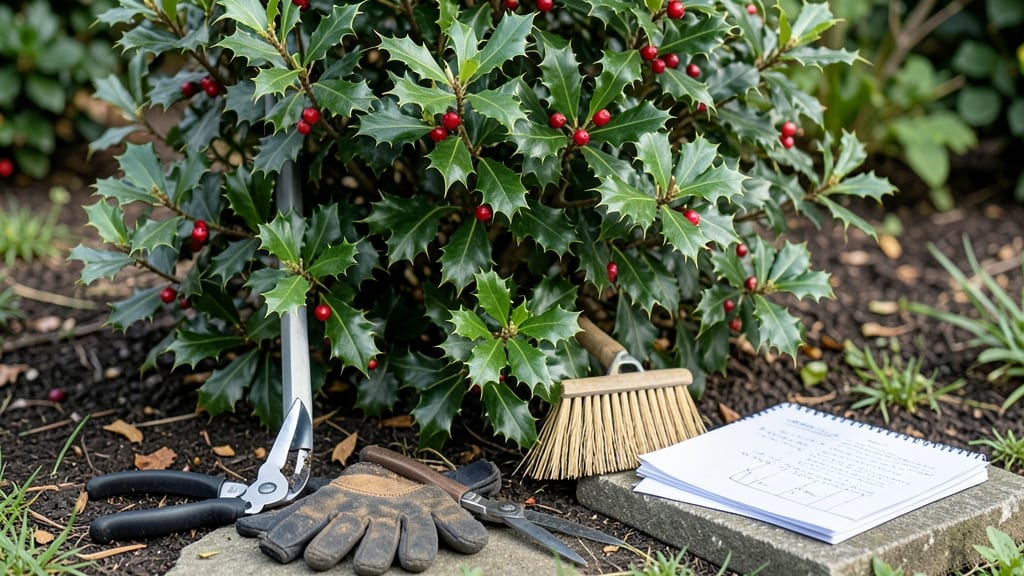
To cut holly bushes at the best time, do it in late winter or early spring before new growth starts, protecting flower buds and berry production. Light shaping can happen after flowering if needed.
Timing matters because holly bushes set flower buds in late winter, and cutting too early can remove next year's blooms. 🌿 The dormant season (December-February) is ideal because the plant isn't actively growing, reducing stress.
Avoid pruning in summer or fall—this disrupts berry development and weakens the shrub. For male and female varieties, focus on removing dead or crossing branches while preserving the natural shape.
If you're working with female holly bushes, be extra cautious—they produce berries that take nearly a year to mature. A light trim after flowering (late spring) helps maintain shape without sacrificing fruit.
For male bushes, which don't produce berries, you have more flexibility but still prioritize late winter pruning to encourage healthy new growth.
💡 In This Article
- Optimal Pruning Seasons for Holly Bushes
- Step-by-Step Guide to Pruning Holly for Health and Shape
Optimal pruning seasons for holly bushes
The best time to prune holly bushes aligns with their natural growth cycle, specifically during their dormant season when metabolic activity slows.
This occurs in late winter (December-February) or early spring (March) before the plant begins pushing new growth. 🌱 During dormancy, the plant conserves energy, making it less vulnerable to stress from pruning.
For example, English holly (Ilex aquifolium) sets its flower buds in late winter, so cutting too early risks removing next year's blooms entirely.
Pruning during dormancy also prevents disrupting the plant's berry production cycle, which begins after flowering in late spring. Female holly bushes need their flowers to develop into berries over nearly a full year, so any aggressive trimming after flowering can reduce or eliminate fruit.
The 12-18 month berry maturation process means summer or fall pruning can weaken the plant and leave it vulnerable to pests or disease. For instance, American holly (Ilex opaca) produces berries that take 15-18 months to ripen, so timing is critical.
What most gardeners don't realize is that holly bushes have a two-phase growth pattern: the first flush of growth in spring and a secondary growth spurt in late summer.
Pruning after the first growth phase (late spring) is only safe if you're doing minimal shaping—never more than 25% of the plant's foliage. This late-spring trim should focus on removing only dead, diseased, or crossing branches to avoid stressing the plant during its berry development phase.
Summer and fall pruning are particularly risky because they coincide with the plant's active growth and berry maturation. Cutting during these seasons can stimulate new growth that won't have time to harden off before winter, leaving tender shoots vulnerable to frost damage.
Additionally, summer pruning can reduce next year's flower buds by as much as 40%, according to horticultural studies, since flower buds form in late winter from the previous year's growth.
For male holly bushes, which don't produce berries, the window for pruning is slightly more flexible, but late winter remains ideal. These varieties can handle light shaping in early spring without the same reproductive risks.
However, even male hollies benefit from dormant-season pruning because it reduces disease pressure by improving airflow through the plant's canopy. The key is to never remove more than one-third of the plant's total foliage in any single pruning session.
Consider these seasonal risks when planning your holly maintenance:
- Late Winter/Early Spring: Ideal for 25-30% reduction of old wood, removes winter-damaged branches, minimal stress
- Late Spring: Only for light shaping (10% max), never after June 1st for female bushes
- Summer/Fall: Avoid completely—can delay dormancy and reduce winter hardiness
Pro tip: Mark your calendar for February 15th-March 15th as your holly pruning window. This gives you a 4-6 week period to complete pruning before new growth begins, ensuring you don't accidentally trim off next year's flowers or berries. 🌟