
Plants
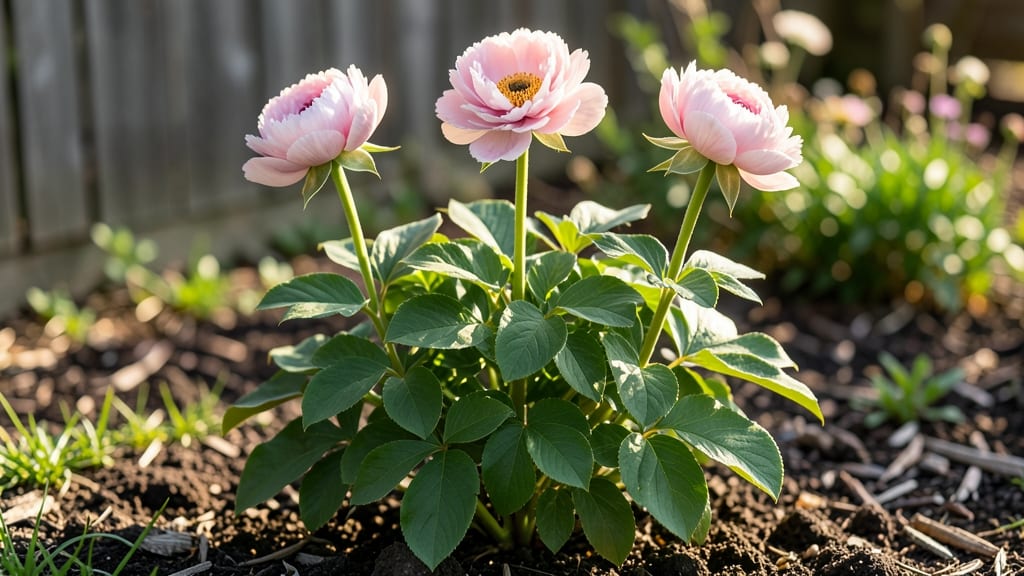
Peony bushes look like lush, clump-forming shrubs with bold, glossy green leaves and dramatic blooms in pink, red, white, or yellow. Their sturdy woody stems support large, fragrant flowers that grow 2-3 feet tall and wide, thriving in sunny garden spots.
Peonies are instantly recognizable by their ruffled, bowl-shaped blooms that can reach up to 6-8 inches wide, often with layers of petals in some varieties. 🌸 The leaves are another key identifier—deep green, lance-shaped with serrated edges, growing in clusters along thick stems.
Unlike many perennials, peonies have a distinctive woody base that persists year-round, especially in tree peony varieties, while herbaceous types die back to the ground in winter but regrow vigorously each spring.
The flowers themselves come in three main types: single (one layer of petals), semi-double (multiple layers), and Japanese (highly layered, almost rose-like). Color variations range from soft blush to deep magenta, with some rare cultivars even producing lavender or near-black blooms.
Their fragrance—often described as sweet and spicy—adds another sensory clue that distinguishes them from similar-looking flowers like roses or daylilies.
💡 In This Article
- Identifying Peony Leaves, Stems, and Flower Characteristics
- Peony Variety Visual Comparison Guide
Identifying peony leaves, stems, and flower characteristics
The leaves of peony bushes are a defining feature, with their lance-shaped form and deep green, glossy color that can reach 4-6 inches long. Each leaf is divided into 3-5 leaflets arranged alternately along the stem, creating a feathery appearance when viewed from above.
The edges have fine serrations, almost like tiny teeth, which help distinguish them from smoother-leaved plants. These leaves grow in clusters of 3-5 at each node, giving the bush a dense, layered look that's both ornamental and functional for photosynthesis.
The stems themselves are thick and woody, especially in tree peonies, with a rough, textured surface that feels slightly gritty to the touch. Herbaceous peonies have smooth, green stems that emerge fresh each spring from the crown, while tree peonies retain their brown, woody stems year-round.
This woody structure provides the plant with stability to support the heavy blooms, which can weigh up to 1 pound each when fully open! The stems also contain vascular bundles that transport water and nutrients efficiently, allowing peonies to thrive in both dry and moist conditions.
Peony flowers come in three primary structural types that affect their appearance: single (one layer of petals), semi-double (multiple layers), and Japanese (highly layered with a rose-like center).
Single blooms, like those of the 'Sarah Bernhardt' cultivar, have 5-7 petals radiating from a central cluster of stamens, creating an open, airy look.
Semi-double varieties, such as 'Bowl of Beauty', pack 15-25 petals in layers, while Japanese types like 'Koi Nodoki' can have 50+ petals with a dense, almost velvety texture. The petals themselves are papery-thin and often slightly waxy, giving them a delicate yet sturdy feel.
The blooming process is equally distinctive, beginning with buds that form in late spring and unfurling over 5-7 days in optimal conditions. Each flower head can grow to 6-8 inches wide, with petals that may curl slightly at the edges when fully mature.
The fragrance—often described as a mix of honey, spice, and citrus—reaches its peak intensity in the morning hours, when temperatures are cooler.
This scent is produced by volatile organic compounds in the petals that attract pollinators, though peonies are also prized for their ornamental value even in non-scented varieties.
Seasonal changes are another key identifier. Herbaceous peonies die back to the ground in late fall, leaving only their woody crowns visible, while tree peonies retain their foliage and stems year-round.
In autumn, the leaves of herbaceous types turn yellow-brown and crisp before falling, while tree peony leaves may persist until late winter in mild climates. This seasonal cycle helps gardeners distinguish between the two main types without needing to see flowers.
Consider these visual cues when identifying peonies in your garden:
- Leaves: Lance-shaped with serrated edges, 3-5 leaflets per stem, deep green and glossy
- Stems: Thick and woody (tree peonies) or smooth green (herbaceous), with rough texture in mature plants
- Flowers: 6-8 inches wide, single/semi-double/Japanese types, papery petals with spicy fragrance
- Seasonal: Herbaceous types die back in winter; tree peonies remain evergreen in foliage
These characteristics make peonies uniquely identifiable, even from a distance in a garden setting. Their combination of bold foliage, dramatic blooms, and seasonal behavior sets them apart from other perennials. 🌸