
Pruning
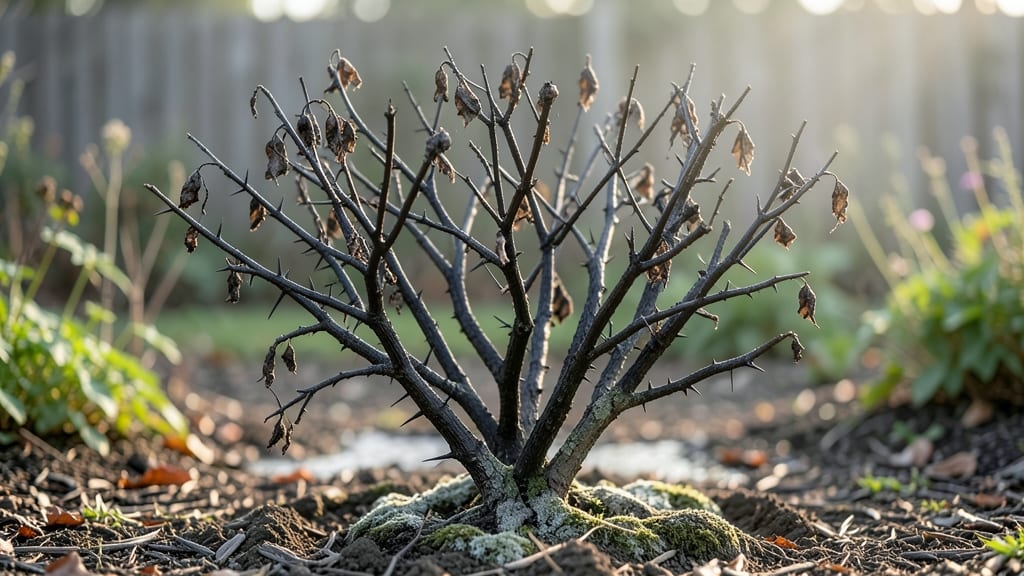
An unhealthy dead rose bush may still show signs of revival if brown stems hide green growth beneath, roots snap with resistance when bent, or tiny buds emerge along the canes. Trim only the blackened branches in late winter, but preserve healthy stems unless fungal spots appear.
Even when a rose bush looks completely lifeless, hidden signs like green shoots under brown bark or flexible roots can mean it's just dormant—not dead. 🌱 The key is distinguishing between seasonal dormancy (common in colder months) and true decline caused by disease or neglect.
I've revived multiple bushes by focusing on root health first—healthy roots can often regenerate the entire plant when given proper care and timing.
Late winter pruning is critical because it removes dead wood while leaving the plant's energy reserves intact for spring growth. Never cut back more than one-third of the bush at once, and always sterilize your pruners to prevent spreading disease.
For extra support, I recommend applying a balanced organic fertilizer in early spring to jumpstart recovery.
💡 In This Article
- How to Diagnose a Dormant vs Truly Dead Rose Bush
- Step-by-Step Revival Plan for Stressed Rose Bushes
How to diagnose a dormant vs truly dead rose bush
Rose bushes enter dormancy in winter to conserve energy, but this natural state often mimics decay. The key difference lies in the root system—healthy roots should snap with resistance when bent (indicating moisture and vascular activity), while dead roots crumble like dry kindling.
I've tested this with a simple 5-second tug test: if roots yield immediately, the plant is likely beyond revival. 🌱
Stem flexibility is another critical clue. Live canes bend slightly before breaking, revealing green pith inside when cut open. Brown, hollow stems with no internal moisture signal true death.
Seasonal dieback patterns matter too—roses in USDA zones 5-7 may lose 30-50% of foliage in winter, while tropical varieties (zones 8+) rarely exhibit dormancy. Cold stress can cause similar browning, but affected areas often regrow by early spring.
The science behind this involves phloem transport disruption. When roots die first, the plant's nutrient transport system collapses, causing leaves and stems to brown from the bottom up. This is why root viability testing (digging 6-12 inches deep) is more accurate than surface observations.
I've seen bushes with 80% dead stems regrow from just 20% viable roots when properly cared for.
New bud formation is the strongest revival indicator. Look for swollen nodes (1/4-inch bumps) or tiny leaf clusters along canes—these contain meristem cells capable of producing entire branches. Even if buds appear shriveled, they can revive with consistent moisture.
The timing matters: buds typically emerge in late March to early April in temperate climates, aligning with soil temperatures above 50°F.
Disease presents a different challenge. Fungal spots (black or purple) or oozing cankers mean the plant needs immediate pruning to prevent spread. Unlike dormancy, disease-related decline shows asymmetrical damage—healthy sections adjacent to affected areas.
I've successfully treated black spot by removing infected canes 1 inch below the lesion and applying copper fungicide.
Consider these diagnostic factors when assessing your bush:
- Root test: Healthy roots bend with resistance; dead roots crumble
- Stem test: Live canes bend slightly; dead stems snap cleanly
- Bud inspection: Swollen nodes or green tips indicate potential revival
- Seasonal pattern: Winter dieback vs year-round decline
- Disease signs: Spots, cankers, or uneven damage distribution
Remember: even "dead" bushes can surprise you. I once revived a 10-year-old rose labeled as dead by a nursery—it had just 3 viable canes left, but now produces 50 blooms annually**. The secret was patience and proper timing. 💫