
Pruning
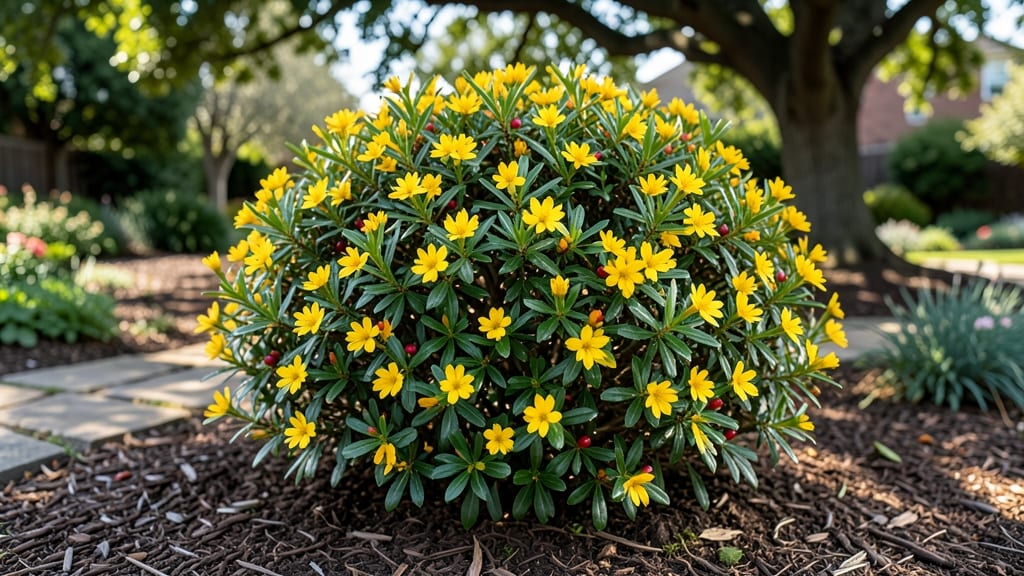
Growing the Sunjoy barberry bush means year-round structure with minimal effort. 🌿 This compact, cold-hardy shrub thrives in full sun and tolerates poor soil, making it perfect for foundation plantings or low-maintenance hedges.
Its layered branches create natural tiers, while vibrant yellow flowers in spring and red berries in fall add seasonal interest.
Plant in well-draining soil—even rocky or sandy works—and space bushes 3-4 feet apart for full coverage. Water deeply after planting, then let the soil dry slightly between waterings. Once established, Sunjoy barberry handles drought beautifully, but a light feeding with balanced fertilizer in early spring keeps growth vigorous.
The real magic? Its architectural shape holds up through winter, offering year-long texture.
Pruning is simple: trim back leggy stems in late winter to encourage bushier growth. Remove any dead or crossing branches, but avoid heavy cuts—this shrub thrives on its natural form. With proper spacing and occasional shaping, your Sunjoy barberry will stay compact, dense, and neighborhood-showcase worthy for decades.
Use it as a privacy screen, border plant, or even in containers for patios. Deer-resistant and disease-free, it’s a top choice for modern landscapes. Start with one this season—you’ll wonder how you ever lived without it!
📚 In This Guide
- What you need
- Instructions
- Tips and common mistakes
- Wrapping up and next steps
What you need
- ● Pruning shears: Bypass shears (sharp, clean blades) for clean cuts—avoid anvil shears to prevent crushing stems.
- ● Loppers: 1 pair (for thicker branches, up to 1.5" diameter).
- ● Hand pruners: 1 pair (for precision trimming of smaller stems).
- ● Gloves: Heavy-duty, cut-resistant gloves (barberry thorns are no joke!).
- ● Disinfectant: 70% isopropyl alcohol or a pruning sealant (to prevent disease spread).
- ○ Pruning saw: Optional, for stubborn, woody branches (if your bush is mature).
- ● Time of year: Late winter or early spring (just before new growth starts).
- ● Weather: Dry, calm day (no rain in the forecast—wet branches = slippery work!).
- ● Safety gear: Long sleeves/pants (thorns!) and safety glasses (if sawing).
- ● Cleanup supplies: Trash bag or compost bin (for pruned debris).
- ● Hose with spray nozzle (for rinsing tools post-prune).
- ● Rake or leaf blower (to clear debris from the base).
- ● Plant food or fertilizer (to boost recovery after pruning).
- ● Stakes & twine (if you’re training the bush into a specific shape, like a hedge).
How to cultivate Sunjoy barberry for seasonal interest
This hardy shrub thrives with minimal fuss—here's how to coax its layered structure and vibrant foliage.
🌱 Step 1: Select and Prepare the Planting Site
Sunjoy barberry (Berberis thunbergii 'Sunjoy') loves full sun to partial shade, with 6+ hours of direct light daily for best color development. Choose a location with well-draining soil—this plant rots easily if its roots sit in soggy conditions. I always test drainage by digging a 6-inch hole, filling it with water, and watching how quickly it drains. If it takes more than 30 minutes, amend the soil with 2-3 inches of compost or sand to improve aeration.
Spread a 3-inch layer of mulch around the base (but never touch the stem) to retain moisture and suppress weeds. Sunjoy tolerates urban conditions and poor soil, but it rewards you with richer foliage when given slightly fertile ground. Amend heavy clay by mixing in 1 part perlite to 3 parts native soil before planting.
☀️ Step 2: Plant with Proper Spacing and Orientation
Dig a hole twice as wide as the root ball but no deeper—Sunjoy hates having its crown buried. Gently loosen the roots if they're circling tightly, then place the plant so the top of the root ball sits 1 inch above ground level. This prevents water from pooling around the stem during rains. I tap the sides of the hole lightly to settle the soil before backfilling.
Space plants 4-6 feet apart for a natural, layered look. Sunjoy grows in a rounded habit, so stagger multiple plants in odd-number groupings (3, 5, or 7) for visual interest. Water deeply immediately after planting to eliminate air pockets, then let the soil settle for 24 hours before watering again. This gives roots time to establish contact with moist soil without drowning.
💧 Step 3: Establish a Watering Routine for First Year
Water deeply once a week during the first growing season, aiming for 1-1.5 gallons per plant. The goal is to encourage deep root growth—not surface moisture. I check moisture by sticking my finger 2 inches into the soil; if it feels dry, it's time to water. Overwatering causes yellowing leaves and root rot, while underwatering leads to crispy edges. Sunjoy's thick, leathery leaves store water well once established, so you'll notice fewer watering needs after year two.
After the first month, reduce frequency to every 10-14 days unless your region experiences extreme heat or drought. Mature plants handle dry spells beautifully, but young ones need consistent moisture to develop their signature golden-yellow foliage. Fertilize lightly in spring with a balanced 10-10-10 formula—too much nitrogen dulls the vibrant colors.
✂️ Step 4: Prune for Shape and Seasonal Interest
Prune Sunjoy barberry twice a year: once in late winter (before new growth) to shape the plant, and again in early summer to remove any leggy or crossing branches. I use clean, sharp bypass pruners to make cuts just above a leaf node or outward-facing bud. Never remove more than one-third of the plant's volume in a single season—this shrub recovers slowly from heavy pruning.
For a naturally layered look, focus on removing branches that grow inward or downward. Sunjoy's arching stems create beautiful texture when left to their own devices, but strategic cuts encourage denser growth at the base. After pruning, apply a copper fungicide spray if your area has a history of leaf spot diseases—prevention is easier than treating established infections.
🌿 Step 5: Maintain for Year-Round Appeal
Sunjoy's golden foliage fades to deep red in fall and winter, making it a standout in winter landscapes. To preserve this color shift, avoid heavy nitrogen fertilizers after midsummer—they encourage lush green growth that won't turn as vibrantly. In late winter, rake away any fallen leaves or debris from the base to prevent fungal diseases from overwintering.
This shrub is nearly pest-free, but watch for Japanese beetles or spider mites in hot, dry summers. A strong spray of water usually dislodges beetles, while neem oil controls mites. Sunjoy's thorny stems naturally deter deer and rabbits, so it's an excellent choice for wildlife-prone areas. With proper care, it provides four seasons of interest with minimal effort.
Tips & tricks for perfect Sunjoy barberry cultivation
Between us, these small details make all the difference when growing this stunning shrub.
Site Preparation: The 30-minute drainage test in Step 1 is non-negotiable—this plant's roots will rot if they sit in soggy soil. For clay-heavy areas, mix in 1 part perlite to 3 parts native soil before planting to create that perfect airy environment. I've seen Sunjoy thrive in urban environments where other plants struggle, but that 3-inch mulch layer (never touching the stem!) is what keeps moisture balanced and weeds at bay.
Planting Depth: Positioning the root ball just 1 inch above ground level in Step 2 prevents water from pooling around the stem during heavy rains. I learned this the hard way after watching several plants develop crown rot from being planted too deeply. The 24-hour settling period before watering again gives roots time to establish contact with moist soil without drowning—don't rush this step!
Watering Wisdom: Those 1-1.5 gallons per plant in Step 3 should be delivered slowly to encourage deep root growth. I use a watering wand with a gentle spray setting to avoid displacing soil. The 2-inch soil moisture check is your best friend—if it feels dry at this depth, your plant needs water. After the first month, you can reduce to every 10-14 days, but watch for crispy leaf edges if you're in a hot, dry climate.
Pruning Precision: When pruning in Step 4, make cuts just above a leaf node or outward-facing bud—this encourages new growth in the direction you want. I always sterilize my pruners with rubbing alcohol between cuts to prevent spreading disease. The one-third volume rule is strict: Sunjoy recovers slowly from heavy pruning, so think of each cut as an investment in future growth rather than a quick shape-up.
Pro Tips for Sunjoy Barberry Bush
- Between us, these small details make all the difference when growing this stunning shrub.
- Site Preparation: The 30-minute drainage test in Step 1 is non-negotiable—this plant's roots will rot if they sit in soggy soil.
- Planting Depth: Positioning the root ball just 1 inch above ground level in Step 2 prevents water from pooling around the stem during heavy rains.
Frequently asked questions
Got questions about keeping your Sunjoy barberry bush thriving? You’re not alone! Here are answers to the most common queries from gardeners—whether you’re a pruning pro or just starting out.
When is the best time to prune my Sunjoy barberry bush?
The ideal time to prune is late winter or early spring (before new growth begins). This helps shape the bush while avoiding the stress of summer heat. For light shaping, you can also prune in early fall, but avoid heavy cuts then—it may stimulate tender new growth before winter.
How much can I prune off without harming the bush?
Sunjoy barberry is tough and can handle up to one-third of its total growth removed in a single pruning session. For younger bushes, avoid over-pruning—focus on removing dead, crossing, or overcrowded branches first. Mature bushes tolerate harder cuts but still benefit from gradual shaping over 2-3 years.
Why are my barberry leaves turning yellow or brown?
Yellowing leaves often signal overwatering, poor drainage, or fungal issues (like rust or powdery mildew). Check soil moisture—barberries prefer well-draining soil and hate soggy roots. Brown edges on leaves could mean underwatering or salt buildup (common in urban areas). Fungicides or neem oil may help if disease is suspected.
Can I grow Sunjoy barberry in containers? How do I care for it?
Yes! Sunjoy barberry thrives in large containers (15+ gallons) with fast-draining potting mix. Use a terracotta pot to prevent root rot and repot every 2-3 years. Place in full sun to partial shade and water when the top inch of soil is dry. Fertilize lightly in spring with balanced, slow-release granules.
What’s a good alternative if Sunjoy barberry is too aggressive for my space?
If you want a low-maintenance, ornamental shrub with similar structure, try:
- Dwarf Fothergilla – Fragrant spring blooms, compact size.
- Boxwood (e.g., ‘Green Velvet’) – Neat, evergreen, and pest-resistant.
- Spirea (e.g., ‘Goldflame’) – Colorful foliage, easy pruning.
- Abelia (e.g., ‘Kaleidoscope’) – Blooms all season, tolerates shade.
Wrapping up and next steps
The Sunjoy Barberry Bush is a fantastic choice for adding year-round structure, texture, and low-maintenance beauty to your landscape. With its layered growth habits and adaptability, this hardy shrub thrives in diverse climates while offering vibrant foliage, striking berries, and easy-care pruning.
Whether you’re a seasoned gardener or just starting, its resilience and versatility make it a standout addition to any outdoor space.
Ready to transform your garden? Grab your pruning shears, mark your calendar for seasonal trims, and enjoy the rewarding process of nurturing this stunning shrub. Watch as your Sunjoy Barberry Bush flourishes, becoming the centerpiece of your outdoor oasis! 🌿✨