
Watering
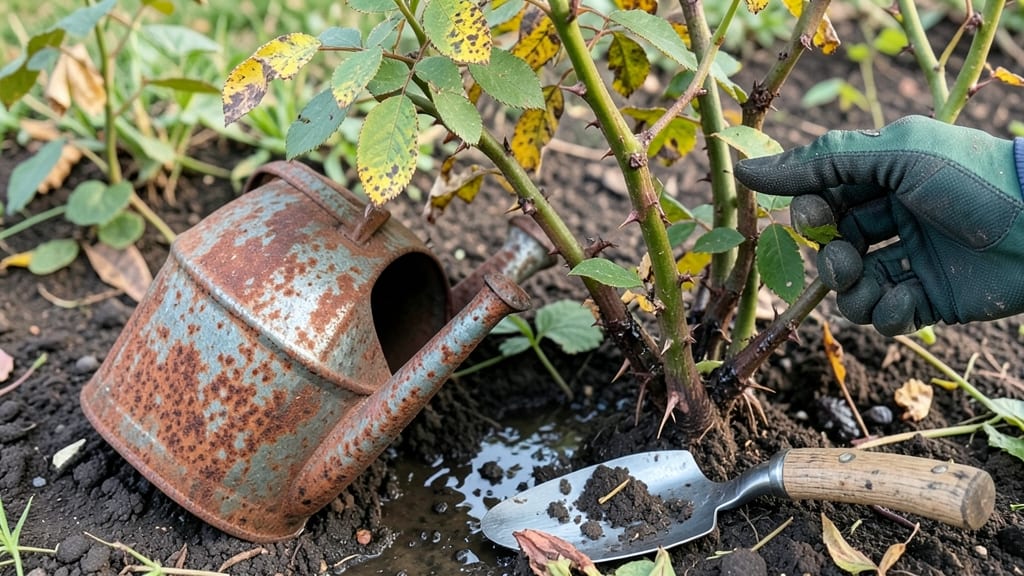
Your rose bush drowning in too much water? 🌱 The yellow leaves and wilting stems aren't a death sentence—just a cry for help. Overwatering chokes roots by cutting off oxygen, and roses hate soggy feet as much as you hate soggy shoes.
The first step is simple: stop watering immediately and let the soil dry out. Check drainage by digging down 2 inches—if it's still damp after 24 hours, you're overdoing it. Healthy rose soil should feel like a damp sponge, not a swamp.
Within a week, you'll see new green growth as roots recover. Add coarse sand or perlite to improve drainage, and consider a raised bed if your yard stays waterlogged. Prevention is easy: water only when the top inch of soil feels dry.
This method works for all rose types, from hybrid teas to shrub roses. Let's bring those blooms back to life!
Root Causes of Overwatered Roses
When your rose bush starts wilting despite your best efforts, the issue often lies beneath the soil—literally. Overwatering isn’t just about giving your plant too much H₂O; it’s a cascade of problems triggered by poor drainage, soil health, and even environmental factors.
Understanding these root causes helps you fix the issue before it’s too late. Here’s why your rose bush might be drowning in its own moisture.
Roses thrive in well-draining soil, but if your garden bed or containers lack proper aeration, water pools around the roots instead of seeping away. This creates an oxygen-deprived environment where roots suffocate, leading to root rot—a fungal infection that turns healthy roots mushy and brown.
Why it happens:
- Compacted soil: Heavy clay or tightly packed dirt traps water like a sponge, preventing excess moisture from escaping. Test this by digging a small hole—if water sits in it after 30 minutes, drainage is poor.
- Lack of organic matter: Soil high in sand or low in compost holds water poorly but also fails to retain essential nutrients. Roses need a balance of both.
- Improper container drainage: Pots without drainage holes act like bathtubs, drowning roots over time. Even "self-watering" containers can over-saturate if not monitored.
Actionable fix: Amend clay soil with perlite, coarse sand, or compost to improve aeration. For containers, use a mix of potting soil, perlite, and vermiculite (a 50/30/20 ratio works well). Always check for drainage holes—if none exist, drill them yourself!
Watering on a schedule without checking soil moisture is a common mistake. Roses need consistent moisture but not soggy conditions. Overwatering—whether from frequent light waterings or deep soakings—disrupts the plant’s natural rhythm.
Why it happens:
- Ignoring the "finger test": Stick your finger 1–2 inches into the soil. If it’s damp, wait before watering again. Many gardeners water based on time (e.g., "every Tuesday"), not the plant’s needs.
- Automatic irrigation gone wild: Sprinklers or drip systems set on timers can deliver more water than roses need, especially during rainy periods. Double-check your system’s settings!
- Small, frequent waterings: Light sprinkles encourage shallow root growth, making roses dependent on surface moisture. Deep, infrequent waterings (1–2 inches per week) encourage stronger roots.
Actionable fix:
- Water deeply 2–3 times per week (adjust for climate) rather than daily shallow sessions.
- Use a moisture meter or the finger test to guide watering.
- Water in the early morning to reduce evaporation and fungal risks.
Your rose bush isn’t just suffering from your watering—it might be battling the elements. Humidity, rainfall, and even shade can amplify overwatering problems by slowing evaporation and trapping moisture.
Why it happens:
- High humidity: Air saturated with moisture (common in summer or rainy seasons) prevents soil from drying out between waterings. Roots stay waterlogged longer, inviting rot.
- Shady spots: Roses need 6+ hours of sunlight to dry excess moisture. Shade slows evaporation, keeping the soil damp for days.
- Heavy rainfall: A sudden downpour can deliver more water than your roses need, especially if the soil is already moist. Mulch helps, but it’s not a substitute for proper drainage.
Actionable fix:
- Move potted roses to sunnier locations or prune nearby trees/shrubs blocking light.
- After heavy rain, check soil moisture before watering again.
- Use mulch (2–3 inches of wood chips or straw) to regulate soil temperature and reduce evaporation—but avoid piling it against the stem.
Overwatered roses are prime targets for fungal diseases like black spot, powdery mildew, or root rot. Fungi thrive in wet conditions, clogging stomata (plant pores) and blocking nutrient uptake.
Why it happens:
- Stagnant water on leaves: Overhead watering leaves puddles on foliage, creating a breeding ground for spores. Water at the base, not the canopy!
- Poor air circulation: Crowded roses or dense foliage trap humidity, accelerating fungal spread. Prune regularly to improve airflow.
- Weakened roots: Overwatering stresses roots, making them vulnerable to infections. Healthy roots resist pathogens better.
Actionable fix:
- Water at the soil level using a drip irrigation system or soaker hose.
- Prune dead or crowded branches to enhance airflow.
- Apply fungicide (copper-based or neem oil) if you spot black spots or mildew.
Now that you know the real culprits behind your rose bush’s water woes, the next step is to revive those blooms with targeted fixes. Stay tuned!
Revive Your Rose Bush Now
Overwatering can turn your vibrant rose bush into a sad, soggy mess—but don’t worry! With the right steps, you can nurse it back to health and prevent future waterlogging. Below are practical, step-by-step solutions tailored to common causes of overwatering, plus pro tips to keep your roses thriving.
Cause: Constant damp soil suffocates roots, leading to rot and nutrient starvation. Fix:
- Pause watering for at least 3–5 days to let excess moisture evaporate.
- If the soil feels squishy or smells musty, hold off even longer.
- Pro Tip: 💡 Use a moisture meter (or stick your finger 2 inches deep) to check soil dryness before watering again.
Cause: Compacted or clay-heavy soil traps water, drowning roots. Fix:
- Loosen the soil around the base (but avoid damaging roots).
- Add organic matter—mix in compost, perlite, or coarse sand to improve aeration.
- Raise the bed slightly (if possible) by adding a 1–2 inch layer of gravel beneath the soil.
- Why? This creates a drainage layer, preventing future water pooling.
Cause: Rotten roots and wilted leaves signal severe stress. Fix:
- Prune yellow/brown leaves with clean, sharp shears to redirect energy to healthy growth.
- Inspect roots (gently dig around the base):
- Healthy roots = firm, white/tan.
- Rotten roots = mushy, black, or smell foul. Trim these away with sterilized pruners.
- Pro Tip: 🌡️ If roots are soft or slimy, soak them in a 1:10 hydrogen peroxide-water mix (3%) for 10 minutes to kill pathogens.
Cause: Overzealous watering or poor timing worsens the problem. Fix:
- Water deeply but infrequently—1–2 times per week (adjust for climate).
- Best time to water: Early morning (6–8 AM) to reduce evaporation and fungal risks.
- Avoid wetting leaves—use a soaker hose or drip irrigation at the base.
- Mulch properly: Apply 2–3 inches of organic mulch (straw, wood chips) to retain moisture without suffocating roots.
Cause: Ignoring soil type, weather, or plant signals leads to repeat issues. Prevention Checklist:
| Problem | Solution | Tool/Tip |
|---|---|---|
| Heavy clay soil | Amend with sand/compost | 💡 Test drainage: Dig a hole, fill with water—if it doesn’t drain in 6 hours, improve soil. |
| Frequent rain | Cover with shade cloth temporarily | ✨ Use a clear plastic tunnel to protect from downpours. |
| No drainage holes | Raise beds or add gravel | 🔨 For potted roses, drill holes in the container. |
| Overwatering habit | Set reminders or use timers | ⏰ Apps like PlantNet track watering needs. |
Cause: Overwatering leaches nutrients, weakening the plant. Fix:
- Use a balanced, water-soluble fertilizer (10-10-10) 2 weeks after pruning.
- Avoid high-nitrogen feeds—they encourage leafy growth but weaken roots.
- Organic option: Fish emulsion or seaweed extract for gentle revival.
Remember: Patience is key! A revived rose bush may take 4–6 weeks to show new growth. Monitor progress and adjust care as needed. 🌹💦
Frequently asked questions
How do I know if my rose bush has too much water?
Check for these signs: yellowing leaves, wilting stems, soil that stays damp for days, or roots that smell foul when dug up. If the top 2 inches of soil feel soggy or mushy, your rose is getting too much water. Healthy soil should feel like a damp sponge, not a swamp.
Can I save a rose bush with root rot from overwatering?
Yes, but act fast! Prune away mushy, black roots immediately and repot in fresh, well-draining soil. Add perlite or sand to improve aeration. Water lightly only when the top 1 inch of soil is dry, and avoid wetting leaves to prevent fungal spread.
Why does my rose bush wilt even when the soil is wet?
Overwatering suffocates roots by cutting off oxygen, causing wilting despite damp soil. This is a classic sign of root rot. Stop watering immediately, loosen compacted soil, and ensure proper drainage. Healthy roots need air to breathe—think of it like drowning prevention for your roses!
How often should I water my rose bush after fixing overwatering?
Water deeply 2–3 times per week (adjust for climate) once the soil is dry. Use the finger test: Stick your finger 1–2 inches deep—if it feels dry, it’s time to water. Early morning is best to reduce evaporation and fungal risks.
What’s the best way to improve drainage for my rose bush?
For garden beds, mix compost or perlite into heavy clay soil. For containers, ensure drainage holes exist and use a 50/30/20 mix of potting soil, perlite, and vermiculite. Raised beds also help—elevate the soil 1–2 inches with gravel for better water flow.