
Light Requirements
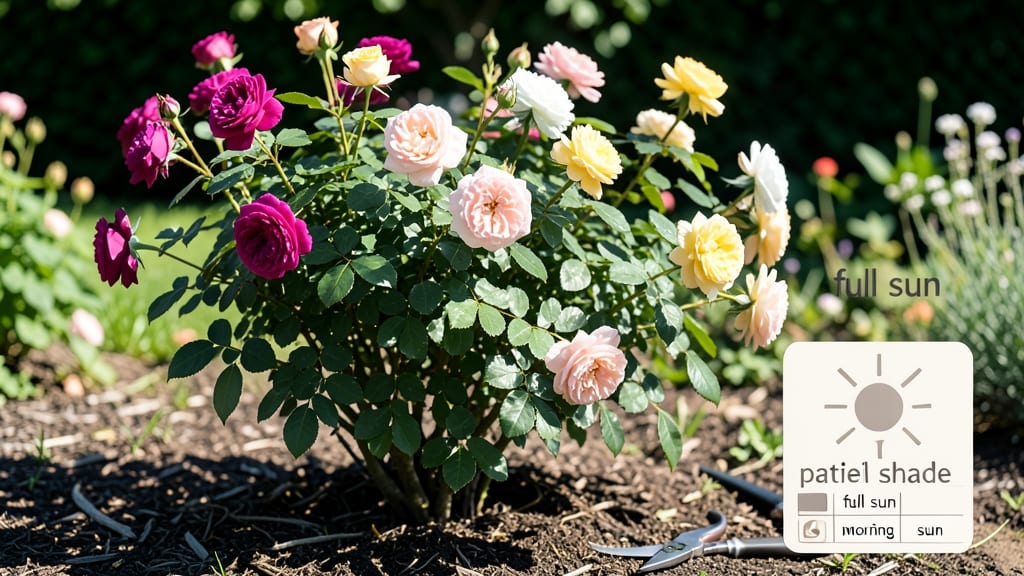
Your rose bush thrives on the light requirements—at least 6 hours of direct sunlight daily, though most varieties crave even more for peak blooms and sturdy growth.
Picture this: your roses stand tall and proud, their petals bursting with color, while your neighbor’s wilt under the same sky. The difference? Light—or the lack of it. Too little sun weakens stems, fades petals, and leaves you wondering why your $50 rose bush looks like a sad houseplant.
But here’s the catch: not all roses are created equal. Hybrid teas demand full sun to shine, while climbers might tolerate a little afternoon shade. And if you’re in a shady spot or urban garden, we’ve got tricks to trick your roses into thinking they’re in paradise.
In this guide, you’ll learn how to read your rose bush’s light needs, spot the signs of sun stress (or deprivation), and position your 🌹 for maximum impact—whether you’ve got a sunny backyard or a north-facing patio.

Ideal sunlight hours for rose bushes by variety
Not all rose bushes are created equal when it comes to sunlight needs. While most varieties crave 6 to 8 hours of direct sunlight daily, some can thrive with less—especially in cooler climates.
Understanding your rose type’s preferences is key to avoiding weak growth or sunburned foliage. Let’s break down the ideal light exposure for popular varieties and how to adjust for seasonal changes.
For example, hybrid tea roses—the classic showstoppers—demand the most light, often needing full sun (8+ hours) for their iconic blooms. Meanwhile, shrub roses are more adaptable, tolerating 4 to 6 hours of sun in northern climates.
Even within these ranges, regional adjustments matter. A rose that thrives in sunny USDA Zone 9 might struggle in Zone 5, where shorter summer days reduce sunlight availability.
Seasonal shifts also play a role. In summer, roses in southern climates may need afternoon shade to prevent scorching, while northern gardens can often leave them in full sun year-round. The key is flexibility—monitor your roses’ health and tweak their placement as the seasons change.
If you’re growing hybrid teas in a northern climate, consider placing them near reflective surfaces like light-colored walls or gravel paths to maximize sunlight. These tricks can add 1-2 extra hours of effective light during shorter days.
In contrast, southern gardens often require afternoon shade to prevent heat stress, especially for varieties like David Austin English roses, which can wilt in intense midday sun.
For climbing roses, position them near south-facing walls or fences to capture reflected light, which can boost blooming by up to 30%. Even shrub roses, which are the most shade-tolerant, benefit from morning sunlight—this ensures they get the energy they need without overheating.
Pro tip: Avoid placing roses under large trees, as their roots will compete for water and nutrients.
Seasonal adjustments are just as critical. In spring, when days are lengthening, you can gradually increase sunlight exposure.
By summer, most roses should be in their optimal sun position, while fall may require moving them to sunnier spots as daylight fades. Ever-blooming varieties, like Knock Out roses, are more forgiving but still need at least 4 hours of sun daily to perform well.
One common mistake is assuming all roses need full sun year-round. In reality, afternoon shade in summer can prevent sunburn, especially for lighter-colored blooms. Test your roses’ tolerance by observing their leaves—if they develop yellow patches or crispy edges, they’re getting too much direct heat.
Conversely, pale, leggy growth signals insufficient light, often fixable by relocating the plant.
For container-grown roses, sunlight needs remain the same, but mobility is your advantage. Rotate pots seasonally to ensure even light exposure on all sides. If your balcony or patio only gets partial sun, choose shrub or miniature varieties, which are more adaptable.
Just remember: no rose thrives in deep shade, so prioritize the sunniest spot available.
Finally, don’t overlook microclimates within your garden. A rose bed near a building may receive 2-3 fewer hours of sun than one in an open area. Use a
Signs your rose bush isn’t getting enough (or too much) light
Your rose bush might be silently screaming for help—and the culprit could be its sunlight exposure. When roses don’t get enough light, they send subtle (or not-so-subtle) signals like pale, leggy stems and sparse blooms.
On the flip side, too much direct sun can cause crispy leaf edges and sunburned foliage. Learning to read these signs is the first step to reviving your struggling roses.
Start by examining the leaves and stems. Healthy roses have deep green leaves with a waxy finish, while light-starved roses develop a yellowish-green tint and elongated growth. Even worse, roses in too much sun may show white or brown patches where the leaves have been cooked by intense rays.
These visual cues are your garden’s way of saying, “Adjust my light, please!”
⚠️ WARNING: Light Issues Can Stunt Growth Forever ⚠️ Roses are sun worshippers—most varieties thrive with 6+ hours of direct sunlight daily. Without enough light, they’ll produce fewer blooms, weaker canes, and may even become vulnerable to pests.
Over time, poor light exposure can lead to chronic decline, making it harder to revive your bush. Even worse, too much harsh afternoon sun can cause irreversible leaf damage and stress. Diagnose early to avoid long-term damage!
One of the first signs of light deficiency is stunted growth. If your rose bush isn’t growing taller than your wrist in a year, it’s likely not getting enough sun. Another red flag? Fewer than expected blooms.
Roses need sunlight to produce energy for flowering—without it, they’ll focus on survival instead of showy blooms. Even established bushes may revert to a wild, thorny shrub when deprived of light.
On the opposite end, sunburned leaves are a clear sign of too much light. Look for white or papery patches on leaves facing the sun, especially in hot afternoons. These areas may eventually turn brown and crispy, resembling a burnt leaf.
If you notice this, your rose is getting more sun than it can handle, particularly in southern climates or during peak summer months.
To fix light issues, start by moving your rose bush to a sunnier spot if it’s undersized. If relocating isn’t an option, consider pruning nearby trees or structures that block sunlight.
For roses getting too much sun, provide afternoon shade with a lightweight shade cloth or plant taller, shade-tolerant perennials nearby to break the intensity of direct rays.
Finally, pay attention to the soil and moisture—roses in low light often develop root rot because they retain too much moisture. If your bush is struggling, improve drainage and ensure it gets at least 4-5 hours of morning sun, which is gentler than harsh afternoon rays.
With the right adjustments, your rose bush can bounce back to its full, blooming glory!