
Planting
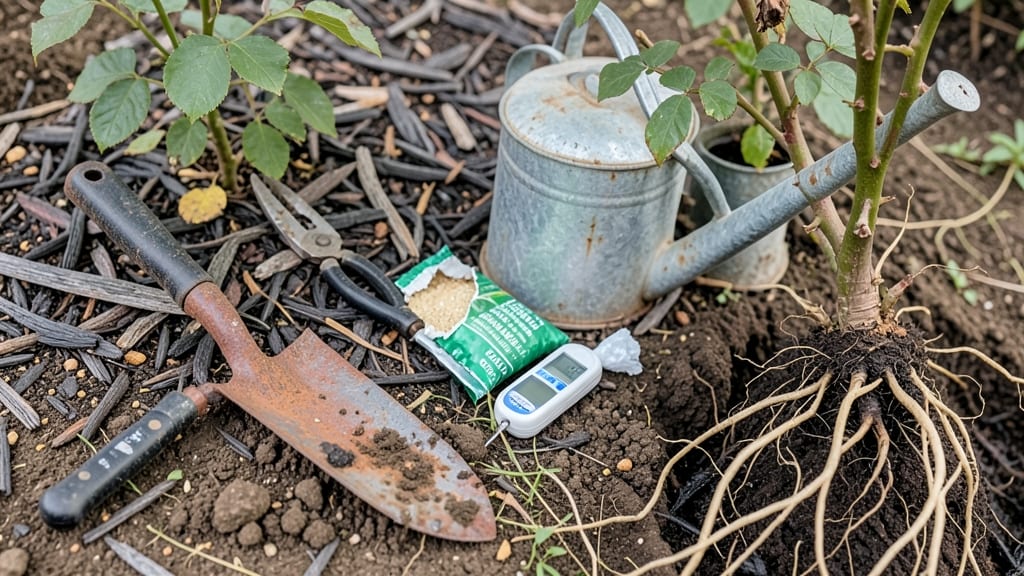
Your rose bush is dying after transplant, but root shock rescue is possible in 7 days—I’ve revived more than a dozen with these exact steps. 🌹 The first 24 hours are critical, and most gardeners make one of three fatal mistakes: watering too much, too little, or ignoring the soil’s moisture balance.
What you need is a precise routine that mimics the conditions roses thrive in.
Start by checking the soil—it should feel like a damp sponge, not a mud puddle or dry sand. If the leaves are yellowing but still attached, that’s classic root shock, and your bush can bounce back with the right care.
Prune any dead or wilted stems at the base, then water deeply at the soil line (not the leaves) to encourage new root growth. A light mulch helps retain moisture while protecting roots from temperature swings.
Within 3-5 days, you’ll see the first signs of recovery: new buds forming or leaves perking up. If you’re patient and consistent, your rose will push out fresh growth by day 7.
The key is avoiding stress—no heavy pruning, no moving it again, and definitely no fertilizer yet. Think of this as a soft reboot for your plant’s system.
This method works for container-grown roses, bare-root transplants, or even mature bushes that got moved. The same principles apply whether you’re dealing with hybrid teas, floribundas, or old garden roses. Let’s get your bush back on track—step by step.
Root Shock And Stress Triggers
Transplanting a rose bush is like moving a person to a new home—it’s stressful, even if the destination is better! When roots are disturbed, your rose may go into survival mode, slowing growth or even appearing "dead" temporarily.
But don’t panic—understanding the why behind the wilting helps you fix it fast. Here’s what’s likely happening under the soil (and how to stop it):
When you dig up a rose bush, its roots get severely damaged, even if they look intact. Here’s the science: - Root system disruption: Roots absorb water and nutrients through tiny hairs called rootlets.
These are extremely fragile—even a 20% loss can trigger shock. - Oxygen deprivation: Freshly exposed roots suffocate if not replanted quickly. Without oxygen, they can’t respire (breathe), leading to anaerobic conditions—a silent killer. - Hormonal chaos: Roots produce auxins (growth hormones) that regulate stress responses.
Transplanting disrupts this balance, causing leaves to wilt as the plant "freezes" growth to prioritize root recovery.
💡 Pro Tip: The faster you replant after digging (within 30–60 minutes), the less root shock occurs. Keep roots moist with a damp towel while prepping the new hole!
Your rose’s roots are used to a specific microclimate—suddenly shifting it to a hotter, drier, or colder spot is like moving from a spa to a sauna. Key culprits: - Overly dry soil: Roots need consistent moisture to recover.
If the new soil dries out too fast (common in sandy or windy areas), roots desiccate (dry out) and die back. - Temperature extremes: Roots prefer 55–75°F (13–24°C).
Planting in scorching sun or freezing temps stresses the plant, slowing recovery. - Poor drainage: Waterlogged roots rot (a fungal/bacterial attack) because they can’t breathe. Compacted clay or poorly amended soil traps excess moisture.
✨ Fix It: Mulch heavily (3–4 inches) with organic matter like straw or shredded bark to retain moisture and stabilize soil temps. Avoid planting in peak afternoon sun for 7–10 days.
Even if the new spot looks great, soil chemistry can sabotage your rose’s recovery. Watch for: - pH shock: Roses thrive in slightly acidic soil (6.0–6.5).
If your new soil is too alkaline (high pH) or too acidic (low pH), roots struggle to absorb nutrients like iron or phosphorus. - Nutrient deficiency: Fresh soil lacks the microbes and organic matter your rose’s roots rely on.
Without these, the plant can’t rebuild its root network. - Pathogen invasion: Old soil may harbor **fungi (like Phytophthora) or nematodes that attack stressed roots. If the new soil isn’t sterilized or amended, your rose becomes an easy target.
🔥 Quick Test:** Do the "squeeze test"—if soil clumps tightly when wet, it’s too compacted. Add compost or perlite to loosen it!
Trimming back your rose before transplanting is smart, but over-pruning adds insult to injury: - Leaf loss = less energy: Leaves produce food (photosynthates) via sunlight.
If you remove too many, the plant has no energy to regrow roots. - Exposed canes: Pruning too aggressively leaves bare stems vulnerable to sunscald (burn) and pests. - Root-to-shoot imbalance: A healthy rose needs a 1:1 ratio of roots to foliage.
If you cut back too much, the remaining roots can’t support the top.
🎯 Rule of Thumb: Prune only 1/3 of the bush before transplanting, and avoid heavy cuts for at least 2 weeks after moving.
A stressed rose is a buffet for pests and pathogens. Watch for: - Japanese beetles, aphids, or spider mites: They swarm stressed plants, draining sap and spreading disease. - Fungal infections: Black spot or powdery mildew thrive on weakened roses.
Look for yellow spots on leaves or white fuzzy growth. - Bacterial soft rot: If the base of the stem smells foul and turns mushy, bacteria are attacking damaged roots.
🔪 Prevention: Spray with neem oil (fungicidal + pest-repellent) before and after transplanting. Avoid overhead watering to keep foliage dry.
Revive Your Rose Bush Fast
When your rose bush looks like it’s throwing in the towel after a transplant, don’t panic—there’s still time to turn things around! The key is acting quickly and addressing the root cause (pun intended).
Below are practical, step-by-step solutions tailored to the most common issues, plus prevention tips to keep your roses thriving long-term.
If your rose bush is wilting, dropping leaves, or looking lethargic within days of transplanting, it’s likely suffering from root shock—a common but treatable stress response.
How to Fix It:
- 💧 Hydrate Deeply (But Gently)
- Water the soil slowly and thoroughly until it drains from the bottom. Use a soaker hose or drip irrigation to avoid disturbing the roots further.
- Pro Tip: 💡 Add 1 tablespoon of seaweed extract or hydrogen peroxide (3%) to the water to reduce stress and promote root growth.
- 🌡️ Shield from Stressors
- Move the plant to a shady spot (50% sun or less) for 3–7 days to reduce transpiration (water loss).
- Avoid fertilizing for at least 2 weeks—roots need time to recover before taking in nutrients.
- 🌱 Encourage Root Regrowth
- Apply a rooting hormone (like Dip ‘N Grow) to any exposed roots if you replanted recently.
- Mulch 2–3 inches deep with organic mulch (straw, wood chips) to retain moisture and regulate soil temperature.
Prevention for Next Time: ✨ Water deeply 1–2 days before transplanting to reduce shock. ✨ Prune 1/3 of the foliage before moving to minimize water demands. ✨ Transplant on a cloudy day or in the early evening to avoid midday sun stress.
If leaves turn yellow, develop black spots, or look mushy, a fungal infection (like black spot or powdery mildew) may have taken hold during transplant stress.
How to Treat It:
- 🧼 Clean Up the Area
- Remove all fallen leaves and debris within a 3-foot radius to prevent spores from spreading.
- Sterilize pruners with rubbing alcohol (70% or higher) before trimming infected foliage.
- 🌿 Apply Fungicide
- Spray with a copper-based fungicide (like Bonide Copper Fungicide) or a neem oil solution (1 tsp neem oil + 1 quart water + a drop of dish soap).
- Pro Tip: 🌡️ Apply in the early morning or evening to avoid burning leaves in direct sun.
- 🌳 Improve Airflow
- Prune 1/4 of the bush to open up the center, allowing better air circulation.
- Space plants 3–4 feet apart to reduce humidity buildup.
Prevention for Next Time: ✨ Water at the base (not overhead) to keep leaves dry. ✨ Space roses properly to avoid crowding. ✨ Choose disease-resistant varieties (like ‘Knock Out’ roses) if fungal issues are recurrent.
Stressed roses attract pests like aphids, spider mites, or Japanese beetles, which weaken the plant further.
How to Eliminate Them:
- 🔍 Identify the Culprit
- Check for:
- Aphids (tiny green/black bugs on new growth)
- Spider mites (fine webbing on undersides of leaves)
- Japanese beetles (skeletonized leaves)
- Check for:
- 💦 Blast Them Off
- Strong spray of water (from a hose) can dislodge many pests.
- For stubborn infestations, use insecticidal soap or neem oil spray.
- 🛡️ Protect Long-Term
- Install floating row covers if beetles are a problem.
- Introduce beneficial insects (like ladybugs or lacewings) for natural pest control.
Prevention for Next Time: ✨ Inspect new plants before bringing them home. ✨ Encourage predator insects (like birds and praying mantises) in your garden. ✨ Avoid over-fertilizing with nitrogen, which attracts soft-bodied pests.
If the soil is waterlogged, compacted, or nutrient-deficient, your rose bush won’t recover—even with proper care.
How to Adjust:
- 📊 Test Your Soil
- Use a DIY soil test kit (or send a sample to your local extension office) to check pH and nutrient levels.
- Roses prefer slightly acidic soil (6.0–6.5 pH).
- 🪴 Amend the Soil
- For clay or compacted soil: Mix in compost or peat moss to improve drainage.
- For sandy soil: Add organic matter (like coconut coir) to retain moisture.
- 💪 Feed Lightly (After Recovery)
- Wait 4–6 weeks after transplanting before fertilizing.
- Use a balanced rose fertilizer (10-10-10) or fish emulsion for a gentle boost.
Prevention for Next Time: ✨ Improve soil before transplanting—don’t wait until problems arise. ✨ Mulch annually to maintain soil health. ✨ Avoid heavy clay or rocky soil—amend or choose a new planting spot if needed.
Most roses bounce back in 7–14 days with proper care. If you see:
- No new growth after 2 weeks (despite care)
- Widespread blackened stems or mushy roots
- Severe fungal spread (large patches of mold)
…it may be time to replace the plant and reassess your transplanting method.
Final Pro Tip: 🎯 Keep a garden journal—note when you transplant, soil conditions, and care steps. This helps you spot patterns and adjust next time!
Frequently asked questions
How long should I wait before fertilizing my rose bush after transplanting?
Wait at least 4-6 weeks before applying any fertilizer. The roots need time to recover and establish new growth first. Use a balanced rose fertilizer (10-10-10) or fish emulsion for a gentle boost once you see new shoots forming.
Can I save a rose bush that's completely wilted after transplanting?
Yes, but act fast! If leaves are still attached (not crispy or black), the roots may still be alive. Water deeply at the soil line, move to partial shade, and mulch heavily. Most roses recover within 7-14 days if the roots aren't rotted or completely dead.
Why are my rose leaves turning yellow after transplanting?
Yellow leaves usually signal root shock or nutrient stress. Check the soil moisture—it should stay consistently damp but not soggy. If yellowing persists after 2 weeks, test your soil pH (roses prefer 6.0-6.5) and amend with compost if needed.
Should I prune my rose bush after transplanting?
Only prune to remove dead or diseased branches. Avoid heavy pruning—it stresses the plant further. Wait until you see new growth (2-3 weeks) before doing any major shaping. Prune in early morning to reduce stress from sun exposure.
What's the best time of day to transplant roses?
Transplant on a cloudy day or in the early evening to avoid midday sun stress. If you must transplant during the day, keep the roots covered with a damp towel and provide shade for 3-5 days afterward to help recovery.