
Pruning
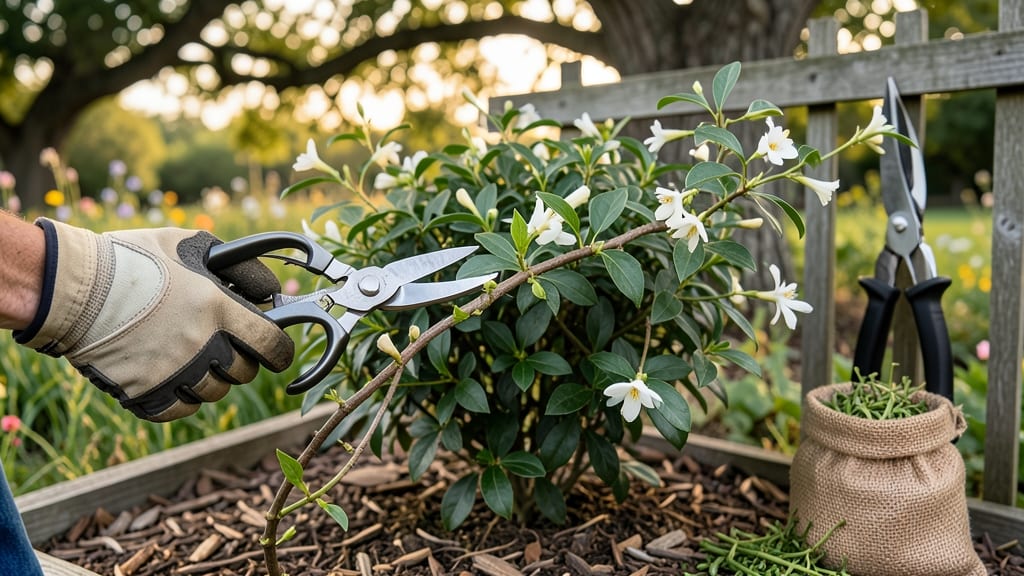
Pruning your jasmine bush keeps it fragrant and full for years to come. ✨ I learned the hard way that skipping this step means fewer flowers and leggy growth—until I discovered the right timing and technique.
The secret lies in understanding when your plant needs a haircut (hint: it’s not just spring!).
You only need three basic tools: sharp pruning shears, clean gloves, and a small broom to sweep up debris. The real magic happens in late winter or early spring, right before new growth begins.
This is when jasmine responds best, sending out fresh, fragrant shoots that will bloom all summer long.
Start by removing any dead or crossing branches first—they’re stealing energy from your plant. Then cut back about one-third of the oldest growth to encourage bushier, more productive growth. The result? A jasmine bush that smells like heaven and stays lush all season.
Even experienced gardeners make mistakes here—like pruning too late in the year or cutting back too aggressively. The key is patience: jasmine recovers quickly, but timing matters. With this method, you’ll have a fragrant, thriving bush that keeps giving year after year.
📚 In This Guide
- What you need
- Instructions
- Tips and common mistakes
- Wrapping up and next steps
What you need
- ● Pruning shears: Bypass pruners (sharp, clean blades) for clean cuts on stems up to ½ inch thick.
- ● Loppers: For thicker branches (1–2 inches in diameter); choose bypass-style for precision.
- ● Hand pruners: Anvil-style (budget-friendly) for small stems, but bypass is ideal for jasmine’s delicate growth.
- ● Gloves: Heavy-duty gardening gloves (protect against thorns and sap).
- ● Disinfectant: 70% isopropyl alcohol or bleach solution (1 part bleach to 9 parts water) to sterilize tools between cuts.
- ● Trash bags or bucket: For collecting clippings (jasmine can regrow vigorously!).
- ○ Pruning sealant (optional): Wound dressing (like tree sealant) for large cuts to prevent disease.
- ● Timing: Prune in early spring (just before new growth) or after flowering (late summer/fall). Avoid heavy pruning in winter.
- ● Weather: Choose a dry, overcast day to reduce stress on the plant and minimize sap bleeding.
- ● Safety gear: Sunglasses (sap can irritate eyes) and long sleeves if your jasmine has thorns.
- ● Plant health check: Inspect for diseased or dead branches (remove these first to improve airflow).
- ● Sharpen your tools: Dull blades crush stems, inviting disease. Hone shears before starting! ✂️
- ● Label your tools: Use a permanent marker to mark pruners/loppers for quick identification.
- ● Work in layers: Remove 30% of growth max per session to avoid shocking the plant.
Step-by-Step guide to pruning a jasmine bush
Here's how to keep your jasmine lush, fragrant, and full of life through every season.
✂️ Step 1: Prune After Blooming for Next Year's Flowers
Wait until late spring or early summer, right after your jasmine finishes flowering. This timing ensures you don't cut off next year's buds, which form on old wood. Look for clusters of spent blooms—these signal it's time to act. I grab my pruners and start by removing any dead or crossing branches first, making the job cleaner and easier.
Cut just above a leaf node or outward-facing bud at a 45-degree angle. This encourages new growth in the right direction. If a branch is overcrowded, thin it out by removing up to one-third of the oldest stems at the base. Jasmine responds well to pruning, so don't be shy—just avoid cutting into old, woody stems that no longer produce flowers.
✂️ Step 2: Shape and Thin in Late Winter
In late winter or early spring, before new growth begins, give your jasmine a light shaping. This is the time to remove any weak, diseased, or damaged branches—they'll only slow down your plant. I like to start by inspecting the bush from all sides, looking for areas where branches are rubbing together or growing inward.
Use your pruners to make clean cuts just above a leaf node or bud, always cutting at a slight angle. If your jasmine is getting too leggy, you can also trim back some of the longer branches by one-third to one-half to encourage bushier growth. Remember, jasmine thrives on pruning, so don't hesitate to give it a good trim—just avoid cutting into the thick, woody stems.
✂️ Step 3: Light Maintenance Throughout the Growing Season
During the growing season, keep an eye out for any suckers or water sprouts—these are fast-growing, weak stems that pop up at the base or along the branches. Pinch them off early to redirect the plant's energy into stronger growth. I check my jasmine every few weeks and remove any dead or dying leaves or stems as soon as I spot them.
If your jasmine starts to look too dense, thin out some of the inner branches to improve airflow and sunlight penetration. This helps prevent fungal diseases and keeps the bush healthier overall. A little maintenance now means fewer problems later—and more fragrant blooms for you to enjoy.
✂️ Step 4: Clean Up in Fall for Winter Prep
As fall approaches, give your jasmine one last check before winter sets in. Remove any dead, diseased, or weak branches to keep the plant strong. I also look for any branches that are crossing or rubbing against each other—these can create wounds that invite pests or disease.
Trim back any overly long or leggy branches by one-third to encourage a more compact shape. Avoid heavy pruning in fall, as this can stimulate new growth that won't harden off before winter. Instead, focus on cleaning up and shaping. Once you're done, give the bush a light layer of mulch (if you have it) to protect the roots from freezing temperatures.
Tips & tricks for perfect pruning of your jasmine bush
Here's what I've learned after years of keeping my jasmine thriving—these little details make all the difference for fragrant blooms.
The Timing Secret: In Step 1, those spent blooms are your signal—wait until they're completely faded before pruning. I've seen people cut too early and lose next year's buds forming on old wood. The key is patience; the plant knows best when it's ready.
Cutting Technique That Changed Everything: Always make your cuts at a 45-degree angle just above a leaf node or outward-facing bud. This isn't just about looks—it directs new growth where you want it. I used to cut randomly, and my jasmine grew all lopsided until I learned this trick. The angle also prevents water from pooling on the cut, which can rot the branch.
Seasonal Pruning Strategy: During the growing season (Step 3), I make it a habit to check my jasmine every two weeks. Those suckers and water sprouts grow fast, and removing them early means less work later. Think of it like weeding—small efforts prevent big problems. For winter prep (Step 4), I avoid heavy pruning because new growth won't harden off before cold weather—just clean up and shape.
Equipment Upgrade: Invest in a good pair of bypass pruners—they make clean cuts that heal faster than the jagged cuts from anvil pruners. I also keep rubbing alcohol handy to wipe down my pruners between cuts—this prevents spreading disease from one branch to another. A small bottle in my gardening tool caddy makes this easy to remember.
Pro Tips for Pruning Jasmine Bush
- Here's what I've learned after years of keeping my jasmine thriving—these little details make all the difference for fragrant blooms.
- The Timing Secret: In Step 1, those spent blooms are your signal—wait until they're completely faded before pruning.
- Cutting Technique That Changed Everything: Always make your cuts at a 45-degree angle just above a leaf node or outward-facing bud.
Frequently asked questions
Got questions about keeping your jasmine bush lush and fragrant? Here are answers to the most common ones—so you can prune like a pro!
When is the best time to prune jasmine bushes?
The ideal time is late winter or early spring (just before new growth begins). For light shaping, you can prune lightly after flowering to encourage more blooms. Avoid heavy pruning in fall—it can stimulate tender new growth that won’t survive winter.
How much can I trim back my jasmine bush?
For most varieties, you can safely prune back up to one-third of the plant’s height. If your jasmine is overgrown, trim gradually over 2–3 years to avoid shocking the plant. Never remove more than 25% in a single session unless it’s severely neglected.
What if my jasmine isn’t flowering after pruning?
Jasmine needs 6–8 hours of sunlight daily to bloom well. If it’s not flowering, check:
- Light levels – Move it to a sunnier spot if needed.
- Watering – Ensure it’s not over- or under-watered.
- Fertilizer – Use a balanced, phosphorus-rich fertilizer in spring.
Can I prune jasmine in summer?
Yes, but lightly! Summer pruning is best for shaping or removing dead/diseased branches. Avoid heavy pruning—it can stress the plant during hot months. If you must prune heavily, do it early morning or late evening to reduce heat shock.
What’s the difference between pruning star jasmine and regular jasmine?
Star jasmine (Trachelospermum)
is more forgiving—it tolerates harder pruning and can be trimmed into hedges. Regular jasmine (Jasminum) (like Arabian or Primrose) is less tolerant and blooms on new wood, so prune after flowering. Star jasmine blooms on old and new wood, so you can prune anytime (except peak bloom).
Wrapping up and next steps
Pruning your jasmine bush doesn’t have to be intimidating—it’s all about timing, technique, and a little patience. 🌿 With the right tools, seasonal care, and a clear plan, you’ll keep your bush lush, fragrant, and thriving year-round.
Whether you’re trimming for shape, health, or blooms, every snip brings you closer to a garden that’s both beautiful and bountiful.
Ready to take the next step? Grab your pruners, mark your seasonal calendar, and start small—your jasmine will thank you with waves of intoxicating perfume! For extra confidence, revisit our FAQs or watch a quick tutorial before diving in. Happy pruning!