
Flowers
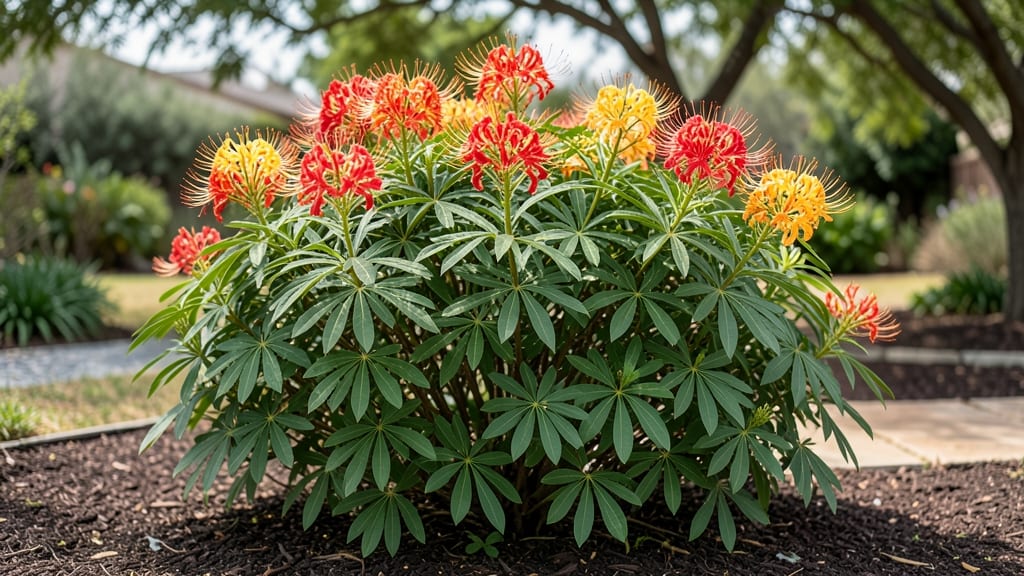
Peacock flower bushes bring bold color to sunny spots with their striking foliage and vibrant blooms. 🌸 I've grown mine for years, and they've become the showstopper of my garden—especially when they burst into bloom in late spring.
The secret to their success lies in mimicking their natural tropical habitat while keeping care simple. These plants thrive in well-draining soil and need at least 6 hours of direct sunlight daily. They're drought-tolerant once established, but regular watering keeps those signature peacock-patterned leaves looking their best.
In warmer climates, they can even bloom year-round with minimal effort. By midsummer, you'll see clusters of bright flowers that attract hummingbirds while adding a tropical vibe to your landscape. The foliage stays lush and colorful even after blooms fade, making them a low-maintenance perennial that keeps giving.
Perfect for borders, containers, or as a focal point in tropical-themed gardens. Let's get yours thriving!
📚 In This Guide
- What you need
- Instructions
- Tips and common mistakes
- Wrapping up and next steps
What you need
- ● Peacock flower bush seeds or nursery-grown plants: Seeds: 5–10 (for multiple plants or higher germination success) Nursery plants: 1–3 (for quicker results, choose healthy 1–2 ft. specimens)
- ○ Well-draining potting mix or garden soil: 1–2 bags (10–20 lbs each) of cactus/succulent mix (if planting in containers) Compost (1–2 lbs) to enrich garden soil (optional but recommended)
- ● Containers (if not planting in-ground): 5–15 gallon pots (1 per plant) with drainage holes OR raised garden beds (minimum 12" depth)
- ● Basic gardening tools: Trowel or small shovel Pruning shears (for shaping and maintenance) Gloves (to protect hands from thorns)
- ● Fertilizer: Balanced, slow-release granular fertilizer (e.g., 10-10-10, 1 tbsp per plant) OR liquid fertilizer (diluted as per package instructions)
- ● Sunlight: A full-sun location (6+ hours of direct sunlight daily). Partial shade (4–6 hours) is tolerable but may reduce flowering.
- ● Climate: Thrives in USDA Zones 9–11. In colder zones, grow as an annual or overwinter indoors.
- ● Watering setup: Drip irrigation or a watering can with a long spout (to avoid disturbing soil).
- ○ Optional (but helpful): Mulch (2–3 inches of organic mulch to retain moisture and suppress weeds) Support stakes (for taller varieties, especially in windy areas) Peat moss or perlite (to improve drainage in heavy clay soils)
How to grow a thriving peacock flower bush
Here's the straightforward method I've used to cultivate vibrant peacock flower bushes that bloom reliably year after year.
🌱 Step 1: Choose the Perfect Planting Location
Peacock flower bushes (Caesalpinia pulcherrima) crave full sun—at least 6-8 hours daily—so pick the sunniest spot in your yard. I always scout locations in late afternoon when shadows are longest to ensure the bush gets maximum light. The soil should drain well; these plants despise soggy roots, so avoid low spots where water pools.
Test your spot by digging a 12-inch deep hole. If water lingers after 30 minutes, amend the soil with 2-3 inches of compost or plant in a raised bed. The ideal soil pH is 6.0-7.0, but peacock flowers tolerate slightly alkaline conditions better than acidic ones. I add a handful of crushed limestone if my soil tests below 6.0—this prevents yellowing leaves later.
☀️ Step 2: Plant at the Right Time and Depth
Spring is the best time to plant, after the last frost when soil temperatures reach 60°F. Dig a hole twice as wide as the root ball but only as deep—planting too deep suffocates the roots. Gently loosen the roots if they're circling tightly in the pot, then place the bush in the hole so the top of the root ball sits even with the ground level (not buried).
Backfill with native soil mixed with 1-2 inches of compost to encourage root spread. Water deeply to settle the soil, then add 2-3 inches of mulch (like pine straw or shredded bark) around the base, keeping it 3 inches away from the stem. This mulch layer locks in moisture and regulates soil temperature—critical in hot climates where peacock flowers thrive.
💧 Step 3: Water Consistently During Establishment
For the first 4-6 weeks, water deeply 2-3 times per week—enough to moisten the soil 12 inches down. You'll know it's right when the top 2 inches of soil feel damp but not soggy. Overwatering is the fastest way to kill these plants; they're drought-tolerant once established but need consistent moisture to root in.
After the initial phase, reduce watering to once a week during dry spells, unless your area gets less than 1 inch of rain weekly. Check moisture by sticking your finger 2 inches deep—if it feels dry, water thoroughly. Mature peacock flower bushes can survive on rainfall alone in most climates, but they reward regular care with longer blooming seasons.
✂️ Step 4: Prune for Health and More Blooms
Prune late winter or early spring before new growth appears. Remove dead, damaged, or crossing branches first—this improves airflow and reduces disease risk. Then, cut back one-third of the oldest stems to encourage fresh growth. I always use clean, sharp pruners and make cuts at a 45-degree angle just above a leaf node.
Deadhead spent blooms throughout the season to prompt more flowers, but don't overdo it—peacock flowers set seed easily, and removing too many blooms can reduce their natural vigor. If your bush gets leggy, you can also lightly trim the tips of new growth to encourage bushier habits. Just avoid heavy pruning in fall, as it removes next year's flower buds.
🌿 Step 5: Fertilize for Vibrant Growth
Apply a balanced, slow-release fertilizer (like 10-10-10) in early spring when new growth starts. Use half the recommended dose—peacock flowers are light feeders and over-fertilizing leads to lush foliage but fewer blooms. Scatter the granules 6 inches away from the stem and water deeply to activate them.
Repeat in mid-summer with a low-phosphorus fertilizer (like 5-5-5) to support blooming without encouraging excessive leaf growth. I skip fall fertilization entirely—this lets the plant focus on hardening off for winter. If your bush looks pale or growth slows, a foliar feed with iron or magnesium can help, but most healthy peacock flowers need minimal feeding once established.
Tips & tricks for thriving peacock flower bushes
Here's what nobody tells you about keeping these sun-loving beauties happy and blooming.
Sunlight Secret: Those 6-8 hours of sun are non-negotiable, but what I learned the hard way is that morning sun is more important than afternoon. If you're planting in a spot with afternoon shade, position the bush so the front faces east—not west. The cooler morning light prevents leaf scorch while still giving plenty of energy for blooming. I've seen bushes in western exposures get crispy edges despite full sun hours.
Soil Test Tip: Before amending your soil with compost or limestone, grab a soil test kit from your local garden center—it's only about $10. I tested my soil last year and discovered it was at 5.8 pH, which explained why my peacock flowers were struggling. That handful of crushed limestone I mentioned? It raised the pH to 6.5 in just 3 months. Don't guess—test! The difference in plant health is dramatic.
Watering Wisdom: That 12-inch deep watering during establishment might sound like a lot, but trust me on this. Use a long screwdriver to check moisture—push it down and see if soil clings to it. If not, water again. I've seen beginners water lightly every day instead of deeply 2-3 times, and their bushes never properly root. Think of it like giving your plant a long drink rather than many sips—it encourages deep root growth.
Pruning Precision: When you're cutting back those one-third of oldest stems in Step 4, make sure you're targeting the largest, thickest stems first. These are the ones that have outgrown their usefulness and are competing with new growth. I always look for stems that are at least pencil-thick—anything smaller I leave alone. Also, those 45-degree cuts matter more than you'd think—they prevent water from pooling on the cut surface and causing rot.
Pro Tips for Peacock Flower Bush
- Here's what nobody tells you about keeping these sun-loving beauties happy and blooming.
- Sunlight Secret: Those 6-8 hours of sun are non-negotiable, but what I learned the hard way is that morning sun is more important than afternoon.
- Soil Test Tip: Before amending your soil with compost or limestone, grab a soil test kit from your local garden center—it's only about $10.
Frequently asked questions
Got questions about growing and caring for your peacock flower bush (Caulophyllum thalictroides)? Here are some of the most common ones—plus expert tips to keep your plant thriving!
How fast does a peacock flower bush grow?
A peacock flower bush grows at a moderate pace, typically adding 6–12 inches per year under ideal conditions. With patience, it can reach 2–3 feet tall and wide in 3–5 years. For faster growth, ensure it’s planted in well-draining soil with partial to full sun and mulch to retain moisture.
When is the best time to plant a peacock flower bush?
Plant your peacock flower bush in early spring or fall for the best success. This gives roots time to establish before extreme heat or cold. Avoid planting in summer—the heat can stress young plants. If you’re transplanting, water deeply 1–2 times per week until it’s fully settled (about 6–8 weeks).
Does a peacock flower bush need full sun?
While it tolerates full sun, peacock flower bushes thrive best in partial shade (especially in hot climates). In zones 5–8, provide morning sun and afternoon shade to prevent leaf scorch. If grown in full shade, expect slower growth and fewer flowers. Test your spot: if it gets 6+ hours of direct sun, partial shade is ideal.
What pests or diseases commonly affect peacock flower bushes?
Peacock flower bushes are disease-resistant, but they may attract aphids, spider mites, or deer. To deter pests:
- Spray with neem oil for aphids or mites.
- Use deer repellent if local wildlife is a problem.
- Prune affected leaves and dispose of them in the trash (not compost).
Can I grow a peacock flower bush in a container?
Yes! Peacock flower bushes adapt well to large containers (18+ inches wide) with drainage holes. Use a well-draining potting mix (like a 50/50 blend of garden soil and perlite). Repot every 2–3 years and fertilize lightly in spring. Keep containers in partial shade and water when the top 1–2 inches of soil dry out.
Wrapping up and next steps
The peacock flower bush is a true showstopper—easy to grow, drought-tolerant, and bursting with color that thrills year-round! 🌸 Whether you're a seasoned gardener or just starting, its low-maintenance charm makes it a perfect addition to any landscape. Ready to transform your outdoor space?
Your next step? Pick a sunny spot, gather your supplies, and dive in! Plant one (or a dozen) and watch your garden bloom with vibrant, fuss-free beauty. Happy gardening! 🌿