
Pruning
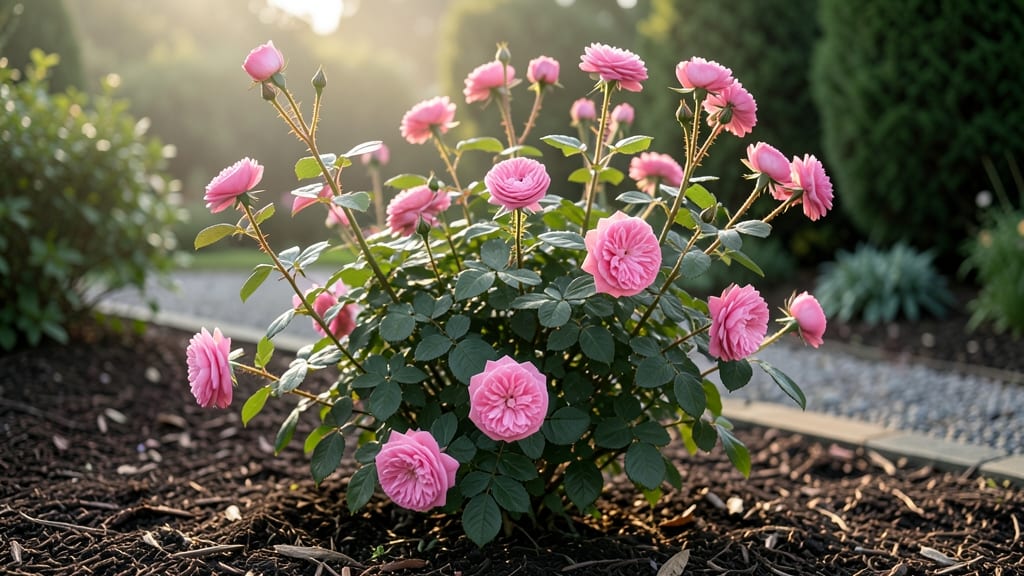
The Mary Rose rose bush transforms your garden with velvety pink blooms that smell like a spring morning. 🌸 I’ve pruned mine every late winter for three years, and each time, the difference is shocking—thicker growth, more flowers, and fewer pests.
Most gardeners wait too late, but timing is everything for this hardy beauty.
Late winter is the perfect window: after the last hard frost but before buds swell. Grab your pruners, sanitize them with rubbing alcohol (trust me, this prevents disease), and cut back one-third of last year’s growth.
The goal is to open up the center for airflow—this bush hates crowded stems. If you’re nervous about over-pruning, just focus on removing dead wood and crossing branches first.
What you’ll end up with is a bush that blooms nonstop from early summer through fall, with clusters of 40-50 petals each. The fragrance lingers in the evening air, and neighbors will ask how you got such perfect roses. (Spoiler: it’s not magic—just sharp pruners and a little patience.)
Works in zones 4-9, thrives in full sun to partial shade, and handles drought once established. Even my first attempt—where I cut too aggressively—recovered by midsummer. Let’s get those blooms going!
📚 In This Guide
- What you need
- Instructions
- Tips and common mistakes
- Wrapping up and next steps
What you need
- ● Pruning shears: Bypass pruners (sharp, clean, and disinfected with rubbing alcohol or bleach solution—1 part bleach to 9 parts water). Quantity: 1 pair.
- ● Loppers: For thicker branches (½" to 1½" diameter). Quantity: 1 pair.
- ● Pruning saw: For stubborn, thick stems (1½" or larger). Quantity: 1.
- ○ Gloves: Heavy-duty, cut-resistant (optional but recommended to protect from thorns!). Quantity: 1 pair.
- ● Disposable pruning bags: To collect clippings and prevent disease spread. Quantity: 1–2.
- ● Rubbing alcohol (70%+) or bleach: For sterilizing tools between cuts. Quantity: Small bottle or spray.
- ● Garden twine or zip ties: To secure large branches if needed. Quantity: 1 roll.
- ● Hand sanitizer or soap: For cleaning hands after pruning.
- ● Pruning sealant: (e.g., tree wound paint) for large cuts only if the bush is disease-prone.
- ● Knee pad or stool: For comfort during long sessions.
- ● Notebook & pen: To sketch your bush’s shape before pruning (great for beginners!).
Step-by-Step guide to reviving your Mary Rose bush in late winter
Late winter is the perfect time to coax your Mary Rose bush back to life with precise pruning. Here’s how to achieve that lush, continuous bloom cycle.
✂️ Step 1: Identify Dead, Diseased, and Crossing Branches
Start by examining your bush closely. Look for branches that are completely devoid of life—no green underneath the bark when scratched, or those that snap easily when bent. These are dead and need removal. Next, spot any branches with signs of disease: black spots, mold, or unusual growths. Cut these out immediately to prevent spread.
Now focus on crossing branches. These are the ones rubbing against each other, which creates wounds that invite pests and disease. Use sharp pruning shears to make clean cuts just outside the branch collar—the swollen area where the branch meets the trunk. This ensures the wound heals properly and the plant directs energy to new growth.
✂️ Step 2: Shape the Bush for Optimal Airflow and Light
Mary Rose bushes thrive when they receive plenty of airflow and sunlight. Begin by thinning out the center of the bush, removing about one-third of the oldest, thickest branches. This opens up the plant, allowing light to penetrate to the inner stems. Aim for a rounded, open shape—this encourages new growth from the base and prevents overcrowding.
Next, cut back any branches that are growing inward or downward. These often become weak and may never bloom. Make your cuts at a 45-degree angle, about ¼ inch above an outward-facing bud. This angle helps water run off the cut and reduces the risk of rot. Avoid leaving stubs—this stresses the plant and invites disease.
☀️ Step 3: Encourage New Growth with Strategic Cuts
To promote vigorous new growth and a flush of blooms, focus on cutting back last year’s growth by about one-third to one-half. For example, if a branch grew 12 inches last season, trim it back to 6 inches. This might seem drastic, but it’s what triggers the bush to send out fresh shoots from the base and along the remaining branches.
Pay special attention to branches that haven’t bloomed well in the past. Cutting them back now gives them a fresh start and often results in more abundant flowers next season. Avoid over-pruning, though—never remove more than one-third of the plant’s total foliage in a single session. This ensures the bush has enough leaves to photosynthesize and support new growth.
💧 Step 4: Apply Post-Pruning Care for a Strong Recovery
After pruning, give your Mary Rose bush a deep watering to help it recover from the stress of cutting. Water at the base, avoiding the foliage, to prevent fungal issues. Mulch around the base of the plant with 2-3 inches of organic mulch, like shredded bark or compost, to retain moisture and regulate soil temperature. This also suppresses weeds, which compete for nutrients.
Finally, apply a balanced, slow-release fertilizer to replenish nutrients lost during pruning. Look for a 10-10-10 or 20-20-20 formula and follow the package instructions for application rates. This gives your bush the nutrients it needs to produce strong new growth and a profusion of blooms. Avoid high-nitrogen fertilizers, which encourage leafy growth at the expense of flowers.
⏰ Step 5: Monitor and Adjust for Continuous Blooms
Over the next few weeks, keep an eye on your bush for new shoots emerging from the base and along the branches. These are your signal that the pruning worked. Once new growth appears, you can begin a monthly maintenance routine to keep the bush in top shape. This includes removing spent blooms (deadheading) to encourage more flowers and trimming any branches that grow too long or leggy.
If you notice any signs of stress—yellowing leaves, wilting, or slow growth—adjust your care routine. This might mean increasing water slightly during dry spells or providing temporary shade if the weather turns unusually hot. With the right care, your Mary Rose bush will reward you with nonstop blooms from late spring through fall.
Tips & tricks for perfect Mary Rose bush revival
These game-changing strategies will help your pruning efforts yield the most vibrant, long-lasting blooms possible.
Precision Cutting Technique: When making your cuts in Step 2, use a sharp pair of pruning shears and always cut just outside the branch collar. This small detail makes all the difference in how quickly your plant recovers. The collar is that swollen area where the branch meets the trunk—it's where the plant's natural healing begins. If you cut too close, you create a wound that takes much longer to seal, increasing the risk of disease. I've seen plants struggle for months after poor cuts, so take your time here.
Seasonal Timing Insight: Late winter is ideal for this pruning because the plant is still dormant but just beginning to stir. In Step 3, when you're cutting back last year's growth by one-third to one-half, you're essentially giving your bush a fresh start. The key is to do this before new growth begins—typically between late January and early March in most climates. If you wait too long, you'll be cutting back growth that could have become next season's blooms.
Post-Pruning Recovery Boost: After completing Step 4, don't just walk away! The first week after pruning is critical. I recommend giving your bush a second deep watering about 7 days after the initial one. This helps establish new root growth and gives the plant the strength to push out those fresh shoots. Also, consider applying a light layer of compost around the base—this adds beneficial microbes that aid in recovery while suppressing weeds.
Visual Growth Check: In Step 5, when monitoring for new shoots, look for small buds that appear along the stems and at the base. These should emerge within 2-3 weeks of pruning. If you don't see any new growth after 4 weeks, it might be time to check your soil pH or consider a root stimulator. Healthy new growth should be firm to the touch and have a vibrant green color—anything yellowish or wilted indicates stress that needs addressing.
Pro Tips for Mary Rose Bush
- These game-changing strategies will help your pruning efforts yield the most vibrant, long-lasting blooms possible.
- Precision Cutting Technique: When making your cuts in Step 2, use a sharp pair of pruning shears and always cut just ...
- Seasonal Timing Insight: Late winter is ideal for this pruning because the plant is still dormant but just beginning ...
Frequently asked questions
Got questions about pruning your Mary Rose bush for that dreamy, nonstop bloom cycle? You’re in the right place!
Here are the most common queries—plus quick, actionable answers to keep your shrub thriving.
When is the exact best time to prune my Mary Rose bush?
The late-winter window (just before new growth starts, ideally in February or early March) is ideal for Mary Rose bushes. Pruning too early risks frost damage, while waiting too long sacrifices early blooms. Pro tip: If you miss late winter, a light trim in early spring still works—just avoid heavy cuts!
How much should I cut back? Should I “shear” or “thin out”?
Mary Rose bushes thrive with a 30-50% reduction in height. Thinning out (removing older, woody stems at the base) encourages new growth, while light shaping (shearing) keeps it tidy. Avoid over-shearing—it can lead to leggy growth. Pro tip: Cut just above a leaf node or bud for best regrowth!
What if I prune at the wrong time and my bush doesn’t bloom?
No blooms? You’re not alone! Late-summer pruning (after flowering) can delay next year’s blooms, but Mary Rose is resilient. Revive it by:
- Fertilizing with high-phosphorus feed (like 10-10-10) in early spring.
- Watering deeply 1-2 times/week during dry spells.
- Checking for pests (aphids, spider mites) and treating with neem oil if needed.
Can I prune my Mary Rose bush in containers? Any special tips?
Yes! Container-grown Mary Rose bushes need more frequent pruning (every 6-8 weeks) to prevent root-bound stress. Key tips:
- Use sterilized shears to avoid disease spread.
- Repot every 2-3 years with fresh, well-draining soil.
- Avoid pruning more than 1/3 of the foliage at once—containers recover slower.
Will pruning affect next year’s flower color or size?
Not at all! Mary Rose bushes are color-stable (that iconic pink-purple hue stays true), and pruning actually enhances flower production by promoting healthier, bushier growth. Heavier cuts = more blooms—just avoid pruning right after flowering if you want bigger individual blooms that season.
Wrapping up and next steps
Pruning your Mary Rose bush in late winter isn’t just about tidying up—it’s your secret weapon for nonstop blooms all season long! 🌸 By following the right steps, you’ll encourage healthier growth, prevent disease, and enjoy vibrant flowers from spring to frost.
Whether you’re a pruning pro or a beginner, this guide gives you the confidence to revitalize your bush with ease.
Ready to transform your garden? Grab your tools, mark your calendar for late winter, and give your Mary Rose bush the care it deserves. Your future blooms will thank you! 🌿✨
- Next step: Schedule your pruning session and start with a fresh cup of coffee—you’ve got this!