
Pruning
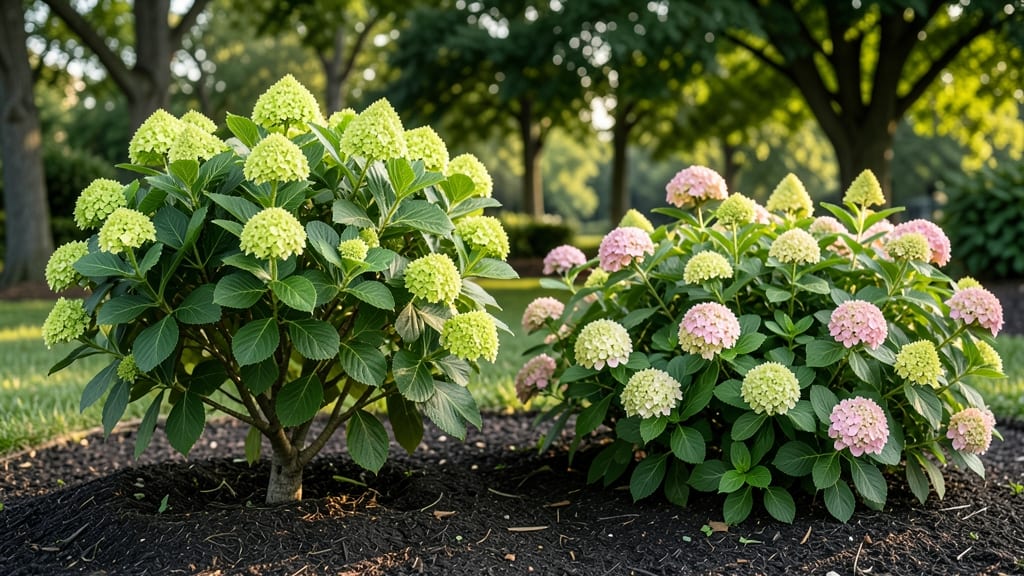
Choosing between a Limelight hydrangea tree and bush comes down to one word: vision. ✨ Both pack the same stunning lime-green blooms, but their shapes and growth habits transform your garden in completely different ways—one as a towering statement piece, the other as a lush, sprawling accent.
The tree version grows 10-15 feet tall with a narrow, upright form, perfect for anchoring a border or framing a driveway. Its layered branches create natural tiers of blooms that light up from spring through fall, then hold onto dried flower heads for winter interest.
Meanwhile, the bush stays 4-5 feet tall but spreads 5-6 feet wide, ideal for hedges, mixed borders, or softening fences with its cascading habit.
You’ll notice the tree demands sturdier pruning—focused on shaping its vertical lines—while the bush thrives with light shaping to encourage its natural bushiness. Both love morning sun and afternoon shade, but the tree handles wind better, making it a winner for exposed sites.
For a focal point, go tree. For textured layers, choose bush. Both pair beautifully with evergreens, perennials, or even small shrubs—but the tree steals the show as a standalone, while the bush blends seamlessly into a crowd.
The first product explained
Meet the Limelight Hydrangea Tree—the showstopper of your garden! 🌿✨ This stunning hybrid is a cross between a classic hydrangea bush and a tree, offering all the beauty of traditional hydrangeas with a sleek, upright form. Perfect for gardeners who want year-round interest and a bold statement without sacrificing space, this variety is designed to thrive in both containers and garden beds.
🌱 Key Specs & Features
- Growth Habit: Upright, tree-like structure (6–8 ft tall, 4–6 ft wide) with a single or multi-trunk form.
- Bloom Time: Prolific bloomer! Produces large, cone-shaped flower clusters (panicles) in bright lime-green that mature to a soft cream. Blooms from late spring through fall, with some winter interest if deadheaded.
- Foliage: Deep green, glossy leaves that add year-round texture.
- Sunlight Needs: Partial shade to full sun (morning sun + afternoon shade ideal). Thrives in Zones 5–9.
- Soil Preference: Moist, well-draining, acidic soil (pH 5.5–6.2). Loves organic matter!
- Disease Resistance: More resistant to powdery mildew and leaf spot compared to some bush varieties.
🎯 Who’s It For?
This hydrangea is a dream for:
- 🏡 Homeowners with small yards or urban spaces who want a tree-like look without the commitment of a full-sized tree.
- 🌸 Gardeners craving long-lasting color and low-maintenance beauty.
- 🛍️ Container enthusiasts—its compact size makes it perfect for large pots or patio plantings.
- 🐝 Pollinator lovers—butterflies and bees adore its flowers!
💰 Price Point & Where to Buy
The Limelight Hydrangea Tree typically retails for $50–$120, depending on size and retailer. You’ll find it at:
- 🌿 Local nurseries (spring/fall sales often have discounts!)
- 🛒 Online retailers like Proven Winners, Monrovia, or Amazon.
- 💡 Pro Tip: Buy from reputable growers to ensure healthy root systems—look for 1–3 gallon pots for best results!
💡 Quick Care Tips
- 🌡️ Water deeply 1–2 times per week (more in extreme heat). Mulch to retain moisture.
- ✂️ Prune in late winter/early spring to shape and encourage new growth. Remove old wood (brown stems) to promote blooms.
- 🎯 Feed with acidic fertilizer (like hydrangea-specific food) in spring for vibrant blooms.
The second product explained
If you’re dreaming of a bold, statement-making hydrangea that thrives year-round with minimal fuss, the Limelight® Hydrangea Tree (Hydrangea paniculata 'Limelight') is your star player! 🌟 Unlike its bushy cousin, this tree-shaped hydrangea offers a structured, vertical elegance while packing the same vibrant blooms and hardy resilience.
Let’s dive into why this cultivar steals the show—and how it stacks up against the classic Limelight hydrangea bush.
🌿 Key Specs & Features
Here’s what makes the Limelight Hydrangea Tree a game-changer:
- Growth Habit: Grows as a small tree (10–15 ft tall, 6–8 ft wide) with a single-trunk or multi-stemmed form, perfect for focal points in gardens or containers.
- Bloom Time: Season-long (summer to frost!) with cone-shaped flowers that start greenish-white and mature to creamy white—plus, they retain their color into winter (unlike some hydrangeas that fade).
- Hardiness: Thrives in USDA Zones 3–8, making it one of the toughest hydrangeas for cold climates.
- Light Needs: Full sun to partial shade (6+ hours of sun for best blooms).
- Soil Tolerance: Adaptable but prefers well-draining, slightly acidic soil (pH 5.0–6.0 for optimal color).
- Maintenance:
- Low-maintenance once established.
- Prune in late winter/early spring to shape and encourage new growth.
- Drought-tolerant once roots are established.
🎯 Who’s It For?
The Limelight Hydrangea Tree is a dream pick for:
- Small-space gardeners: Its compact tree form fits urban yards, patios, or large containers (use a 15–20 gallon pot!).
- Year-round color lovers: Unlike bushes that may drop blooms, this tree’s woody stems add winter interest.
- Low-maintenance enthusiasts: No need for monthly deadheading—just one pruning session per year!
- Cold-climate gardeners: It outperforms many hydrangeas in freezing temps.
- Designers & DIYers: Its structured shape works as a privacy screen, accent tree, or mixed-border star.
💰 Price Point & Where to Buy
Ready to invest in a showstopper? Here’s the scoop on pricing (as of 2024):
| Size | Price Range | Where to Shop |
|---|---|---|
| 1–3 gallon (young plant) | $35–$60 | Local nurseries, Home Depot, Lowe’s, Proven Winners |
| 5–7 gallon (established) | $70–$120 | Specialty garden centers, Wayne’s World of Wonder, Fast-Growing-Trees.com |
| 15+ gallon (mature tree) | $150–$300+ | Landscape suppliers, Monrovia (custom orders) |
Pro Tip: 💡 Buy from local nurseries in early spring for the best selection and healthier root systems. If ordering online, check reviews for shipment speed—hydrangeas hate sitting in hot trucks!
Head-to-head comparison
Now that you’ve met both the Limelight Hydrangea Tree and the Limelight Hydrangea Bush, let’s dive into a detailed side-by-side comparison to help you decide which one fits your garden’s vision—whether you’re dreaming of a bold statement or a lush, low-maintenance backdrop. 🌿✨
🌱 Growth Habit & Form
The most obvious difference between these two is their structure, and it’s not just about height! The Limelight Hydrangea Tree is a multi-stemmed tree with a naturally upright, vase-shaped form, making it perfect for creating a focal point in your landscape.
It typically grows 6–8 feet tall with a 4–6-foot spread, offering a dramatic vertical presence.
On the other hand, the Limelight Hydrangea Bush is a shrub with a more rounded, mounded shape. It reaches 4–5 feet tall and wide, ideal for borders, hedges, or as a mid-height accent. If you love a full, bushy look without the tree’s structured silhouette, this is your pick!
Winner for structure? It depends on your style—tree for drama, bush for softness.
🌸 Bloom Performance
Both varieties are reliable bloomers, but there are subtle differences in how they perform. The Limelight Hydrangea Tree produces larger, more abundant blooms clustered along its branches, creating a showstopping cascade of lime-green flowers that transition to pink as the season progresses.
Its upright growth means flowers are highly visible from all angles, even from a distance.
The Limelight Hydrangea Bush also delivers vibrant, long-lasting blooms, but they’re slightly smaller and more densely packed in a rounded form.
If you prefer a soft, cloud-like effect rather than a vertical waterfall, this bush is a winner. Pro tip: Both varieties bloom on new wood, so prune in late winter or early spring to encourage fresh growth and even more flowers! 💡
Winner for blooms? Tree for volume, bush for density.
🌿 Maintenance & Pruning
Here’s where the tree version wins for low-maintenance lovers! Since it’s already structured, it requires minimal pruning—just shape it lightly in late winter to remove dead or crossing branches.
The bush version, however, may need more frequent trimming to maintain its rounded form, especially if you want to keep it compact.
Both varieties are drought-tolerant once established and thrive in partial shade to full sun, but the tree’s upright growth means it casts less shade on surrounding plants, making it a better choice for smaller gardens. Pro tip: Feed both with acidic fertilizer in early spring to boost bloom production! 🌡️
Winner for ease? Tree for less work, bush for customizable shape.
💰 Price & Availability
When it comes to cost, the Limelight Hydrangea Tree tends to be 10–20% more expensive than the bush version, simply because it’s a pre-sized, structured plant rather than a smaller shrub. Prices typically range from $50–$120 for a 3–5 gallon container, depending on the nursery.
The Limelight Hydrangea Bush is usually $30–$80 for the same size, making it a more budget-friendly option if you’re planting multiple shrubs for hedges or borders. Pro tip: Check local nurseries for seasonal sales—hydrangeas often go on discount in early spring or fall! 🎯
Winner for budget? Bush for affordability, tree for premium structure.
🏡 Landscape Versatility
If you’re envisioning a focal point, the Limelight Hydrangea Tree is your star player. It works beautifully as a specimen plant, in small gardens, or even as a privacy screen when planted in a row. Its height makes it perfect for backyard accents or framing a patio.
The Limelight Hydrangea Bush shines in mixed borders, foundation plantings, or as a hedge material. It’s also great for container gardening if you keep it pruned. Pro tip: Pair the bush with low-growing perennials like heuchera or ajuga for a layered, textured look! ✨
Winner for placement? Tree for drama, bush for versatility.
🌦️ Durability & Longevity
Both varieties are hardy and long-lived, but the tree version may have a slight edge in wind resistance due to its sturdy, multi-stemmed structure. The bush version can be more susceptible to flopping in stormy conditions unless staked or pruned regularly.
Neither is particularly deer-resistant, so if you’re in a high-traffic wildlife area, consider adding a natural repellent or pairing it with deer-resistant plants. Both thrive in USDA Zones 5–9, making them adaptable to most climates.
Winner for sturdiness? Tree for wind resistance, bush for adaptability.
🎨 Seasonal Interest
Beyond their spring and summer blooms, both varieties offer year-round interest:
- Spring/Summer: Lime-green blooms that transition to pink.
- Fall: Bronze-tinted foliage for a warm contrast.
- Winter: Exfoliating bark adds texture, especially on the tree.
The tree’s exfoliating bark is particularly striking in winter, while the bush’s dense foliage provides a soft, evergreen-like appearance when not in bloom. Pro tip: Add ornamental grasses or evergreens nearby to extend the seasonal appeal! 🌡️
Which one should you choose?
So, you’ve weighed the options—Limelight Hydrangea Tree vs. Limelight Hydrangea Bush—and now it’s time to pick the winner for your garden! The choice boils down to your space, style, and maintenance preferences. Here’s our verdict to help you decide:
🌳 Go for the Limelight Hydrangea Tree if...
- You want drama 🎭: Trees add vertical interest and become a stunning focal point in your landscape.
- Space is no object: With mature heights of 8–12 feet, these thrive in larger yards, patios, or near entryways.
- You love year-round structure: The tree’s upright form keeps its elegance even when not in bloom.
- Pruning feels like a chore you’re willing to tackle: While pruning is manageable, the tree’s height may require a ladder or stool.
🌺 Choose the Limelight Hydrangea Bush if...
- You prefer a fuller, bushier look 🌿: Bushes create lush, rounded mounds perfect for borders, foundation plantings, or mixed beds.
- Your space is cozy or compact: At 3–5 feet tall, they’re ideal for smaller gardens, containers, or urban landscapes.
- You want low-maintenance blooms: Bushes are easier to prune (and even more forgiving if you skip it entirely!).
- You’re all about the wow factor in clusters 🌸: Their dense foliage and abundant blooms make them a showstopper in any setting.
💡 Pro Tip: If you’re torn, consider both! Plant a Limelight Tree as a backdrop and a Bush in front for a layered, dynamic display. Just ensure they have enough space to grow without competing for nutrients.
No matter which you pick, you’re getting stunning, low-fuss blooms that’ll turn heads from spring to fall. Happy gardening! 🌺✨