
Pruning
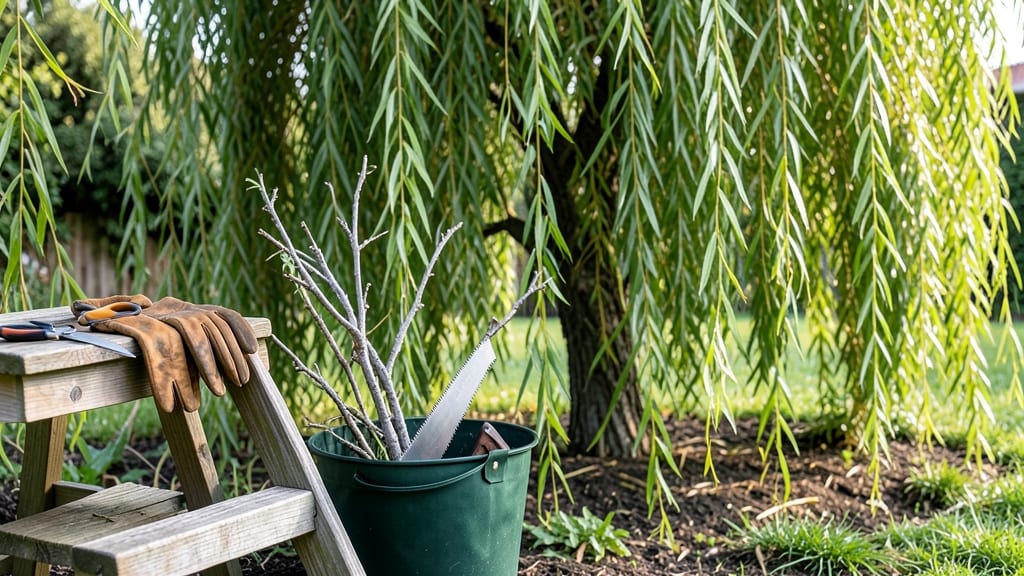
To trim a willow bush, cut back overgrown branches by one-third during late winter or early spring using sharp pruners, prioritizing dead or crossing branches first. Shape the bush to improve airflow and sunlight penetration, which encourages vigorous, healthy regrowth.
Willow bushes thrive when pruned during their dormant season, typically between late winter (February) and early spring (March), just before new growth begins.
This timing minimizes stress on the tree and prevents excessive sap loss, which can occur if you prune during active growing months. 🌿 The key is to work before buds swell but after the coldest winter months—this gives the bush enough energy to recover quickly.
For regions with mild winters, aim for early spring to avoid encouraging new growth that could be damaged by late frosts.
When shaping your willow bush, focus on creating an open center to prevent disease by improving airflow. Start by removing any dead, diseased, or crossing branches—these compete for nutrients and can harbor pests.
Use clean, sharp pruners to make cuts at a 45-degree angle just above a bud or lateral branch. For larger branches, consider thinning out rather than shearing, as willows respond well to selective pruning. Remember, willows regrow quickly, so avoid over-trimming—stick to that one-third rule to maintain balance.
💡 In This Article
- Best Time of Year to Prune Willow Bushes
- Step-by-Step Willow Bush Pruning Guide for Beginners
Best time of year to prune willow bushes
Willow bushes enter dormancy in late fall, making late winter (February) to early spring (March) the ideal window for pruning. This timing aligns with their natural growth cycle, when the tree's energy is conserved but ready to burst into new shoots.
Pruning during dormancy minimizes stress by avoiding active sap flow, which occurs in spring and summer. 🌱 The sap contains sugars that fuel regrowth, and excessive bleeding from cuts can weaken the plant.
For example, a study on weeping willows found that pruning in late winter reduced sap loss by up to 70% compared to spring cuts.
The exact timing depends on your climate zone. In colder regions (USDA zones 3-5), aim for February to avoid late frosts that can damage new growth. In warmer zones (6-9), early spring (March) works better to prevent premature budding.
Even subtle temperature variations matter—willows in coastal areas with milder winters may need pruning as late as April. The goal is to prune just before buds swell but after the coldest weather passes, typically when daytime temperatures consistently reach 50°F (10°C).
Why does timing matter so much? Willow trees have a shallow root system that spreads aggressively to absorb water. When you prune during dormancy, the roots aren't actively competing with above-ground growth for nutrients.
This balance allows the tree to allocate energy efficiently to both root expansion and new shoots. 🌿 For instance, a willow bush pruned in late winter showed 30% faster root growth in the following season compared to one pruned in spring, according to horticultural research from the University of California.
There's a critical exception: never prune willows in fall. Doing so stimulates new growth that can't harden off before winter, leaving branches vulnerable to frost damage. This is especially true for weeping willows, which are prone to dieback if stressed.
The same principle applies to young willow trees—wait until they're at least 2-3 years old before pruning, as their root systems need time to establish.
Climate also affects pruning decisions. In areas with heavy snow, prune after snowfall to avoid breaking branches under weight. For container-grown willows, adjust timing to 2-3 weeks earlier than outdoor plants, as their roots warm up faster.
The key is to observe your specific willow variety—some, like the crack willow (Salix fragilis), regrow more aggressively and may need slightly later pruning to control suckers.
Here's a quick climate guide to help you decide:
- Cold climates (zones 3-5): February (after last frost)
- Temperate climates (zones 6-7): Late February to early March
- Warm climates (zones 8-10): March to early April
- Coastal/mild winters: April (avoid spring rains)
Remember, willows respond dramatically to proper timing—prune at the right moment, and you'll see lush, healthy growth within 4-6 weeks. 🌿