
How To
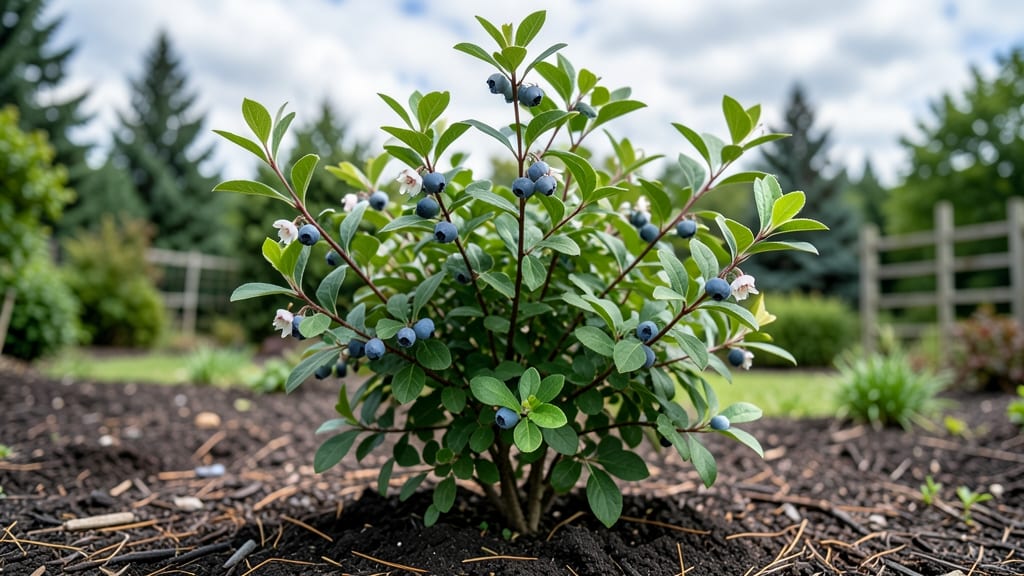
How tall does a blueberry bush grow? It depends on the variety and care you give them 🫐—and knowing the right size can save you space (or heartache) when planting.
If you're dreaming of a blueberry bush but wondering whether it’ll fit in your backyard—or just your balcony—you’re not alone. Some varieties stay compact, while others reach for the sky, and picking the wrong one can mean wasted space or a harvest you can’t reach.
Standard highbush types like 'Bluecrop' or 'Duke' typically hit 6 to 12 feet, making them ideal for larger gardens or as privacy hedges. Meanwhile, dwarf varieties like 'Top Hat' or 'Peach Sorbet' max out around 2 to 4 feet, perfect for containers or small yards.
Below, I’ll break down the height ranges, how to choose the right size for your space, and tips to control growth—so you can enjoy those sweet berries without the bush taking over your garden.

Blueberry bush height ranges: dwarf to giant varieties explained
Blueberry bushes aren’t one-size-fits-all—their height can range from compact dwarfs perfect for containers to towering giants that need room to sprawl. Understanding these size differences helps you choose the right variety for your space, whether it’s a small balcony or a sprawling backyard.
The height of a mature blueberry bush depends on its genetic variety, pruning habits, and growing conditions. Let’s break down the spectrum so you can pick the perfect fit for your garden.
Most blueberry bushes fall into three broad categories: dwarf (under 3 feet), standard (3–6 feet), and giant (6+ feet). Each category has unique spacing needs, care requirements, and ideal growing environments.
For example, dwarf varieties thrive in pots or tight spaces, while giant bushes need ample room to develop their full potential. Knowing these distinctions ensures you avoid overcrowding, poor airflow, and even stunted fruit production.
Here’s a quick guide to blueberry bush heights, including popular varieties and their mature sizes:
| Variety Type | Mature Height | Spacing Needs | Best For |
|---|---|---|---|
| Dwarf (Lowbush) | 1–3 ft | 1–2 ft apart | Containers, small gardens, edging |
| Semi-Dwarf (Half-High) | 3–5 ft | 3–4 ft apart | Small yards, raised beds, urban gardens |
| Standard (Highbush) | 5–8 ft | 5–6 ft apart | Backyards, orchards, large gardens |
| Giant (Super-Highbush) | 8–12 ft | 8–10 ft apart | Large properties, commercial plantings |
Dwarf varieties, like the ‘Top Hat’ or ‘Peach Sorbet’, stay under 3 feet tall and are ideal for containers, balconies, or small gardens. These bushes produce smaller yields but are perfect for urban gardeners or those with limited space. Their compact size also makes them easier to prune and maintain, reducing the need for ladders or tall tools.
Semi-dwarf (half-high) bushes, such as ‘Bluecrop’ or ‘Patriot’, reach 3–5 feet at maturity. They strike a balance between productivity and space efficiency, making them a favorite for raised beds, small yards, or mixed borders. These varieties often produce larger berries than dwarfs while still fitting neatly into moderate-sized gardens. Space them 3–4 feet apart to allow airflow and prevent disease.
Standard highbush varieties, like ‘Duke’ or ‘Jersey’, grow 5–8 feet tall and are the most common choice for home gardens. They require 5–6 feet of spacing to thrive and produce abundant harvests when given proper care. These bushes are hardy and productive, but their size means they need regular pruning to control height and shape. If you have a sunny backyard, a standard blueberry bush is a great investment for fresh berries.
For those with ample space, giant (super-highbush) varieties like ‘Aurora’ or ‘Liberty’ can reach 8–12 feet tall. These are often used in commercial plantings or large rural properties where space isn’t a concern.
They produce massive yields but require 8–10 feet of spacing and heavy-duty pruning to keep them manageable. If you’re growing them in a home garden, consider trellising or espalier techniques to save space.
One critical factor influencing height is pruning. Regular pruning controls bush size, improves air circulation, and boosts fruit production.
For dwarf varieties, light pruning in late winter keeps them tidy, while standard and giant bushes benefit from annual pruning to remove dead wood and shape the plant. Always use clean, sharp pruners and sterilize tools between cuts to prevent disease spread.
Another key consideration is soil and sunlight. Blueberry bushes thrive in acidic, well-draining soil with a pH of 4.5–5.5. They also need full sun (6–8 hours daily) to reach their full height and produce the best fruit.
If your garden lacks these conditions, consider amending the soil with peat moss or sulfur and planting in a sunny spot to encourage healthy growth.
Whether you’re growing dwarf blueberries in pots or giant bushes in your backyard, choosing the right size ensures a successful harvest and a beautiful garden.
Now that you know the height ranges, you’re ready to pick the perfect variety for your space—just don’t forget to measure twice and plant once! 🌱
How to choose the right blueberry bush size for your space
Selecting the perfect blueberry bush size depends entirely on your space and gardening goals. A standard blueberry bush can reach 6–12 feet tall, making it ideal for spacious backyards, while dwarf varieties stay under 3 feet—perfect for containers or small balconies.
Your choice impacts not just aesthetics but also harvest yield and maintenance ease.
Before purchasing, measure your garden bed or container. A 3-foot dwarf bush needs only 3–4 feet of space, while a 6-foot standard bush requires 5–6 feet for optimal airflow and sunlight. If you’re short on space, consider semi-dwarf varieties (4–5 feet) that strike a balance between size and productivity.
Blueberry Bush Size Comparison
2–4 ft tall
4–5 ft tall
6–12 ft tall
- Fits containers
- Low maintenance
- Early harvest
- Smaller yield
- Limited root space
- Balanced size
- Higher productivity
- Needs more space
- Requires pruning
- Large harvest
- Long lifespan
- Needs large space
- Harder to maintain
Sunlight is another critical factor. All blueberry bushes thrive with 6–8 hours of full sun daily, but taller varieties may cast shadows over nearby plants. If your space gets partial shade, opt for a dwarf or semi-dwarf bush—they adapt better to lighter conditions while still producing fruit.
Pruning plays a huge role in managing height. For standard bushes, prune in late winter to remove dead or overcrowded branches, keeping the center open for airflow. For dwarf varieties, light pruning in early spring encourages bushier growth. Always use sterilized shears to prevent disease spread.
For small gardens or urban spaces, consider container gardening. A 5-gallon pot works for dwarf bushes, while 15-gallon containers suit semi-dwarfs. Use a well-draining, acidic soil mix (pH 4.5–5.5) and ensure the container has drainage holes to prevent root rot.
Remember, even standard bushes can be trained to stay smaller with consistent pruning. Start young—prune new growth back by one-third in the first year to encourage a compact shape. With the right variety and care, you can enjoy homegrown blueberries regardless of space! 🌱