
How To
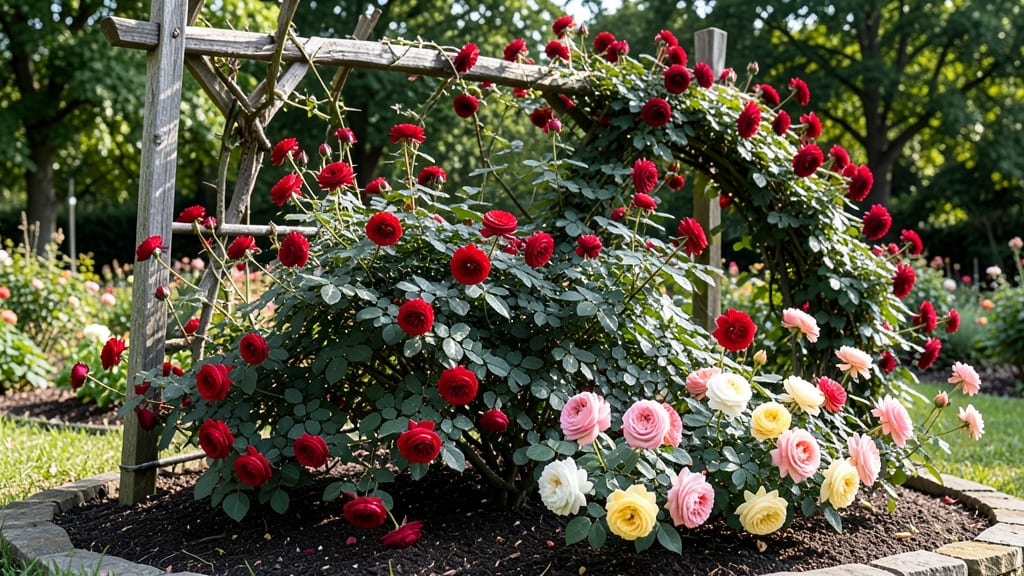
Rose bushes can grow anywhere from 1 foot to towering 12 feet tall, depending entirely on the variety you choose.
Picture this: a delicate miniature rose 🌹 barely reaching your knee, while a climbing rose sprawls across your porch like a living pergola. The difference isn’t just about space—it’s about pruning, sunlight, and even your local climate.
If you’ve ever wondered whether your garden can handle a 6-foot shrub rose or if a climbing giant is practical for your fence, this guide breaks down the exact heights by type—and how to control growth without stunting those stunning blooms.
You’ll learn which roses stay compact, which varieties need trellises, and the pruning secrets that keep even the tallest roses in check. Let’s get started.

Rose bush height by variety: from miniature to climbing giants
Choosing the right rose variety for your space isn’t just about color or fragrance—it’s about understanding height potential. A miniature rose might fit perfectly in a window box, while a climbing rose could scale your entire pergola.
Knowing these differences helps you plan spacing, pruning, and even trellis support before planting. Let’s break down the natural height ranges of the most popular rose types so you can pick the perfect fit for your garden.
Roses aren’t one-size-fits-all. Some varieties stay compact, ideal for small gardens or containers, while others reach towering heights, perfect for fences or arbors. Even within categories like hybrid teas or floribundas, heights can vary by 1-3 feet.
For example, a dwarf hybrid tea might max out at 2 feet, while a standard climber can soar to 20 feet or more with proper training. Your pruning approach—and even your soil type—can influence how much a rose stretches toward the sky.
| Variety | Height Range | Growth Habit | Ideal Spacing |
|---|---|---|---|
| Miniature Roses | 6"–24" | Bushy, compact | 12"–18" apart |
| Polyantha Roses | 18"–36" | Upright, multi-stemmed | 18"–24" apart |
| Floribunda Roses | 24"–48" | Bushy, clusters of blooms | 24"–36" apart |
| Grandiflora Roses | 36"–60" | Tall, single-stemmed | 36"–48" apart |
| Hybrid Tea Roses | 36"–60" | Upright, classic blooms | 24"–36" apart |
| Climbing Roses | 6"–20+ ft | Long canes, needs support | 12"–18" from structure |
| Shrub Roses | 3"–6 ft | Multi-stemmed, dense | 24"–36" apart |
If you’re working with limited space, miniature roses and polyantha varieties are your best bets. These stay under 3 feet tall and thrive in containers or along borders. For example, the 'Fairy' rose maxes out at just 12 inches, making it perfect for rock gardens or window boxes.
Meanwhile, floribundas like 'Iceberg' reach 3–4 feet, offering a balance of height and bushiness for mixed borders.
For statement-making plants, grandiflora and hybrid tea roses deliver dramatic blooms on 4–5 foot stems. These varieties often produce single, large flowers and benefit from staking to prevent flopping.
If you’re dreaming of a romantic arbor, climbing roses like 'New Dawn' can climb 15–20 feet with proper training. Just remember: these giants need strong trellises or fences to support their weight.
Don’t overlook shrub roses for mid-height options. These multi-stemmed beauties typically grow 3–6 feet tall and create lush, informal hedges. Varieties like 'Knock Out' roses stay around 4 feet and bloom continuously with minimal pruning. Their disease-resistant nature makes them ideal for low-maintenance gardens.
Your climate and soil can also tweak a rose’s height. Roses in warmer zones (USDA 8–10) often grow 10–20% taller than those in cooler regions. For instance, a hybrid tea might hit 5 feet in Florida but only 4 feet in Zone 5.
Well-draining, nutrient-rich soil encourages stronger stems, while poor soil can stunt growth. Always amend your soil with compost or organic matter before planting to support healthy height development.
Proper pruning techniques can also control height. If you want a taller rose, avoid heavy pruning—focus on removing dead wood and shaping. For shorter roses, prune back 1/3 of the plant in early spring to encourage bushier growth. Just be careful: over-pruning climbing
Pruning limits for rose bushes: how to control height without harming growth
Pruning is the key to managing your rose bush's height while keeping it healthy and blooming. Different rose varieties have distinct pruning limits, and cutting too aggressively can stunt growth or even kill your plant.
For example, climbing roses need minimal pruning to encourage their towering vines, while miniature roses require gentle shaping to maintain their compact form.
Understanding your rose's natural growth habit helps you decide whether to promote bushier growth or allow it to reach its full height potential. Hybrid teas and grandifloras, for instance, typically grow 3–6 feet tall and benefit from regular pruning to maintain shape and airflow.
Meanwhile, shrub roses can reach 5–8 feet and often thrive with lighter pruning to encourage a fuller, more natural look.
Watch Out: Over-Pruning Mistakes
Roses have natural height limits based on their variety, and pruning beyond these limits can cause irreversible damage. For example, cutting back a climbing rose by more than one-third of its height in a single season can weaken its structure and reduce flowering.
Always research your specific rose variety—some, like old garden roses, are particularly sensitive to heavy pruning.
Seasonal timing plays a critical role in pruning success. Early spring is ideal for heavy pruning of shrub roses and hybrid teas, as it removes dead wood and stimulates new growth before the growing season.
In contrast, light pruning in late summer or early fall helps shape climbing roses without disrupting their winter dormancy.
To encourage bushier growth in roses that naturally reach taller heights, focus on pruning the top third of the plant to promote lateral branching.
For instance, if your grandiflora rose is growing too tall, cut back the tallest stems by one-third and remove any crossing branches to improve airflow and reduce disease risk.
If you're aiming for taller stems, like with climbing roses, avoid heavy pruning altogether. Instead, provide a sturdy trellis or arbor and train the canes upward.
Prune only to remove dead or weak growth, and never cut back more than 10–15% of the plant's height in a single season to maintain its vigor.
Always step back and assess your rose bush after pruning to ensure you've achieved the desired shape without overdoing it. Remember, patience is key—roses respond best to gradual pruning over multiple seasons.
With the right approach, you can guide your roses to the perfect height for your garden while keeping them thriving for years to come. ✂️🌹