
Container Gardens
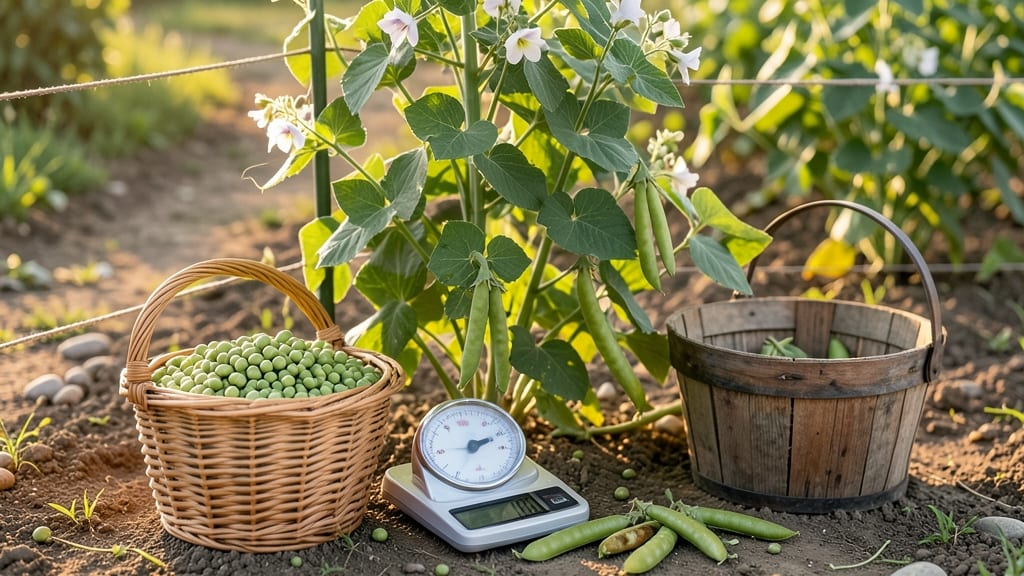
Knowing how many pounds are in a bushel of field peas helps gardeners and farmers accurately measure yields, with a standard bushel weighing about 60 pounds. However, moisture levels and pea variety can cause slight variations, making precise calculations essential for storage planning.
A bushel measurement for field peas isn't set in stone—it depends on factors like moisture content and shell thickness. 🌱 For instance, freshly harvested peas might weigh slightly more due to higher water content, while dried peas could be lighter.
The USDA standard of 60 pounds per bushel is a baseline, but real-world conditions often require adjustments. This is why experienced growers always weigh samples rather than relying solely on volume.
Understanding this weight helps with everything from seed planning to market sales.
For example, if you're selling peas by the bushel, knowing the exact poundage ensures fair pricing and avoids disputes with buyers. 💡 Gardeners also use this measurement to estimate how much storage space they'll need before harvest season—field peas are heavy, and proper ventilation is key to preventing spoilage.
💡 In This Article
- Why Field Pea Weight Varies by Moisture and Variety
- Practical Uses for Bushel Weight in Gardening and Farming
Why field pea weight varies by moisture and variety
Field peas absorb moisture like a sponge, and their weight shifts dramatically based on water content.
At harvest, freshly picked peas can contain 15-20% moisture by weight, which adds significant pounds to the bushel—sometimes pushing it to 65-70 pounds before drying. 🌱 This moisture evaporates during storage or processing, reducing the weight to the standard 60-pound bushel once dried to 10-12% moisture.
The USDA defines a bushel for commercial trade at this dried state, but farmers must account for this natural variation when planning storage or sales.
Pea variety also plays a role—thicker shells (common in hardier varieties) add bulk without much weight gain, while thinner-shelled peas pack more edible weight per volume. For example, a bushel of black-eyed peas might weigh slightly less than green field peas due to shell density differences.
Even within the same variety, shell thickness can vary by 5-10%** depending on growing conditions, further affecting the total weight.
Temperature and humidity during growth also influence final weight. Peas grown in cooler, wetter climates tend to have higher moisture retention at harvest, while those from hot, dry regions dry out faster in the pod.
This is why a bushel of peas from North Dakota might consistently weigh 62 pounds, while the same variety from Georgia could average 58 pounds due to faster field drying. 💧 These regional differences are critical for farmers who need to adjust storage plans based on expected moisture levels.
For gardeners, this variability means never assuming a bushel equals exactly 60 pounds. A simple test is to weigh a quart-sized sample (about 1/16 of a bushel) and multiply by 16 to estimate total weight.
This hands-on approach accounts for your specific growing conditions and pea variety, preventing over- or under-estimation of yields. The key takeaway? Always weigh, don't guess—especially when planning storage or sales.
Storage conditions further complicate weight calculations. Improper ventilation can cause peas to reabsorb moisture from the air, adding unexpected pounds back to the bushel. In contrast, well-ventilated storage keeps moisture stable, maintaining the 60-pound baseline.
This is why commercial farmers invest in climate-controlled storage—it's not just about preventing spoilage, but also ensuring consistent weight for buyers who rely on those 60-pound bushel standards.
Understanding these factors helps explain why some farmers see their bushels fluctuate by 5-10 pounds from year to year. The science isn't just about moisture—it's about how peas interact with their environment at every growth and storage stage.
For gardeners, this means paying attention to local climate patterns and adjusting expectations accordingly. 🌱