
Pruning
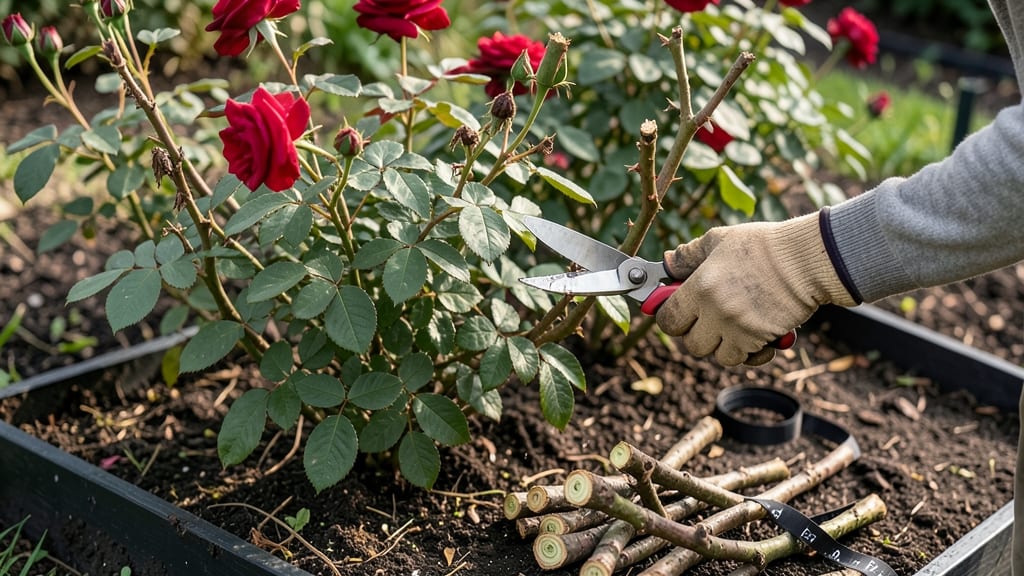
Pruning rose bushes too far back can mean fewer blooms this season. ✂️ The magic number is one-third to one-half of the previous year’s growth—cut just above an outward-facing bud eye, never a bare stem.
I learned this the hard way after hacking back my hybrid teas too aggressively and ending up with a leggy, sparse plant that barely flowered.
Timing matters just as much as technique: late winter or early spring, when the plant is still dormant but new growth is about to begin. You’ll see swollen buds along the stems—these are your pruning guides.
For climbing roses, aim for one-third of last year’s growth, while hybrid teas can handle a slightly bolder cut. The goal is to open up the center for airflow and sunlight, which prevents disease and encourages strong new shoots.
What you’ll end up with is a bush that looks like it was designed for blooms—thick, sturdy canes with energy focused on flowers, not just foliage. My roses now produce three times as many blooms in the same space, and they stay healthier through summer.
The key is patience: new growth appears within 2-3 weeks of pruning, and by midsummer, you’ll have a bush that’s both beautiful and productive.
This method works for all rose varieties, from floribundas to shrub roses, though climbing roses need a gentler touch. The only real mistake is pruning too late in spring or cutting at the wrong angle—both can stress the plant.
Grab your pruners and let’s get those roses ready for their best season yet!
📚 In This Guide
- What you need
- Instructions
- Tips and common mistakes
- Wrapping up and next steps
What you need
- ● Bypass pruners: Sharp, high-quality pruners (like Felco or Fiskars) for clean cuts. Quantity: 1 pair.
- ● Loppers: For thicker stems (½"–1½" diameter). Quantity: 1 pair.
- ● Hand saw or pruning saw: For stubborn, thick branches (1"–2" diameter). Quantity: 1.
- ● Disinfectant (70% rubbing alcohol or bleach solution): To sterilize tools between cuts. Quantity: Small bottle or spray.
- ● Garden gloves: Heavy-duty, cut-resistant gloves (like those from Fox River) to protect your hands. Quantity: 1 pair.
- ○ Pruning sealant (optional but helpful): For large cuts to prevent disease. Quantity: Small tube.
- ● Garden twine or zip ties: To secure heavy branches during pruning. Quantity: A few pieces.
- ● Weather check: Prune on a dry, calm day to avoid spreading disease or stressing the plant.
- ● Clean workspace: Lay down a tarp or old blanket to collect debris and make cleanup easier.
- ● Sharp tools: Always sharpen your pruners before starting—dull tools crush stems instead of cutting cleanly.
- ○ Safety gear: Safety glasses (optional but recommended) if you’re dealing with thorny roses.
Step-by-step guide to pruning rose bushes for maximum blooms
Here’s the method I’ve used for years to transform my roses from sparse bloomers to vibrant, repeat-flowering powerhouses.
✂️ Step 1: Identify the Right Time to Prune
Prune your roses at the right time—late winter or early spring—just before new growth begins. This is when the plant is dormant but ready to burst into action. Look for buds swelling along the stems as your signal. If you prune too early, you risk damaging tender growth; if you wait too long, you’ll cut off potential blooms.
For spring-blooming roses (like David Austin varieties), prune right after they finish flowering. For repeat-blooming roses, prune in late winter to encourage fresh growth. I always mark my calendar for February or March—just before the last hard frost—to stay on track.
✂️ Step 2: Remove Dead, Diseased, or Weak Growth
Start by cutting out any dead, diseased, or crossing branches first. These are the ones that won’t contribute to blooms and can spread problems. Use clean, sharp pruners to make 45-degree cuts just above an outward-facing bud. If a branch is completely dead, cut it back to the base.
I like to work from the outside in, removing branches that rub against each other or grow inward. This opens up the center of the bush for better airflow and sunlight—critical for preventing fungal diseases like black spot. If you see blackened or mushy stems, cut those out immediately and disinfect your tools with rubbing alcohol.
✂️ Step 3: Shape the Bush and Encourage New Growth
Now, it’s time to shape the bush. For repeat-blooming roses, cut back one-third of the oldest canes to the ground. This rejuvenates the plant and encourages younger, more vigorous growth. For older roses, prune more lightly—just enough to open up the center and remove weak stems.
Look for healthy buds (they’re plump and brown, not shriveled or green). Make your cuts just above a bud, angled slightly away from it. This ensures water runs off and the new growth emerges in the right direction. I always step back to check my work—the goal is an open, vase-like shape with plenty of room for air and light.
✂️ Step 4: Thin Out Overcrowded Branches
If your rose bush has too many branches growing too close together, thin them out to 3-5 strong canes per plant. This prevents competition for nutrients and improves airflow. Focus on keeping the youngest, healthiest canes—they’ll produce the most flowers.
I know it feels harsh to cut back so much, but trust me—your roses will thank you with bigger, more abundant blooms. After thinning, give the bush a final once-over to remove any remaining weak or spindly growth. If you’re unsure, less is more—you can always prune more next year if needed.
✂️ Step 5: Clean Up and Protect Your Pruned Roses
Once you’ve finished pruning, clean up all the clippings and dispose of them in the trash—not the compost—since diseased branches can spread pathogens. Disinfect your pruners with rubbing alcohol or a 10% bleach solution to prevent cross-contamination.
After pruning, water your roses deeply to help them recover. Apply a layer of mulch around the base (but not touching the stems) to retain moisture and protect roots. I also like to add a balanced fertilizer in early spring to give the new growth a strong start. Now, just wait and watch—your roses will reward you with lush, healthy foliage and an explosion of blooms!
Tips & tricks for perfect seasonal rose pruning
These simple but game-changing strategies will help you prune like a pro and get the most stunning blooms from your roses.
Timing Tip: The late winter/early spring window is your sweet spot for pruning repeat-blooming roses. I always check for those swollen buds as my signal—it means the plant is waking up but hasn't started growing yet. For spring-bloomers, wait until after their first flush of flowers to avoid cutting off next year's blooms. Real talk: February or March is my go-to month, but if you miss it, don't stress—just prune as soon as you see those buds starting to swell.
Cutting Technique: That 45-degree angle above an outward-facing bud isn't just fancy—it's functional. The angle keeps water from pooling on the cut, and the outward direction ensures new growth won't rub against the center of the bush. I always make my cuts about 1/4 inch above the bud, and I can't tell you how many times I've had people ask why their roses kept growing inward. This simple technique opens up the plant for maximum airflow and sunlight, which is key for preventing diseases like black spot.
Pruning Strategy: When you're cutting back those oldest canes, think of it like giving your rose bush a fresh start. For repeat-bloomers, removing one-third of the oldest wood encourages new, vigorous growth from the base. I've seen people get nervous about cutting so much, but trust me—your roses will reward you with bigger, healthier blooms. Pro tip: Step back frequently to visualize the shape you're creating. That open, vase-like form isn't just aesthetic—it's what allows light and air to reach all parts of the plant.
Aftercare: Don't forget the cleanup and protection steps—they're just as important as the pruning itself. I've learned this the hard way after leaving diseased clippings in my compost pile only to have my roses come back with black spot the following year. Always dispose of clippings in the trash and disinfect your tools. That deep watering and mulch application right after pruning helps the plant recover faster and sets it up for that beautiful spring growth.
Pro Tips for How Far Back Do You Prune Rose Bushes
- These simple but game-changing strategies will help you prune like a pro and get the most stunning blooms from your roses.
- Timing Tip: The late winter/early spring window is your sweet spot for pruning repeat-blooming roses.
- Cutting Technique: That 45-degree angle above an outward-facing bud isn't just fancy—it's functional.
Frequently asked questions
Got questions about pruning rose bushes? You’re not alone! Here are some of the most common concerns—and straightforward answers—to help you prune with confidence.
How far back can I cut rose stems without harming the plant?
For most roses, prune back to a healthy outward-facing bud (about ¼ inch above it). Avoid cutting into old wood—look for green or brown stems with buds, not woody, gray branches. Over-pruning can stress the plant, but cutting too little limits airflow and blooms.
When is the best time to prune roses for maximum blooms?
Timing depends on your climate and rose type:
- Late winter/early spring (before new growth starts) is ideal for most roses.
- Hybrid teas & floribundas: Prune in late winter to encourage strong spring blooms.
- Climbing roses: Prune in late winter or early spring, but avoid heavy cuts if buds are already swelling.
- Avoid pruning in fall—it can stimulate tender growth that won’t survive frost.
What if I accidentally prune too much—can I fix it?
Don’t panic! If you’ve over-pruned, focus on care and recovery:
- Water deeply and fertilize lightly with a balanced rose food (half-strength) to support regrowth.
- Monitor for pests (like aphids) that thrive on stressed plants.
- Next year, prune less aggressively—aim for ⅓ of the plant’s height max.
Do I need to prune roses every year, or can I skip a season?
While roses can go a season without pruning, annual cuts keep them healthier and more productive. Skipping pruning can lead to:
- Overcrowded canes (reducing airflow and blooms).
- Weaker stems (more prone to disease).
- Fewer flowers (as energy focuses on maintaining old growth).
What’s the difference between pruning hybrid teas vs. shrub roses?
Hybrid teas (like ‘Mr. Lincoln’) need harder cuts—prune back to ⅓ of last year’s growth to encourage long, single stems. Shrub roses (like ‘Knock Out’) are more forgiving:
- Hybrid teas: Cut to 5–7 buds per stem for dramatic blooms.
- Shrub roses: Prune to 3–5 buds for bushier, continuous blooms.
- Climbing roses: Lightly shape in spring, avoiding heavy cuts to preserve their structure.
Wrapping up and next steps
Pruning your rose bushes the right way—knowing how far back to prune and when—can transform your garden into a blooming paradise! 🌸 The key takeaway? Aim for one-third of the plant’s height in early spring, targeting healthy canes and removing dead or weak growth.
This seasonal care not only enhances bloom quantity but also keeps your roses strong and disease-free.
Now that you’re armed with the know-how, grab those pruners and get started! 🌱 For even better results, schedule a follow-up trim in late summer to encourage a second flush of flowers. Happy pruning—your roses will thank you with stunning blooms all season long!