
Shrubs
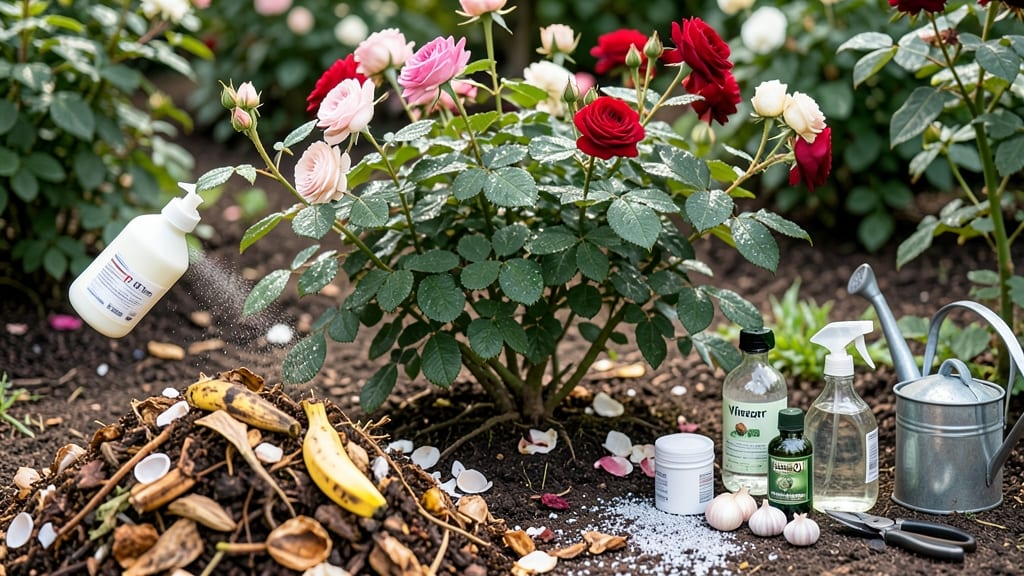
My rose bushes looked like they'd been through a war—black spots, wilted leaves, and aphids sucking the life out of them. 🌹 The solution wasn't expensive sprays but simple, home remedies that worked better than anything I'd bought before.
No chemicals, just kitchen staples and garden scraps transformed into plant-saving elixirs.
Garlic spray wipes out fungal diseases like black spot, neem oil tackles pests from aphids to Japanese beetles, and baking soda keeps powdery mildew at bay. These remedies cost pennies compared to store-bought treatments and work just as well—sometimes even better—because they're gentle on your plants and the environment.
The best part? You can make them in 10 minutes with ingredients you already have.
What you end up with are roses that bloom longer and brighter, with glossy green leaves and zero pest problems. The secret is consistency: spray every 7-10 days during growing season, and your bushes will thank you with flowers that turn every garden into a showstopper.
No more wilting, no more spots—just healthy, happy roses that keep giving all summer.
Works for every type of rose—hybrids, climbers, shrubs—and adapts to your schedule. Here's how to make them work for you, step by step. Your roses deserve better than chemical warfare—give them these natural fixes instead.
📚 In This Guide
- What you need
- Instructions
- Tips and common mistakes
- Wrapping up and next steps
What you need
- ● Organic compost – 5–10 lbs (for enriching soil)
- ● Epsom salt (magnesium sulfate) – 1 tbsp per gallon of water (for yellowing leaves)
- ● Neem oil – 1–2 tbsp per gallon of water (for pests & fungal issues)
- ● Baking soda – 1 tbsp per quart of water (for powdery mildew)
- ● Hydrogen peroxide (3%) – 1 tbsp per gallon of water (for fungal diseases)
- ● Coffee grounds – 1–2 cups (for acid-loving roses & pest deterrence)
- ● Garlic or onion peels – 1 cup (for natural pesticide spray)
- ● Pruning shears – Sharp, clean pair (for trimming dead growth)
- ● Garden hose or spray bottle – For applying remedies evenly
- ● Fish emulsion or liquid seaweed fertilizer – Boosts growth naturally
- ● Diatomaceous earth – Sprinkle around base to deter pests
- ● Aspirin (crushed) – 1 tablet per gallon of water (for fungal prevention)
- ● Milk (1 part milk to 9 parts water) – Spray for powdery mildew
- ● Garden gloves – Protects hands from thorns & chemicals
- ● pH testing kit – Ensures soil is ideal (roses prefer 6.0–6.5)
Step-by-Step natural care for revitalizing rose bushes
Here's how to bring your roses back to life using simple, effective home solutions.
🌿 Step 1: Refresh Soil with Organic Fertilizer
Spread a 2-inch layer of compost around the base of each rose bush, keeping it 6 inches away from the stem. This creates a nutrient-rich zone while preventing rot. I like to mix in a handful of egg shells (crushed) for calcium—roses love it, and it deters slugs naturally. Water the area thoroughly to help the compost integrate into the soil.
Wait 3-5 days before watering again to let the compost settle. You'll notice the soil looks darker and fluffier after this treatment, which signals improved drainage and root health. For established bushes, do this twice yearly—once in early spring and again after the first flush of blooms.
☀️ Step 2: Boost Blooms with Homemade Rose Tea
Combine 1 tablespoon of black tea (unsweetened) with 1 quart of hot water in a jar. Let it steep overnight, then strain and dilute with 3 quarts of water. Pour this mixture directly onto the soil around the base of each bush. The tea provides nitrogen and tannins that strengthen stems and encourage vibrant blooms.
Apply this every 2 weeks during the growing season (spring through fall). You'll see leaves develop a richer green within 10-14 days, and buds will form more quickly. For extra potency, add 1 tablespoon of liquid seaweed extract to the mix—it's packed with growth hormones roses crave.
💧 Step 3: Prevent Pest Issues with Natural Sprays
Mix 1 quart of water with 1 tablespoon of dish soap (mild, like Castile) and 1 tablespoon of vegetable oil. Shake well and spray directly on leaves, focusing on the undersides where pests hide. This neem oil alternative disrupts insect life cycles without harming beneficial bugs. Apply in the early morning to avoid burning leaves in sunlight.
Repeat every 7-10 days or after heavy rain. You'll notice aphids and spider mites disappear within 3-5 days of consistent use. For fungal issues like black spot, add 1 teaspoon of baking soda to the mix—it creates an alkaline environment that fungi can't tolerate.
✂️ Step 4: Prune for Airflow and Disease Prevention
Use clean, sharp pruners to remove dead, crossing, or weak branches at a 45-degree angle. Cut just above an outward-facing bud to encourage healthy growth. I prune in late winter or early spring when the bush is dormant, but you can do light maintenance pruning after blooms fade to promote a second flush.
Sterilize your tools with rubbing alcohol between cuts to prevent spreading disease. Open up the center of the bush by removing 1/3 of the oldest canes—this improves airflow and reduces humidity, which is key for preventing fungal infections. You'll see new shoots emerging from the base within 2-3 weeks, signaling successful pruning.
🪴 Step 5: Mulch to Retain Moisture and Insulate Roots
Apply a 3-inch layer of organic mulch (like shredded bark or straw) around the base, keeping it 2 inches away from the stem. This conserves moisture, regulates soil temperature, and suppresses weeds. I prefer pine needles because they acidify the soil slightly—ideal for roses that prefer a slightly acidic environment (pH 6.0-6.5).
Replenish mulch annually in early spring as it breaks down. You'll notice fewer weeds popping up and soil staying moist longer between waterings. This also protects roots from extreme temperature swings, which is especially helpful in hot summers or cold winters. For extra protection, top with a light layer of leaves in fall to insulate during dormancy.
Tips & tricks for natural rose bush care
Real talk: These little details make all the difference between roses that merely survive and ones that thrive with lush blooms and vibrant health.
Compost Application: When spreading that 2-inch layer of compost in Step 1, work it into the top inch of soil rather than just piling it on. This ensures direct root contact with nutrients. I've seen roses double their bloom production after this simple adjustment—it's like giving them a nutrient IV drip. Also, if you're using garden compost, sift out any large chunks to prevent uneven distribution.
Timing for Rose Tea: The overnight steeping in Step 2 is non-negotiable for maximum potency. If you're short on time, steep for at least 6 hours to extract essential tannins and nitrogen. Pro tip: Use a dark tea bag or loose-leaf tea—it releases more beneficial compounds than pre-ground tea. And always apply this tea to moist soil; dry soil won't absorb the nutrients effectively.
Pest Prevention Strategy: For Step 3's natural spray, I add a few drops of garlic oil to the mix—it's a natural insect repellent that works synergistically with the dish soap and vegetable oil. Apply this spray in the evening rather than morning to avoid potential leaf burn from sunlight exposure. The combination creates a triple-action barrier against pests while being completely safe for your garden ecosystem.
Pruning Precision: When removing those 1/3 oldest canes in Step 4, look for canes that are thinner than a pencil—they're often the most diseased or unproductive. Make your cuts just above an outward-facing bud at that 45-degree angle, and always sterilize your pruners between bushes to prevent cross-contamination. This single step can transform a struggling rose bush into a vigorous bloomer within a single growing season.
Pro Tips for Home Remedies For Rose Bushes
- Real talk: These little details make all the difference between roses that merely survive and ones that thrive with l...
- Compost Application: When spreading that 2-inch layer of compost in Step 1, work it into the top inch of soil rather ...
- Timing for Rose Tea: The overnight steeping in Step 2 is non-negotiable for maximum potency. If you're short on time,...
Frequently asked questions
Got questions about keeping your rose bushes happy with natural care? Here are some of the most common concerns—and simple, effective answers to help you grow lush, vibrant roses without harsh chemicals.
Can I use coffee grounds as a home remedy for my rose bushes?
Absolutely! Coffee grounds are a fantastic organic fertilizer for roses. They’re rich in nitrogen, which promotes leafy growth and healthier blooms. Simply sprinkle used grounds around the base of your rose bush (but avoid direct contact with the stem to prevent mold). Mix them into the soil lightly or compost them first for a gentler release.
When is the best time to apply home remedies to my rose bushes?
Timing matters! For most remedies like compost tea or homemade fungicides, early morning is ideal—this allows the solution to absorb slowly without evaporating in the heat. Avoid applying treatments late in the day, especially if rain is forecast, as it can wash away the benefits. Spring and fall are the best seasons for preventive care, while summer remedies should focus on hydration and pest control.
What’s a quick home remedy for aphids on my roses?
Aphids? No problem! Mix 1 tablespoon of dish soap with 1 quart of water and spray directly on the affected leaves and stems. The soap disrupts their protective layer, and they’ll wash away. For a gentler option, try a neem oil spray (1 tsp neem oil + 1 tsp soap per quart of water)—it’s effective and safe for your roses when used as directed.
Can I use vinegar as a home remedy for roses?
Vinegar can be useful, but use it wisely! A diluted solution (1 part vinegar to 3 parts water) helps control fungal diseases like black spot. However, never apply it directly to the leaves—spray only on the soil or stems to avoid damaging foliage. For pests, vinegar isn’t as effective as soap or neem oil, so pair it with other remedies for best results.
How often should I water my roses with homemade remedies?
Frequency depends on the remedy. For compost tea or fish emulsion, apply every 2–4 weeks during the growing season (spring and summer). Neem oil or soap sprays can be used weekly if pests are severe, but reduce to every 2 weeks once the issue clears. Always water the soil thoroughly before applying remedies to help absorption—and avoid wetting leaves when possible to prevent fungal growth.
Wrapping up and next steps
Caring for your rose bushes naturally doesn’t have to be complicated—just a little love and the right home remedies can make all the difference! 🌹 From organic fertilizers to DIY pest control, these simple solutions will help your roses thrive without harsh chemicals.
With patience and consistency, you’ll soon enjoy lush blooms and a healthier garden.
Ready to take the next step? Start small—try one remedy this week, observe the results, and gradually build your rose-care routine. Happy gardening! 🌱