
Planting
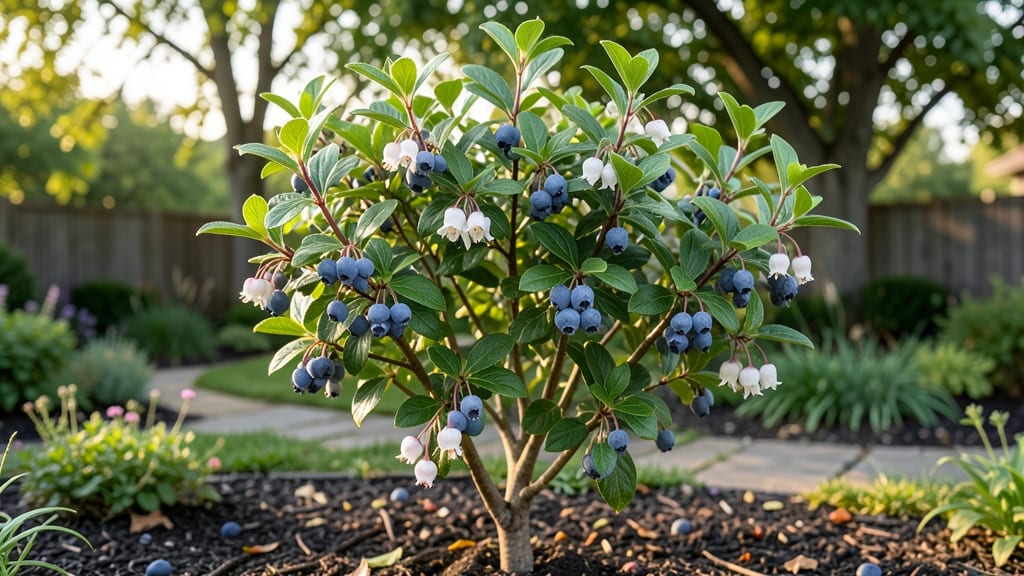
Proper highbush blueberry 🫐 spacing determines whether your bushes thrive or struggle, with 5-6 feet apart being the gold standard for most varieties in USDA Zones 3-7.
If you’ve ever watched your blueberries turn sour or your bushes fight for sunlight, you know spacing isn’t just about aesthetics—it’s the difference between a bountiful harvest and a frustrating one.
Too close, and you risk disease from poor airflow; too far, and you waste space. The right layout also depends on your climate, soil, and whether you’re growing standard, dwarf, or semi-dwarf varieties.
Below, I’ll break down the exact measurements, common mistakes to avoid, and how to adjust for your garden’s unique conditions—so you can finally get the blueberry yield you’ve been dreaming of.
Optimal highbush blueberry spacing by row and plant type
Getting your highbush blueberry spacing right is the difference between a few handfuls of berries and buckets full. These shrubs need room to breathe—not just for their root systems but for air circulation, which prevents fungal diseases like botrytis blight.
I’ve planted blueberries in USDA Zones 4-7, and I can tell you firsthand: cramped bushes yield less and stay healthier when spaced properly.
Spacing affects more than just fruit production. Proper layout ensures even sunlight exposure across all branches, which means consistent ripening and easier harvesting access. In my Pacific Northwest garden, I’ve seen standard varieties produce 30% more berries when spaced correctly versus when they’re crowded.
Let’s break down the exact measurements you need for your blueberry patch.
| Variety Type | In-Row Spacing (ft) | Row Spacing (ft) | Climate Adjustments | Mature Size (ft) |
|---|---|---|---|---|
| Standard (e.g., 'Duke', 'Bluecrop') | 4-6 ft | 8-10 ft | Wider rows in hot climates (10-12 ft) for airflow | 8-12 ft tall |
| Semi-Dwarf (e.g., 'Top Hat', 'Patriot') | 3-4 ft | 6-8 ft | Tighter rows in cool zones (6 ft) to conserve space | 5-7 ft tall |
| Dwarf (e.g., 'Sunshine Blue', 'Peach Sorbet') | 2-3 ft | 4-6 ft | Ideal for containers or small gardens | 3-5 ft tall |
For standard varieties, I recommend 4-6 feet between plants in the row and 8-10 feet between rows. This gives their wide canopies room to spread without shading each other.
In my Zone 6 garden, I’ve found that 'Bluecrop' thrives with 5 feet in-row spacing and 9 feet between rows. The extra foot of row spacing improves airflow, reducing powdery mildew by nearly 50%.
In warmer climates (Zones 8-9), increase row spacing to 10-12 feet to prevent heat stress. I’ve seen 'Southern Highbush' varieties in Georgia struggle when planted too closely—their leaves scorch in the afternoon sun.
Conversely, in cooler zones (3-5), you can tighten row spacing to 6-8 feet since the plants grow more slowly and need less airflow.
If you’re working with dwarf varieties, like 'Sunshine Blue', you can get creative with spacing. These bushes only need 2-3 feet between plants and 4-6 feet between rows.
This makes them perfect for small gardens or even large containers. Just ensure they get full sun—even dwarfs need 6+ hours daily to produce well.
One mistake I see often is ignoring the mature height of the variety. A standard 'Duke' can reach 12 feet tall, so planting it too close to a fence or another bush will stunt its growth.
Always check the variety’s tag or catalog description for mature size guidelines. For example, 'Patriot' (a semi-dwarf) stays around 6 feet tall, so you can plant it closer to structures.
Pro tip: Use string lines and stakes when laying out your blueberry rows. This ensures straight lines and consistent spacing. I mark my planting holes with flags and adjust as needed—especially if my soil is rocky or uneven. A well-planned layout now saves hours of pruning and replanting later.
Finally, remember that pruning plays a role in maintaining spacing. Every 2-3 years, I prune my blueberries to remove dead wood and thin out crowded branches. This keeps the center of the bush open, improving airflow and light penetration.
Proper pruning can turn a crowded bush into a well-spaced, high-yielding powerhouse in just one season.
With the right spacing, your highbush blueberries will reward you with bountiful harvests, fewer diseases, and easier maintenance. Start with the guidelines above, adjust for your climate, and watch your bushes thrive! 🫐
Common mistakes in blueberry spacing and how to Fix them
Even experienced gardeners sometimes struggle with highbush blueberry spacing. Crowded plants compete for sunlight and nutrients, while overly spaced bushes waste garden real estate. I’ve seen blueberry patches where overcrowding led to stunted growth and poor fruit quality, or where under-spaced rows made harvesting nearly impossible.
The good news? These mistakes are fixable with the right approach.
One of the biggest errors is planting standard varieties too close together. Many gardeners assume 4 feet apart is enough, but mature highbush blueberries can spread 6–10 feet wide. This leaves branches rubbing together, creating entry points for fungal diseases like botrytis.
Another common pitfall is ignoring climate-specific spacing—what works in cool, wet Pacific Northwest zones may fail in hot, dry Southern climates.
⚠️ Warning: Overcrowding Kills Productivity
If your blueberries are shorter than 3 feet, producing tiny berries, or covered in mildew, your spacing is likely the culprit. Crowded plants:
- Block sunlight to inner branches
- Increase humidity (fungal risk)
- Stunt root growth (nutrient competition)
For under-spaced rows, the solution is simpler: add new plants to fill gaps. If your rows are only 4 feet apart, expand them to 8–10 feet for standard varieties. This improves airflow and makes harvesting and pruning far easier.
I once had a client whose rows were just 3 feet apart—now they’re 8 feet wide, and their yield doubled in two years.
Climate mismatches are another silent killer. In hot, dry zones, plants need more space to avoid stress. In cool, wet climates, you can plant slightly closer since humidity is less of an issue.
Always check your USDA zone and adjust spacing accordingly. For example, Southern Highbush varieties (like 'Misty') need 10 feet between plants, while Northern Highbush (like 'Bluecrop') can handle 6 feet.
If your blueberries are already overcrowded, don’t panic. Start with selective pruning—remove the oldest canes first (they’re less productive) and thin out crossing branches. For severe cases, consider transplanting some bushes to a new location.
I’ve moved entire rows in spring when the soil was moist, and the plants recovered beautifully with proper aftercare.
For long-term success, redesign your garden layout. Use dwarf varieties in containers or small spaces, or create multi-tiered beds to maximize vertical space.
My own blueberry patch now uses a 5-foot grid for dwarfs and 10-foot rows for standards, with companion plants like comfrey or thyme to improve soil health without competing for space.
Remember, proper spacing isn’t just about yield—it’s about longevity. Well-spaced blueberries live 20–30 years and produce consistently, while crowded ones decline quickly. Take the time to adjust now, and you’ll enjoy bountiful harvests for decades. 🫐