
Shrubs
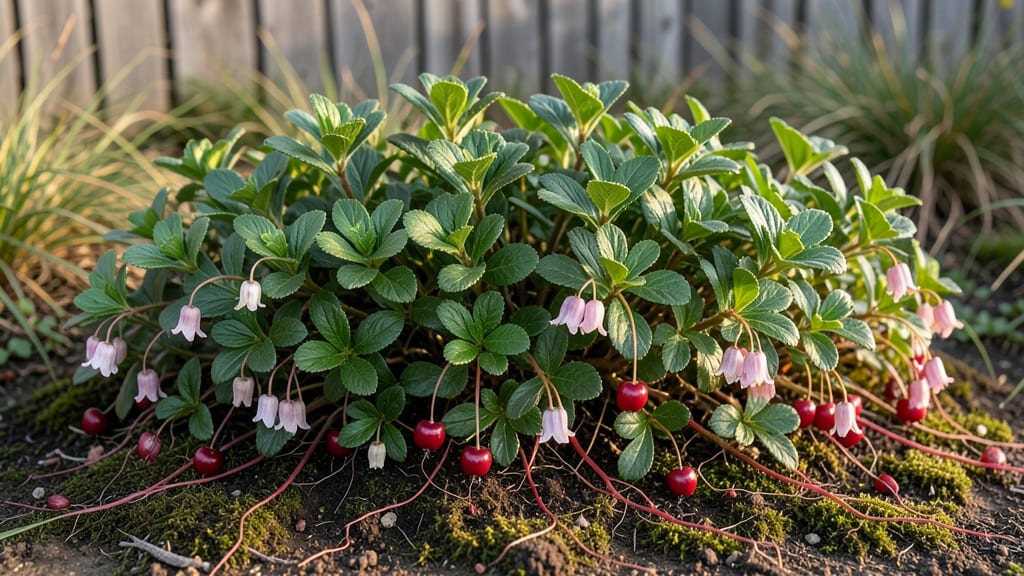
Cranberries do grow on bushes—specifically low-lying evergreen shrubs called Vaccinium macrocarpon—that thrive in acidic, waterlogged bogs rather than typical garden soil. Their unique growth habit produces vibrant red berries when submerged during harvest season.
These cranberry shrubs aren't your average garden plants—they're specially adapted to survive in flooded conditions, where their roots stay oxygenated and nutrient-rich. 🌿 The acidic soil prevents fungal diseases while promoting strong root systems, and the water flooding during harvest actually helps dislodge ripe berries from the vines.
Unlike blueberries or raspberries, cranberries can't tolerate dry soil, which is why commercial farms maintain flooded fields year-round.
What's fascinating is how these shrubs adapt: their woody stems spread horizontally along the ground, creating a dense mat that helps stabilize the bog environment. This growth pattern also makes them perfect for machine harvesting when fields are flooded—workers simply rake the water to collect floating berries.
The whole system is a perfect example of nature's efficiency when conditions are just right.
💡 In This Article
- Cranberry Plant Biology: Why Wetlands Are Ideal
- Growing Cranberries at Home: Soil and Water Requirements
Cranberry plant biology: why wetlands are ideal
The cranberry shrub (Vaccinium macrocarpon) has evolved a remarkable adaptation: its roots thrive in acidic, waterlogged conditions with a pH between 4.0 and 5.0, far more extreme than most garden plants.
Unlike typical berry bushes, cranberries can't tolerate dry soil because their roots require constant oxygen—something flooded bogs provide through specialized air channels in their stems. This adaptation prevents root rot while allowing them to absorb nutrients efficiently from the waterlogged environment.
Here's what makes their growth habit unique: cranberry vines spread horizontally along the ground, forming dense mats that can reach 12-18 inches tall but spread up to 10 feet wide.
Their woody stems develop prop roots that anchor into the bog, creating a stable base for the plant. 🌱 What's fascinating is how these roots develop aerenchyma tissue—air-filled spaces that act like snorkels, allowing oxygen to reach submerged roots.
This is why cranberries can survive in conditions that would kill most plants.
The flooding during harvest isn't just for convenience—it's ecological necessity. When fields are flooded to 6-12 inches deep, the water buoys the berries, making them float to the surface where they can be easily harvested.
The submerged conditions also create a natural fungicide effect, preventing common berry diseases like powdery mildew that plague other fruit bushes. This is why commercial cranberry farms maintain flooded conditions year-round, even when not harvesting.
Comparing cranberries to other berry bushes reveals their specialized nature: blueberries grow in acidic soil but prefer well-drained conditions, while raspberries thrive in neutral soil with good drainage. Cranberries' need for permanent water saturation makes them one of the most unique berry crops in the world.
Their ability to flourish in these harsh conditions is a testament to millions of years of evolution in bog ecosystems.
One often-overlooked detail is how cranberries handle temperature extremes. Their native range in northern climates (like Wisconsin and Massachusetts) means they're hardy down to -20°F, but their roots need consistent moisture to survive winter freeze-thaw cycles.
This dual requirement explains why home gardeners in drier climates struggle—replicating both the acidic soil AND consistent water saturation is challenging without specialized setups.
The cranberry's vibrant red color comes from anthocyanin pigments that develop best in these acidic conditions. These same pigments act as natural sunscreen, protecting the berries from UV damage while they float on the water's surface during harvest.
It's a perfect example of how plant biology and ecology work together to create a crop uniquely adapted to its environment.