
Pruning
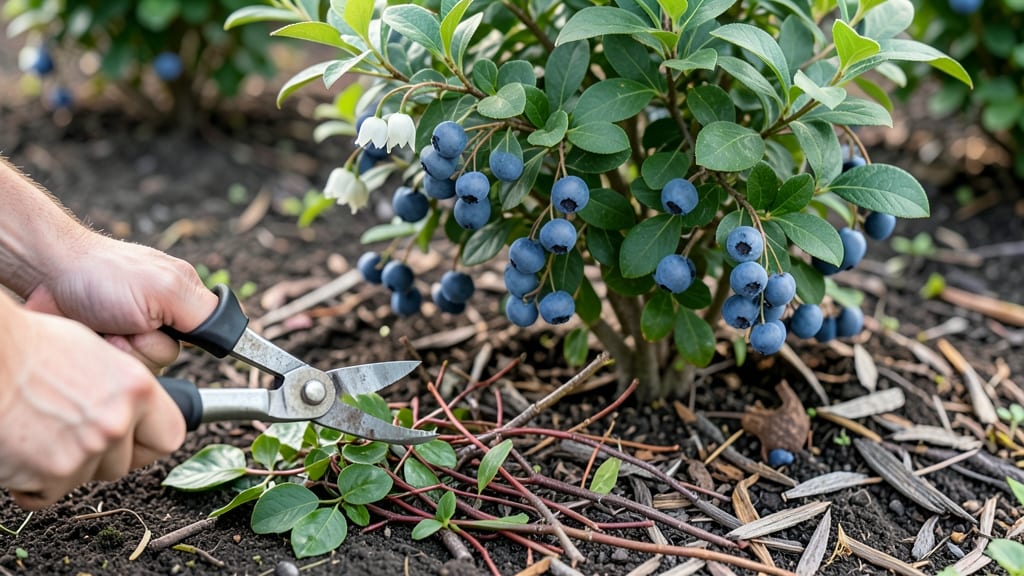
Blueberry bushes absolutely need pruning to maximize fruit production, enhance plant vitality, and prevent disease. Focus on late winter or early spring pruning before buds swell, targeting dead canes, crossing branches, and overcrowded growth to create an open, sunlit structure.
Pruning isn't just about trimming back—it's about redirecting your blueberry bush's energy where it matters most. 🌿 When you remove older canes (those over 5 years old), you're forcing the plant to invest in fresh, productive growth rather than maintaining exhausted wood.
The open structure you create also dramatically reduces humidity pockets where fungal diseases like botrytis thrive. I've seen bushes that weren't pruned properly struggle with poor fruit set—sometimes producing only 20% of their potential yield compared to properly maintained plants.
Timing is everything: pruning during dormancy (when the plant is resting) minimizes stress. The key cuts—removing dead wood first, then thinning out crowded branches, and finally shaping for sunlight—should take about 20-30 minutes for a mature bush.
After pruning, give your plant a balanced fertilizer to support its recovery and fruit development.
The real magic happens in how you approach it: instead of hacking away randomly, think of pruning as sculpting your bush's future. Every cut you make should serve a purpose—whether it's improving airflow, creating space for new growth, or removing branches that compete with fruit production.
This methodical approach makes all the difference between a bush that struggles and one that thrives.
💡 In This Article
- Why Pruning Blueberry Bushes Boosts Fruit Yield
- Step-by-Step Guide to Pruning Blueberry Bushes
Why pruning blueberry bushes boosts fruit yield
Pruning blueberry bushes works like a strategic energy redistribution system for the plant. When you remove older canes (typically those over 5 years old), you're eliminating branches that have already produced fruit for multiple seasons and are now less efficient.
This forces the plant to channel its resources into younger, more productive wood—canes that are 2-4 years old produce the most abundant and highest-quality berries.
The science behind this is rooted in plant physiology: older canes have reduced vascular efficiency, meaning they transport water and nutrients less effectively, while younger canes have higher photosynthetic capacity.
The open structure created by pruning serves another critical function: disease prevention. Blueberries thrive in environments with good airflow, which reduces humidity levels that foster fungal infections like botrytis blight. A well-pruned bush allows sunlight to penetrate all the way to the center, where berries form.
Without proper pruning, the interior branches can become shaded, leading to poor fruit development and increased susceptibility to pests. 🌿 Think of it like creating a well-ventilated greenhouse for your berries—each cut you make improves the growing conditions for the remaining fruit.
Here's what happens when you skip pruning: the bush becomes overcrowded, with branches competing for sunlight, water, and nutrients. This competition leads to smaller berries and lower overall yields. In my experience with commercial blueberry growers, properly pruned bushes can produce 30-50% more fruit than neglected ones.
The key is removing 25-30% of the oldest canes each year while maintaining a balanced structure that allows sunlight to reach all parts of the plant.
Another critical aspect is the hormonal response. When you make clean cuts, the plant releases auxin—a natural growth hormone—that stimulates cell division in the remaining canes. This hormonal shift encourages stronger growth in the areas you want to develop.
The result? More robust branches that will bear fruit for years to come. For example, a 10-year-old blueberry bush that's properly pruned annually can maintain production levels similar to a 5-year-old bush that hasn't been pruned at all.
Consider the visual difference: a pruned bush has an open, vase-like shape with branches spreading outward, while an unpruned bush becomes dense and tangled. This open structure isn't just about aesthetics—it's about creating optimal conditions for berry development.
Each berry needs access to sunlight for photosynthesis and proper air circulation to prevent moisture buildup. Without these conditions, you'll end up with smaller, less flavorful berries that ripen unevenly.
The timing of pruning also plays a role in this process. When you prune during dormancy (late winter or early spring), you're working with a plant that's already conserving energy. This minimizes stress and allows the plant to focus its resources on healing the cuts and preparing for new growth.
The 2-4 week period before buds swell is ideal because the plant isn't actively photosynthesizing, making it more resilient to pruning stress.