
Pruning
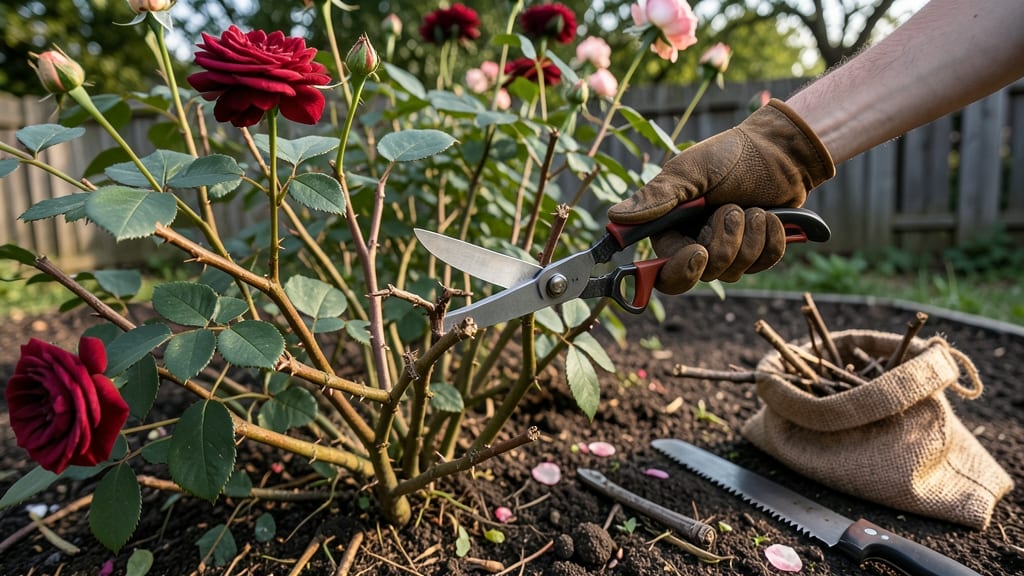
Cutting your rose bush in fall transforms it from a winter casualty into next summer’s showstopper. ✂️ I've learned the hard way that skipping this step means leggy, weak growth—and fewer blooms by June.
The right cuts now mean stronger canes, better airflow, and plants that bounce back faster after winter.
You only need three basic cuts: removing dead/diseased wood, thinning crowded canes, and shaping for sunlight access. Grab your pruners, a sanitizing solution (bleach or rubbing alcohol), and a sharp saw for thick stems—no fancy tools required.
Timing matters too: wait until after your first frost but before hard freezes, usually late October to November in most zones.
What you're left with is a bush that looks like a well-maintained hedge, not a tangled mess. New growth emerges earlier in spring, blooms arrive 2-3 weeks sooner, and the plants resist black spot and powdery mildew better.
The key is cutting at a 45-degree angle just above an outward-facing bud—this simple technique makes all the difference.
Works for hybrid teas, floribundas, and shrub roses alike, though climates vary: in Zone 7+, you might wait until December; in colder zones, prune earlier. Here's how to do it right without turning your bushes into a pruning disaster.
📚 In This Guide
- What you need
- Instructions
- Tips and common mistakes
- Wrapping up and next steps
What you need
- ● Bypass Pruners: A sharp, high-quality pair (e.g., Felco or Corona) to make clean cuts. Quantity: 1 pair
- ● Loppers: For thicker stems (½”–1½” diameter). Quantity: 1 pair
- ● Pruning Saw: For stubborn, thick branches (1½”+ diameter). Quantity: 1
- ● Disinfectant (70% isopropyl alcohol or bleach solution): To sterilize tools between cuts and prevent disease spread.
- ● Garden Gloves: Heavy-duty, cut-resistant gloves (e.g., Mechanix or Rose-specific). Quantity: 1 pair
- ○ Rake or Leaf Blower: To clear debris after pruning. Optional but helpful!
- ○ Garden Twine or Rubber Bands: For temporary support if branches are heavy after cutting. Optional
- ● Dry Weather: Prune on a dry, frost-free day to reduce stress on the plant and prevent fungal issues.
- ● Clean Workspace: Lay down a tarp or old sheet to collect clippings and make cleanup easier.
- ○ Safety Gear: Safety glasses (optional but recommended if dealing with thorny roses).
- ● Know Your Rose Type: Research whether your rose is hybrid tea, shrub, climber, or old garden—pruning needs vary!
Step-by-Step guide to cutting rose bushes in fall
Here's how I protect my roses through winter—simple cuts that keep them healthy and blooming next spring.
✂️ Step 1: Remove Dead, Diseased, or Weak Growth First
Start by inspecting your rose bush carefully. Look for stems that are completely blackened, mushy, or showing signs of fungal spots like black spot disease. These are the first to go—they won’t recover and will only spread problems. Use clean, sharp pruners to cut these stems all the way back to the base or to a healthy outward-facing bud.
I always disinfect my pruners between cuts with rubbing alcohol to prevent cross-contamination. You’ll know you’re doing it right when you’re left with only sturdy, green stems that look healthy. Don’t worry about the size of the cuts—this is about removing the bad, not shaping yet.
✂️ Step 2: Thin Out Crowded Canes for Better Airflow
Next, focus on the bush’s structure. Roses need good airflow to stay disease-free, so thin out any crossing or rubbing stems. These are the ones that grow toward each other and create wounds where pests and diseases can enter. Cut these back to the base, making sure to leave at least 3-5 strong, healthy canes depending on the bush’s size.
Here’s the thing—you want to maintain a balanced shape, but don’t overthink it. Just remove anything that’s clearly competing for space or looks weak. After thinning, your bush should look more open, with light able to reach the center. This prevents future issues like powdery mildew, which thrives in shady, crowded spots.
✂️ Step 3: Shorten Remaining Canes for Winter Hardiness
Now, it’s time to make the final cuts to prepare for winter. For most rose varieties, shorten the remaining canes by about one-third of their height. This encourages stronger growth in spring and reduces the risk of wind damage during storms. Cut just above an outward-facing bud, making the cut at a 45-degree angle to help water run off and prevent rot.
If you’re in a colder climate, you can go a bit shorter—about half the height—but avoid cutting into old wood (the dark, woody stems). New growth is more resilient and will bounce back faster in spring. Once you’re done, your bush should look more compact and well-balanced, ready to handle winter’s challenges.
⏰ Step 4: Clean Up and Mulch for Protection
After pruning, gather all the clippings and dispose of them properly. Don’t compost diseased stems—they can reinfect your garden. Next, apply a 2-3 inch layer of mulch around the base of the bush, keeping it a few inches away from the stem. This insulates the roots and retains moisture, which is critical during winter’s dry spells.
I like to use shredded bark or straw for mulching because they break down slowly and improve soil structure over time. Avoid piling mulch against the stem—this can trap moisture and cause rot. Step back and admire your work; your roses are now prepped to survive the cold and come back stronger in spring.
Tips & tricks for perfect fall rose pruning
Here's what nobody tells you about giving your roses the best winter prep possible.
Tool Preparation: Before you even touch your rose bush, sharpen your pruners with a fine-grit file—dull blades crush stems instead of cutting cleanly, which invites disease. I also wipe down the blades with rubbing alcohol between cuts to prevent spreading fungal spores from diseased to healthy stems. This step alone makes a huge difference in how your roses recover.
Bud Selection Strategy: When making your final cuts in Step 3, look for buds that face outward from the center of the bush. These will grow away from the center, creating a more open structure that improves airflow. If you cut too close to a bud, it may not grow properly—aim for just above the bud where the stem begins to swell slightly.
Seasonal Timing Nuance: While late fall is ideal, you can actually prune roses anytime during their dormant season (roughly November through early March in most climates). The key is avoiding late winter pruning, which exposes new growth to potential frost damage. If you missed fall pruning, wait until early spring before buds begin to swell.
Mulch Depth Wisdom: That 2-3 inch mulch layer in Step 4 serves two critical purposes: insulation and moisture retention. For extra protection in colder climates, consider adding an additional 1-2 inches of straw mulch over the top of your existing mulch layer. Just be sure to remove this extra layer in early spring to prevent smothering new growth.
Pro Tips for Cut Rose Bush In Fall
- Here's what nobody tells you about giving your roses the best winter prep possible.
- Tool Preparation: Before you even touch your rose bush, sharpen your pruners with a fine-grit file—dull blades crush stems instead of cutting cleanly, which invites disease.
- Bud Selection Strategy: When making your final cuts in Step 3, look for buds that face outward from the center of the bush.
Frequently asked questions
Got questions about trimming your rose bushes before winter? You’re not alone! Here are some of the most common concerns—and expert answers—to help you prune with confidence.
When is the exact best time to cut back roses in fall?
The ideal window is after your first hard frost (when leaves turn brown) but before winter freezes lock in. Aim for late October to early November in most climates. In warmer zones, wait until December. Pro tip: If roses bloom into fall, hold off until after the final bloom cycle.
Should I cut roses all the way down to the ground?
No! Only trim hybrid teas and grandifloras halfway—never bare stems. For shrub roses (like Knock Outs) or climbers, remove only dead/diseased wood. Leave 3–4 buds per stem to encourage spring growth. Warning: Over-pruning invites pests and weakens the plant.
What if my roses are already dormant? Can I still prune?
Yes, but act quickly! Dormant roses (no leaves, bare stems) can be pruned through winter if needed—just avoid cutting into old wood (gray/brown stems). Focus on removing dead, crossing, or weak canes. Bonus: Wear gloves; thorns get sharper in cold weather!
Can I skip fall pruning if I prune in early spring?
While spring pruning works, fall cuts reduce disease risk and improve winter hardiness. If you skip fall, prune lightly in spring (just shape and remove dead wood) to avoid overstimulating new growth. Trade-off: Fall pruning = healthier blooms next year!
What if my roses get black spot or mildew after pruning?
Clean cuts won’t cause fungus, but leaving debris can. Always:
- Sterilize shears with rubbing alcohol.
- Remove all fallen leaves/prunings from the base.
- Apply copper fungicide if spots appear.
Wrapping up and next steps
Fall pruning is your rose bush’s secret weapon for a stronger, healthier spring—and you’ve got all the tools to make it happen! 🌹 By removing dead, diseased, or crossing branches and shaping for airflow, you’re setting your plants up for success.
Don’t let winter catch them off guard; a little effort now means blooms galore later.
Ready to take action? Grab those shears, mark your calendar, and prune before the first hard frost. Your roses will thank you—and so will your springtime garden! 🌿