
Blooming
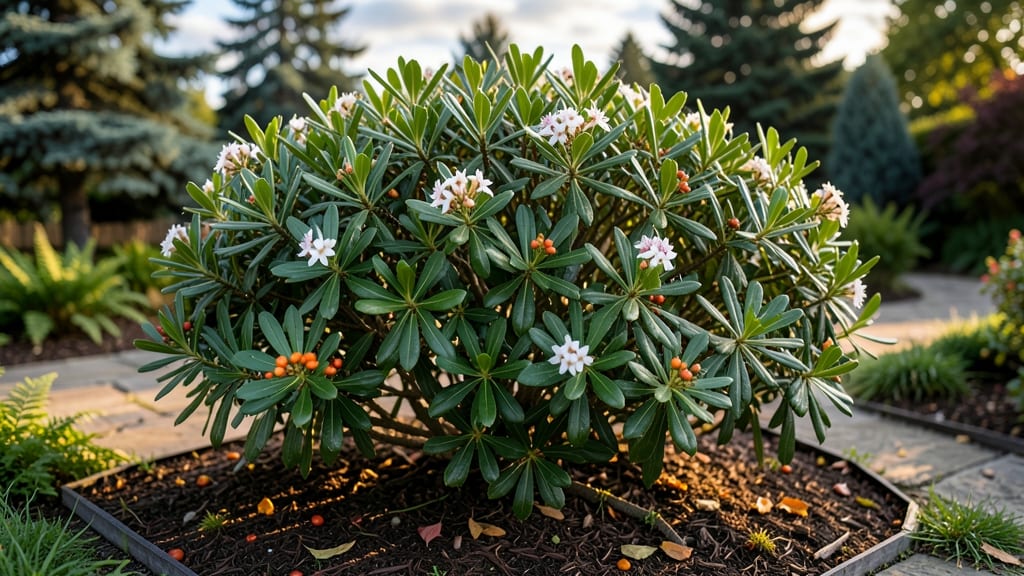
A bush with long thorns like pyracantha and barberry doesn’t just add drama—they create unbreakable privacy that lasts through winter. 🌿 I’ve used these spiky shrubs to transform bare fences into lush, impenetrable barriers that birds love and nosy neighbors can’t peek through.
The key is choosing the right species for your climate and giving them space to spread their natural defenses.
These bushes thrive in full sun to partial shade, need well-drained soil, and reward you with glossy leaves, berries, and—most importantly—thorns that deter intruders. Pyracantha’s bright red berries add winter color, while barberry’s golden foliage brings autumn flair.
Both grow 6-12 feet tall, making them perfect for tall hedges or mixed borders where security meets beauty.
Once established, they’re low-maintenance but prune annually to encourage dense growth. The thorns mean fewer deer browsing, and the berries feed birds through the cold months.
For a foolproof barrier, plant them in staggered rows with 3-4 feet between plants—they’ll fill in fast and keep your space private year-round.
Works as a standalone hedge, a mixed border, or even a wildlife-friendly windbreak. The thorns aren’t just for show—they’re your garden’s first line of defense. Here’s how to pick the right one for your yard.
Nature’s Defensive Strategy
When you encounter a bush with long thorns, you’re witnessing a plant’s built-in survival mechanism. Thorns aren’t just a nuisance—they’re a sophisticated evolutionary adaptation designed to protect the plant from predators, pests, and even harsh environmental conditions.
Let’s break down the key reasons why these spiky shrubs develop such formidable defenses.
Thorns are often inherited traits passed down through generations. Many plant species, especially those in arid or high-stress environments, evolve to develop thorns as a primary defense. For example, Rosa spp. (roses) and Crataegus spp. (hawthorns) produce thorns to deter herbivores like deer, rabbits, and even insects.
These traits are hardcoded into their DNA, ensuring that each new growth cycle produces thorns as a first line of protection.
💡 Pro Tip: If you’re growing a thorny bush from seed or cuttings, expect the offspring to retain (or even amplify) the thorny characteristics of the parent plant. Selective breeding can sometimes reduce thorn density, but it’s not guaranteed.
One of the most common reasons for thorn development is herbivory—the act of animals eating plant tissue. When a bush is frequently targeted by deer, rabbits, or insects, it responds by producing more thorns as a deterrent.
This is a classic example of induced defense, where the plant “learns” from past damage and ramps up its protective measures.
For instance, Berberis thunbergii (Japanese barberry) develops sharp, hooked thorns when exposed to high levels of grazing. Similarly, Pyracantha spp. (firethorn) uses dense clusters of thorns to fend off birds that might otherwise strip its berries. The more a plant is attacked, the more aggressive its thorn production becomes.
🔥 Actionable Insight: If you notice your bush developing thicker thorns suddenly, it may be a sign that local wildlife has increased its foraging in your area. Consider installing physical barriers (like chicken wire) to reduce stress on the plant.
Harsh growing conditions—such as drought, poor soil quality, or extreme temperatures—can also prompt a bush to produce more thorns. When a plant is struggling to allocate resources to growth, it often redirects energy toward defensive structures like thorns instead.
For example, Robinia pseudoacacia (black locust) thrives in nutrient-poor soils but responds to water scarcity by developing longer, sharper thorns. Similarly, Gleditsia triacanthos (honey locust) grows more aggressive thorns when exposed to prolonged dry spells.
This is the plant’s way of saying, “I can’t grow fast, but I’ll make sure nothing eats me.”
🌡️ Key Factor: Overwatering or rich, fertile soil can sometimes reduce thorn production, as the plant has fewer survival concerns. However, this isn’t always the case—some species, like Acacia spp., produce thorns regardless of soil conditions.
Plants communicate internally through hormones like ethylene and jasmonic acid, which trigger defensive responses when damage is detected. When a bush’s leaves or stems are chewed, these hormones flood the plant’s system, signaling it to produce thorns or other protective structures.
Research shows that thorn initiation often occurs at the tips of new shoots, where growth is most vulnerable. The plant prioritizes thorn development in these areas to maximize protection.
Additionally, some thorns contain toxins or irritants (like in Ziziphus spp., or jujube), making them even more effective as a deterrent.
✨ Fascinating Fact: Some thorns aren’t just sharp—they’re also modified stems or highly modified leaves. For example, the thorns on a rose are actually stipules (leaf-like appendages), while those on a cactus are hardened, woody outgrowths.
In dense or competitive environments, thorny bushes gain an edge by limiting access to their branches. Thorns create a physical barrier that prevents neighboring plants from shading them out or stealing nutrients from the soil. This is particularly common in savanna and woodland ecosystems, where space is limited.
For instance, Vachellia nilotica (Acacia) uses thorns to dominate its surroundings, ensuring it captures sunlight and water before other species can. Even in cultivated settings, a thorny hedge can act as a natural competition suppressor, keeping invasive weeds at bay.
🎯 Landscaping Tip: If you’re using a thorny bush as a privacy screen, its aggressive growth habit (partly driven by thorn production) can help it outcompete weaker plants, reducing the need for manual weeding.
Taming Your Thorny Privacy Barrier
Dealing with an overgrown bush featuring long, sharp thorns can feel like a battle—but with the right approach, you can transform it into a lush, low-maintenance privacy screen that thrives year-round.
Below, we break down practical solutions for common issues, from aggressive growth to pest troubles, plus prevention tips to keep your barrier under control.
If your thorny bush is sprawling beyond its intended space, it’s time to rein it in.
🔪 Prune Strategically
- When? Late winter or early spring (before new growth starts).
- How?
- Use clean, sharp bypass pruners (or loppers for thicker branches).
- Cut back overgrown branches to the desired shape, aiming for a natural, tapered look.
- Remove dead or crossing branches first to improve airflow.
- For extreme overgrowth, prune in stages over 2–3 years to avoid shocking the plant.
🌱 Trim for Density
- If your bush is too sparse, prune selectively to encourage bushier growth.
- Focus on inner branches to let sunlight reach the center.
- Pro Tip: 💡 After pruning, apply a balanced fertilizer (10-10-10) to help it recover.
Long, sharp thorns can turn your privacy screen into a safety hazard—especially for kids or pets.
👨🍳 Wear Protective Gear
- Always wear thick gloves (leather or heavy-duty gardening gloves) and long sleeves when pruning.
- Use long-handled pruners to keep distance from thorns.
🔥 Reduce Thorn Growth Naturally
- Prune regularly (every 6–8 weeks in growing season) to discourage excessive thorn development.
- Avoid heavy nitrogen fertilizers, which can promote soft, thorny growth—opt for phosphorus-rich options instead.
- Pro Tip: ✨ Some thorny bushes (like hawthorn or pyracantha) produce fewer thorns when pruned lightly in late summer.
A healthy bush is less attractive to pests, but thorny varieties can still fall prey to issues.
🌡️ Monitor for Common Problems
| Issue | Signs | Fix |
|---|---|---|
| Aphids | Sticky residue, curled leaves | Spray with soapy water or introduce ladybugs. |
| Spider Mites | Yellowing leaves, fine webbing | Mist leaves with water daily; use neem oil if severe. |
| Fungal Spots | Dark spots on leaves | Remove affected leaves; apply copper fungicide. |
| Powdery Mildew | White powdery coating | Improve air circulation; spray with baking soda mix (1 tsp per quart of water). |
🎯 Prevention Tips
- Water at the base (avoid wetting foliage) to reduce fungal risks.
- Mulch around the base (2–3 inches of organic mulch) to retain moisture and deter weeds.
- Space plants properly (follow spacing guidelines for your bush type) to prevent overcrowding.
Keep your thorny bush thriving in all four seasons with minimal effort.
🍂 Fall: Prepare for Winter
- Prune lightly to remove dead or weak branches.
- Apply a winter mulch (straw or shredded leaves) to protect roots from freezing.
- Pro Tip: 🔥 If your bush is evergreen, avoid heavy pruning in fall—wait until spring.
🌱 Spring: Encourage New Growth
- Fertilize with a slow-release, balanced fertilizer (10-10-10 or 8-3-9).
- Check for winter damage and prune out any brown or broken branches.
- Water deeply (1–2 inches per week) during dry spells.
🌞 Summer: Keep It Hydrated
- Water early in the morning to prevent evaporation and fungal growth.
- Mulch again if needed to retain moisture.
- Watch for pests—early intervention is key!
❄️ Winter: Minimal Maintenance
- Skip heavy pruning unless necessary (focus on safety hazards).
- Remove old mulch and replace if it breaks down.
- Pro Tip: ✨ If snow accumulates, gently brush it off to prevent branch damage.
If your current bush is too aggressive, consider replacing it with a low-maintenance alternative that still offers privacy and thorns (if needed).
| Thorny but Manageable Options | Low-Maintenance Alternatives |
|---|---|
| Pyracantha (Firethorn) | Holly (Ilex) – Dense, evergreen, berries for wildlife. |
| Hawthorn (Crataegus) | Russian Olive – Drought-tolerant, silvery foliage. |
| Barberry (Berberis) | Nandina (Heavenly Bamboo) – Clumping, minimal pruning. |
| Goumi Berry (Elaeagnus) | Privet (Ligustrum) – Fast-growing, shears well. |
Pro Tip: 🎯 Before planting, check your local climate zone—some bushes thrive in USDA Zones 5–9, while others prefer warmer regions.
By following these step-by-step solutions, your thorny bush will stay beautiful, safe, and easy to manage—without sacrificing that dramatic privacy you love! 🌿🔒
Frequently asked questions
Which thorny bushes are best for creating a natural security barrier?
For maximum privacy and protection, choose pyracantha (firethorn) or hawthorn—both grow 6-12 feet tall with dense, sharp thorns that deter intruders. Pyracantha also provides winter berries for birds, while hawthorn offers year-round structure. Plant them 3-4 feet apart in staggered rows for an impenetrable hedge.
Are thorny bushes safe for pets or children?
While thorny bushes create excellent privacy, they can pose risks to curious pets or kids. Always wear thick gloves when pruning and consider placing them along property edges rather than play areas. Barberry and pyracantha have the sharpest thorns—opt for holly if you need a softer alternative with mild thorns.
How do I control aggressive thorny bush growth?
Prune annually in late winter to maintain shape and prevent overgrowth. Use sharp bypass pruners and cut back 1/3 of the plant at a time. For stubborn varieties like hawthorn, prune in stages over 2-3 years to avoid shocking the plant. Space new plants 5-6 feet apart to allow airflow and reduce disease risk.
Can thorny bushes survive in cold climates?
Most thorny privacy bushes thrive in USDA Zones 5-9. Pyracantha and hawthorn are particularly hardy, surviving temperatures down to -20°F. For colder regions, choose barberry varieties like 'Rose Glow' which handles -30°F. Always mulch heavily in winter to protect roots from freezing.
Do thorny bushes attract wildlife?
Many thorny bushes like pyracantha and hawthorn produce berries that feed birds through winter. These bushes also provide shelter for small mammals. If you want to encourage wildlife, plant native varieties like serviceberry or winterberry holly, which offer both thorns and food sources.