
Shrubs
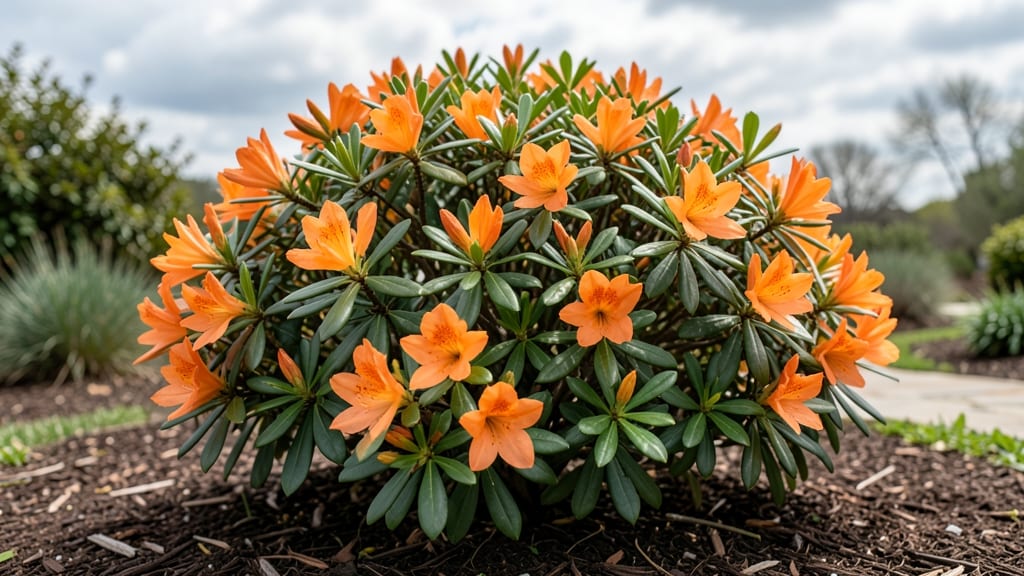
The bright orange azalea bush transforms your garden into a sun-drenched jewel box. 🌸 Its fiery blooms stand out against any backdrop, but placement and pruning are the secrets to keeping it showstopping year after year.
I've learned that strategic trimming after blooming ensures dense foliage and next season's flowers, while pairing it with deep purples or silvery foliage makes the color pop even more.
This azalea thrives in partial shade where temperatures stay mild, making it perfect for foundation plantings or woodland-edge gardens. The fragrance lingers in spring, but even when not in bloom, its glossy leaves add texture.
I've used it as a dramatic focal point near patios, where the scent wafts toward seating areas, and in mixed borders where it anchors the color scheme.
For maximum impact, plant three or five bushes together—they create a bold visual punch that single plants can't match. Combine with boxwoods for structure, ferns for contrast, or even a dwarf conifer to add evergreen depth.
The result? A garden that feels alive with color and movement, even in winter when the foliage takes center stage.
Pro tip: Prune lightly in late summer to shape the bush while preserving next year's flower buds. The key is balance—keep it full enough to hide the stems but open enough to let sunlight reach the center.
With the right placement and care, your bright orange azalea will be the garden's most talked-about feature for decades.
📚 In This Guide
- What you need
- Instructions
- Tips and common mistakes
- Wrapping up and next steps
What you need
- ● Bright orange azalea bush: Choose a healthy, disease-resistant variety (e.g., Rhododendron ‘Girard’s Orange’ or ‘Hino-Crimson’). Quantity: 1-2 mature plants (or bare-root seedlings for DIY planting).
- ● Well-draining acidic soil: Mix 3 parts peat moss or pine bark with 1 part perlite/sand for optimal growth. pH: 4.5–6.0.
- ● Organic mulch: 3–4 inches of pine straw or shredded bark to retain moisture and acidity.
- ● Slow-release fertilizer: Acid-loving plant fertilizer (e.g., 10-10-10 or 8-3-9 with micronutrients). Application: Spring and early fall.
- ● Pruning tools: Bypass pruners (for clean cuts on ¼-inch stems).
- ● Loppers (for thicker branches, up to 1.5-inch diameter).
- ● Sharp bypass saw (for stubborn wood).
- ● Gloves & long sleeves: Azaleas have tiny hairs that can irritate skin.
- ● Hose with nozzle: For deep watering (aim for 1–1.5 inches per week).
- ● Spray bottle: For misting seedlings or new growth.
- ○ Aluminum sulfate: Optional for adjusting soil pH if needed (1–2 lbs per 100 sq ft).
- ○ Plant support (optional): Stakes or cages for young bushes in windy areas.
- ● Partial shade to full sun (morning sun + afternoon shade for optimal blooms).
- ● Protect from late frosts (azaleas bloom on old wood—prune after flowering!).
- ● Test soil pH before planting (kits available at garden centers).
Step-by-step guide to pruning your bright orange azalea bush
Here's how I keep my azaleas vibrant, fragrant, and blooming year after year—no guesswork involved.
✂️ Step 1: Time Your Pruning for Peak Bloom
Prune your azalea right after it finishes flowering, typically in late May or early June. This ensures you don’t cut off next year’s buds, which form on old wood. I always wait until the last petals fall—they’re stunning, so I hate to rush it. If you prune too early, you risk removing flower buds that haven’t opened yet.
Azaleas bloom on last year’s growth, so avoid heavy pruning in fall or winter. You’ll see new growth starting in early spring—this is your cue that the plant is ready for shaping. If you’re unsure, snap a photo of your bush before pruning to guide your cuts.
✂️ Step 2: Shape the Bush for Airflow and Light
Use clean, sharp pruners to cut back one-third of the oldest stems to the ground. This opens up the center of the bush, letting sunlight and air reach the inner branches—critical for preventing fungal diseases like powdery mildew. I like to step back every few cuts to visualize the shape; azaleas respond well to natural, rounded forms.
For side branches, trim back to an outward-facing bud to encourage fuller growth. Avoid cutting into the center of the plant unless absolutely necessary—crowded centers lead to weak, disease-prone stems. You’ll notice new shoots emerging within 2-3 weeks if you’ve pruned correctly.
💧 Step 3: Feed and Hydrate After Pruning
Apply a balanced, acid-loving fertilizer (like 10-10-10 or 8-3-9) right after pruning to support new growth. Azaleas thrive in slightly acidic soil (pH 4.5-6.0), so I mix in a handful of sulfur if my soil tests higher. Water deeply right after fertilizing to help nutrients reach the roots.
Keep the soil evenly moist but not soggy for the first 4-6 weeks post-pruning. Mulch with 2-3 inches of pine bark or pine needles to retain moisture and acidify the soil gradually. Avoid overwatering—azaleas hate wet feet and will drop leaves if stressed.
☀️ Step 4: Maintain Light and Protection Year-Round
Azaleas love morning sun and afternoon shade, especially in hotter climates. If your bush is in full sun, watch for leaf scorch—leaves will turn yellow or crispy at the edges. I’ve found that a light afternoon shade cloth during summer heat keeps my azaleas lush and vibrant.
In winter, protect your azalea from harsh winds and salt spray if you’re near a road. A burlap wrap or frost cloth around the bush can make all the difference in colder zones. You’ll see stronger blooms the next season if you shield it from winter stress.
⏰ Step 5: Monitor for Pests and Adjust as Needed
Check for lace bugs, spider mites, or scale every few weeks, especially after rain. Lace bugs leave yellow stippling on leaves—treat with neem oil or insecticidal soap if you spot them. I spray my azaleas preventatively in early spring to keep pests at bay.
If your azalea’s leaves turn yellow, it could signal overwatering, nutrient deficiency, or root rot. Adjust your watering schedule and test the soil pH. A healthy azalea has deep green, glossy leaves and strong, upright stems—if yours looks leggy or sparse, it’s time to reassess light, water, and fertilizer.
Tips & tricks for perfect bright orange azalea care
Keeping your vibrant azalea thriving takes just a few key strategies—here's what I've learned after years of growing these fragrant beauties.
Timing is Everything: The late May to early June window for pruning is critical because azaleas bloom on old wood. I always mark my calendar for when the last petals fall—this ensures you're cutting at the perfect time. If you miss this window, you risk removing next year's flower buds before they've formed. For those in cooler climates, wait until after the last frost when new growth appears in spring.
Pruning Precision: When shaping your azalea in Step 2, focus on removing one-third of the oldest stems to encourage new growth. I like to visualize the bush from all angles—step back frequently to check for balance. For side branches, always cut just above an outward-facing bud to promote fuller growth. This technique opens up the center, which is key for preventing fungal diseases like powdery mildew that thrive in crowded, damp conditions.
Post-Pruning Recovery: The first 4-6 weeks after pruning are crucial for establishing new growth. I've found that mulching with 2-3 inches of pine bark not only retains moisture but also gradually acidifies the soil—azaleas love that pH range of 4.5-6.0. Water deeply after fertilizing to help nutrients reach the roots, but avoid soggy soil which can lead to root rot. A simple soil test kit can help you monitor the pH if you're unsure.
Seasonal Protection: Your azalea's location matters year-round. In summer, provide afternoon shade to prevent leaf scorch, especially in hotter climates. I use a lightweight shade cloth that doesn't block all light—just enough to protect the delicate leaves. In winter, protect from harsh winds and salt spray with a burlap wrap or frost cloth, particularly if you're near roads or coastal areas where salt can damage foliage.
Pro Tips for Bright Orange Orange Azalea Bush
- Keeping your vibrant azalea thriving takes just a few key strategies—here's what I've learned after years of growing these fragrant beauties.
- Timing is Everything: The late May to early June window for pruning is critical because azaleas bloom on old wood.
- Pruning Precision: When shaping your azalea in Step 2, focus on removing one-third of the oldest stems to encourage new growth.
Frequently asked questions
Got questions about your bright orange azalea bush? You’re not alone! Here are some of the most common queries—plus quick, practical answers to keep your shrub thriving year-round.
When is the best time to prune my bright orange azalea bush for maximum blooms?
Prune your azalea right after flowering (late spring to early summer) to encourage new growth and vibrant blooms next season. Avoid heavy pruning in fall or winter, as azaleas bloom on old wood. Light shaping in late winter (before buds swell) is fine, but skip drastic cuts—this can reduce flowering.
How do I protect my azalea bush from winter damage?
Azaleas are hardy but benefit from mulching (2–3 inches of organic mulch) to insulate roots. Water deeply before the first frost to hydrate the plant, and avoid pruning in late fall. If your area gets harsh winters (<10°F), consider a burlap wrap or frost cloth for young or tender varieties. Never use salt or de-icing products near the roots!
Why aren’t my bright orange azaleas blooming as much as they used to?
Poor blooming often stems from over-fertilizing with high-nitrogen fertilizer, which promotes leafy growth over flowers. Switch to an acid-loving plant fertilizer (like 10-10-10) in early spring. Also check for sunlight—azaleas need partial shade (morning sun, afternoon shade). If the issue persists, test soil pH (ideal: 4.5–5.5); lime-heavy soil can stunt blooms.
What pests or diseases should I watch for in bright orange azalea bushes?
Common culprits include:
- Lace bugs: Look for yellowing leaves with stippled patterns. Treat with neem oil or insecticidal soap.
- Azalea laceworms: Ragged leaf edges? Prune affected areas and use Bt (Bacillus thuringiensis) for organic control.
- Root rot: Overwatering or poor drainage causes wilting. Ensure well-draining soil and avoid soggy conditions.
- Powdery mildew: White fungal coating? Improve airflow and spray with baking soda solution (1 tsp baking soda + 1 quart water + drop of soap).
Prevention tip: Mulch properly and avoid wetting foliage when watering.
Can I grow bright orange azaleas in containers? How do I care for them?
Yes! Choose a large container (15+ gallons) with drainage holes and use acidic potting mix. Water consistently (containers dry out faster), and fertilize monthly during growing season. Move containers to partial shade in summer to prevent leaf scorch. Winter tip: Bring potted azaleas indoors (garage or sheltered porch) if temps drop below 15°F.
Wrapping up and next steps
Transforming your bright orange azalea bush into a year-round fragrant masterpiece is totally within reach—with the right pruning techniques and care! 🌸 By mastering seasonal trims, deadheading, and shaping, you’ll not only boost blooms but also create a stunning focal point that fills your garden with color and scent. Now’s the perfect time to roll up your sleeves and give your azalea the TLC it deserves!
Ready to take the next step? Grab your pruners, sketch a quick plan, and schedule your first pruning session—whether it’s a light spring cleanup or a bold summer shape-up. Your azalea (and your neighbors!) will thank you.