
Orchid Care
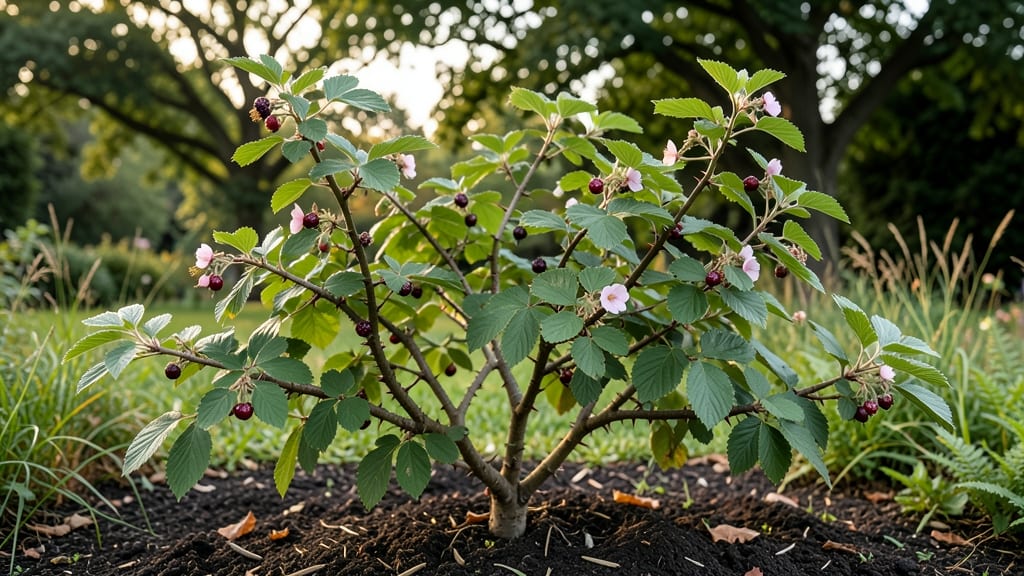
A boysenberry tree or bush grows as a sprawling, thorny vine that behaves like a bush but benefits from trellising to manage its vigorous growth. These plants need 6–10 feet of horizontal space and vertical support for best fruit production, thriving as semi-deciduous perennials in moderate climates.
Boysenberries are actually brambles—a hybrid between blackberries and raspberries—that send out long, arching canes covered in sharp thorns.
Without support, they sprawl aggressively, creating dense thickets that can overtake garden beds. 🌿 The key to managing them is installing a sturdy trellis system early, which not only keeps growth organized but also improves air circulation to prevent fungal diseases.
Many gardeners choose upright varieties like 'Umatilla' for smaller spaces, as they require less horizontal room while still producing abundant fruit.
These plants are semi-deciduous, meaning they shed some leaves in winter but retain others, especially in milder climates. The first two years focus on establishing a strong root system, while pruning becomes critical in years three and four to maintain productivity.
I always recommend removing old canes after harvest and thinning new growth to prioritize the most vigorous shoots—this simple step can double your yield over time.
💡 In This Article
- Boysenberry Vine Growth Patterns and Pruning Needs
- Choosing the Right Boysenberry Cultivar for Your Space
Boysenberry vine growth patterns and pruning needs
The boysenberry vine's sprawling growth habit stems from its botanical classification as a bramble—a hybrid of blackberry and raspberry. Each plant produces multiple canes that grow 3-5 feet annually and arch outward in a semi-upright pattern, creating a dense, thorny thicket if unmanaged.
The root system spreads aggressively through underground runners, capable of extending 10-12 feet in ideal conditions, which explains why these plants need such generous space. 🌱 The canes themselves are semi-woody, with the first-year growth (primocanes) producing leaves but no fruit, while second-year canes (floricanes) bear the actual berries.
Seasonal growth follows a predictable pattern: New canes emerge from the roots in early spring, growing rapidly until late summer when they harden off. Pruning timing is critical—winter pruning (dormant season) removes old canes completely while summer pruning focuses on thinning new growth to improve air flow.
I've found that removing 20-30% of new canes in late summer redirects energy to fewer, more productive shoots. The thorns, while protective, make handling these plants challenging without proper gloves and protective clothing.
Pruning techniques vary by growth stage: Young plants need minimal pruning to establish their root system, while mature plants require annual cane removal after harvest. The "selective thinning" method—keeping 6-8 of the strongest canes—maximizes fruit production by preventing overcrowding.
Many gardeners install T-bar trellises to support the weight of fruiting canes, which can reach 15-20 pounds when laden with berries. Without support, canes often break under the weight, leading to lost harvests.
What most people overlook is the plant's semi-deciduous nature—while it drops many leaves in winter, some evergreen foliage remains, especially in mild climates. This persistent foliage helps photosynthesis begin earlier in spring.
The plant's perennial habit means it lives for 10-15 years with proper care, though yields peak in years 3-7 before gradually declining. I recommend renewing the planting area every 5-7 years by replacing older canes to maintain productivity.
For organic growers, pruning also serves as a disease prevention strategy. Removing infected canes immediately prevents fungal spores from spreading to healthy growth. The 3-foot spacing between plants recommended for trailing varieties creates enough room for pruners to work comfortably while maintaining airflow.
In container growing, this spacing becomes 2-foot intervals between plants, though yields will be proportionally smaller due to root restriction.
One advanced technique I've used with success is the "fan training" method for upright varieties like 'Umatilla'. By spreading canes outward in a fan shape along a horizontal trellis, you create a 360-degree fruiting surface while keeping the plant's footprint compact.
This approach works particularly well in small gardens where horizontal space is limited. The trade-off is slightly more complex pruning, but the space savings often justify the effort. 🌿