
Orchid Care
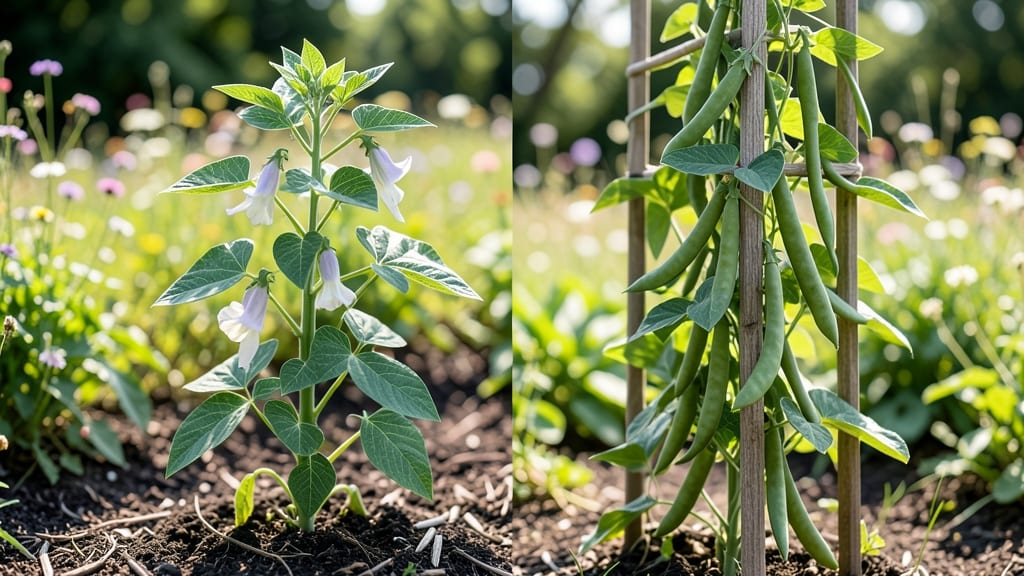
Pinto beans are bush beans, not pole beans, growing as compact plants that reach 2-3 feet tall without needing trellising. Unlike pole varieties, they bear pods directly on the main stem, making them ideal for small gardens and container planting.
Pinto beans are bush beans, not pole beans, meaning they grow as self-supporting shrubs rather than climbing vines. 🌱 This compact growth habit eliminates the need for trellises or stakes, saving both space and effort in your garden.
The plants typically mature quickly—usually within 70-90 days—and produce pods along the main stem, making them perfect for urban gardeners or those with limited yard space.
What sets bush beans apart is their determinate growth pattern, meaning they reach a specific height before producing all their pods at once. This makes them ideal for canning or freezing large batches in a short window.
For best results, plant them in well-draining soil with full sun exposure, and avoid overcrowding to prevent disease.
💡 In This Article
- Bush vs Pole Bean Growth: Key Differences
- Best Practices for Growing Pinto Beans in Gardens
Bush vs pole bean growth: key differences
Pinto beans belong to the Phaseolus vulgaris species and exhibit bush bean growth habits, meaning their plants grow as compact, self-supporting shrubs rather than climbing vines. The key botanical difference lies in their indeterminate vs. determinate growth patterns.
Bush varieties like pinto beans have determinate growth, producing all their pods at once after reaching maturity (typically 2-3 feet tall). This contrasts sharply with pole beans, which have indeterminate growth, continuously producing pods as they climb upward on trellises.
The root systems also differ significantly. Bush beans develop a shallow but extensive root network within the top 6-12 inches of soil, which makes them more susceptible to drought stress but allows for quicker nutrient uptake.
In contrast, pole beans send out deeper, more extensive roots to anchor their climbing vines, which can reach heights of 6-10 feet or more. This structural difference directly impacts their space requirements—bush beans need only 3-4 inches of spacing between plants, while pole beans require 4-6 inches and vertical support.
Yield characteristics vary too. Pinto beans as bush varieties produce a single, concentrated harvest over 2-3 weeks, ideal for canning or freezing large batches at once. Their pods develop along the main stem and branches, creating a dense, bushy appearance.
Pole beans, however, offer a prolonged harvest period (up to 3 months) as new pods continuously form. The trade-off?
Bush beans generally yield slightly less per plant (4-6 pods per plant) compared to pole varieties (6-12 pods per plant), but their compact size makes them more productive in small spaces.
Another critical factor is their photosynthetic efficiency. Bush beans rely on a C3 photosynthetic pathway, which is less efficient in hot climates compared to pole beans' ability to climb toward sunlight. This is why bush varieties often perform better in cooler regions or during spring/fall plantings.
Their compact structure also makes them more resistant to wind damage, a common issue with tall pole bean vines in exposed garden areas. 🌿
For gardeners, the choice between bush and pole beans often comes down to space and time. Bush beans like pinto beans are perfect for container gardening—you can easily grow 3-4 plants in a 5-gallon bucket—while pole beans require dedicated trellising space.
The bush variety's rapid maturation (typically 70-90 days) also makes them ideal for short-season gardens or areas with limited growing periods.
Consider this comparison when planning your garden layout:
- Space needs: Bush beans fit in tight spots; pole beans need vertical space
- Harvest timing: Bush beans offer one concentrated harvest; pole beans provide extended yields
- Maintenance: Bush beans require no trellising; pole beans need staking or cages
- Climate suitability: Bush beans thrive in cooler conditions; pole beans handle heat better