
Pruning
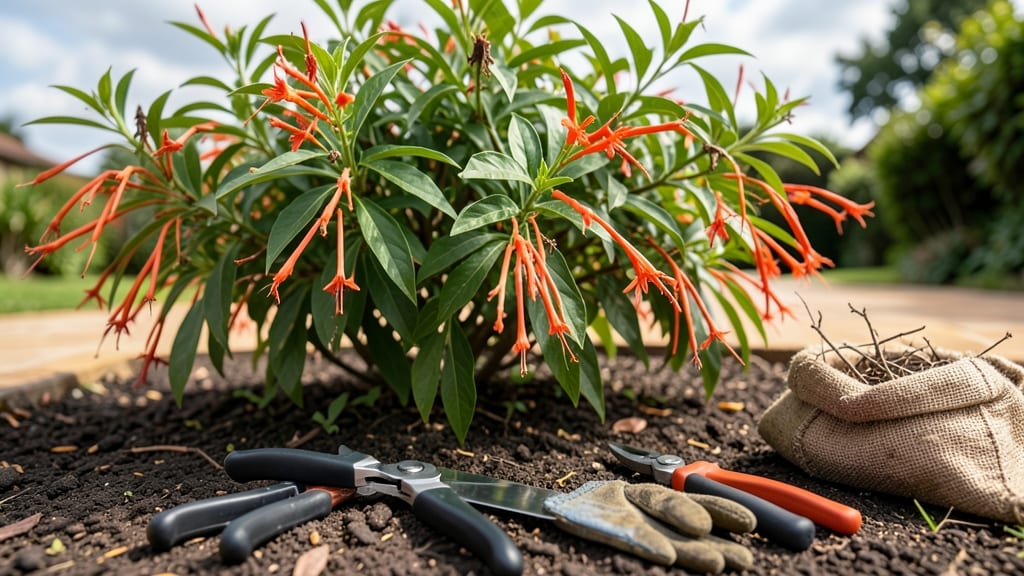
Your fire bush pruning could unlock a cascade of year-round blooms with just a few strategic cuts. ✂️ I’ve turned my once-sparse Hamelia patens into a nonstop color machine by mastering the timing and technique—no fancy tools or horticultural degree required.
The key? Pruning when it matters most and shaping it to encourage dense growth.
The best time to prune is late winter before new growth begins, but you can also trim lightly after flowering to keep it compact. Grab your pruners, gloves, and a bucket for clippings—you’ll need sharp tools to make clean cuts without damaging the branches.
Fire bush responds well to shaping, so don’t be afraid to sculpt it into the shape you want, whether that’s a tidy hedge or a loose, natural form.
After pruning, you’ll notice more vibrant blooms and a bushier plant within weeks. The secret is cutting just above a leaf node (where leaves meet the stem) to encourage new growth.
Avoid over-pruning—never remove more than one-third of the plant at once, or you’ll stress it out. Water well after pruning to help it recover faster.
This method works for fire bushes in containers or garden beds, and it’s perfect for beginners because the plant forgives mistakes. Just remember: patience pays off—your fire bush will reward you with bright red-orange flowers all year long if you keep up with the cuts. Let’s get started!
📚 In This Guide
- What you need
- Instructions
- Tips and common mistakes
- Wrapping up and next steps
What you need
- ● Pruning shears: Bypass-style (for clean cuts) or anvil-style (for thicker branches). Choose sharp, high-quality shears (e.g., Felco or Fiskars) with a 4- to 6-inch blade.
- ● Loppers: Bypass-style, 20- to 24-inch handles for thicker stems (up to 1-inch diameter).
- ● Pruning saw: Curved-tooth or bow saw for branches 1+ inches thick.
- ● Gloves: Heavy-duty, cut-resistant (e.g., Mechanix or leather gardening gloves) to protect from thorns and sap.
- ● Ladder: Sturdy, extendable (16+ feet) if your fire bush exceeds 6 feet tall. Ensure it’s stable and rated for your weight.
- ● Disinfectant: 70% isopropyl alcohol or rubbing alcohol to sterilize tools between cuts (prevents disease spread).
- ● Trash bags: Heavy-duty, 30+ gallon for debris (or a wheelbarrow if hauling large volumes).
- ● Rake: Bow rake (for clearing fine debris) or leaf rake (for larger prunings).
- ● Hand pruners: Compact bypass shears for smaller, detailed cuts.
- ● Pole saw: For high branches (avoids ladder use).
- ● Pruning sealant: (e.g., Tanglefoot Tree Seal) to prevent sap oozing on large cuts.
- ● Safety goggles: Protects eyes from debris or sap splatter.
- ● Knee pads: For comfort during ground-level pruning.
- ● Sharpener: File or whetstone to keep blades razor-sharp.
Instructions for fire bush pruning: year-round color with precision cuts
Here's how to keep your fire bush vibrant while encouraging lush, colorful growth year after year.
✂️ Step 1: Prune Immediately After Flowering
Fire bush (Euonymus alatus) blooms on old wood, so timing is critical. As soon as flowers fade—typically in late spring to early summer—grab your bypass pruners and cut back spent flower clusters to just above the first set of healthy leaves. This redirects energy into next year's blooms rather than seed production.
Don't rush this step. Wait until all flowers have dropped—if you prune too early, you risk cutting off next year's buds. I like to work on a dry morning when the plant is fully hydrated; this prevents stress and makes clean cuts easier. Remove no more than 25% of the plant in this first pruning to avoid shocking it.
🌿 Step 2: Thin Overcrowded Branches in Late Summer
In late August to early September, focus on structural pruning. Look for branches that cross, rub against each other, or grow inward—they compete for sunlight and weaken the plant. Use your loppers to remove these at their base, cutting at a 45-degree angle just outside the branch collar.
This is also the time to open up the plant's center. Fire bush can get dense, and thick inner branches block light from reaching lower growth. Thin out 2-3 main branches per plant to improve airflow and reduce disease risk. You'll see new, vigorous shoots emerge from the base within 4-6 weeks—that's your signal the plant is responding well.
✂️ Step 3: Lightly Shape in Early Spring
Before buds swell in early spring, give your fire bush a final shape. Step back and assess the overall form—this is your chance to refine its natural habit. Use hand pruners to trim any errant branches that spoil the silhouette, cutting back to a strong lateral bud or side branch.
Here's the thing—fire bush responds well to gradual shaping, but avoid heavy cuts now. You're not trying to drastically reduce size; instead, you're encouraging balanced growth. Remove only what's necessary to maintain an open, airy structure. If you see any dead or diseased wood, cut it out immediately—fire bush is prone to powdery mildew, and removing infected branches early prevents spread.
🌱 Step 4: Rejuvenate Older Plants with Strategic Cuts
If your fire bush has become leggy or woody with sparse foliage, it's time for a rejuvenation prune in late winter or early spring. Select 3-4 of the strongest, most vigorous branches and cut them back to 12-18 inches from the ground. This drastic reduction shocks the plant but triggers vigorous new growth from the base.
Don't panic if the plant looks bare afterward—this is normal. Water deeply after pruning and fertilize lightly with a balanced 10-10-10 to support regrowth. Within 6-8 weeks, you'll see a flurry of new shoots. This method works best on plants that are 5-10 years old; younger bushes don't need such aggressive pruning.
Tips & tricks for perfect fire bush pruning
Mastering the art of fire bush pruning transforms a struggling shrub into a vibrant centerpiece. Here's how to avoid common pitfalls and elevate your results.
Timing is Everything: Fire bush blooms on old wood, so precision matters. In Step 1, wait until flowers have completely faded and dropped—this ensures you're not accidentally removing next year's buds. I mark my calendar for late May to early June each year, as this window aligns with when my local fire bushes finish blooming. The key is patience: a week too early can mean cutting off future flowers, while waiting too long lets seed production drain the plant's energy.
The 25% Rule: Never remove more than 25% of the plant in any single pruning session, especially in Step 1. This rule prevents shock and maintains the plant's vigor. If your fire bush looks particularly dense, spread the pruning across multiple years rather than trying to fix everything at once. For example, if you notice overcrowding in Step 2, thin only 10-15% of branches in late summer, then return next year to address the rest.
Cutting Technique Matters: When making cuts in Steps 2 and 3, always cut at a 45-degree angle just outside the branch collar—not into the collar itself. This promotes faster healing and prevents disease entry points. For thicker branches in Step 4, use your loppers to make clean cuts at the base, then sterilize your tools with rubbing alcohol between cuts to prevent spreading any potential pathogens. The angle also helps rainwater run off rather than pool in the wound.
Seasonal Care Connection: After any major pruning, especially the rejuvenation cuts in Step 4, water deeply and apply a balanced 10-10-10 fertilizer. This supports the plant's recovery and encourages new growth. I've found that plants pruned in late winter respond best to a light application of compost around the base as well—this improves soil structure and provides slow-release nutrients during the critical regrowth period.
Pro Tips for Fire Bush Pruning
- Mastering the art of fire bush pruning transforms a struggling shrub into a vibrant centerpiece. Here's how to avoid ...
- Timing is Everything: Fire bush blooms on old wood, so precision matters. In Step 1, wait until flowers have complete...
- The 25% Rule: Never remove more than 25% of the plant in any single pruning session, especially in Step 1. This rule ...
Frequently asked questions
Got questions about keeping your fire bush vibrant and healthy?
Here are answers to the most common concerns—from timing to tools and troubleshooting—so you can prune with confidence!
When is the best time to prune fire bush for blooms?
The ideal time is late winter or early spring (before new growth starts), but you can also trim lightly after blooming to encourage fresh flowers. Avoid heavy pruning in fall—it removes next year’s buds! For container plants, prune anytime except during extreme heat or cold.
Can I prune fire bush in summer without hurting it?
Yes, but go light! Summer pruning is best for shaping or removing dead branches. Avoid cutting more than 1/3 of the plant at once—this can stress it, especially in hot weather. Water thoroughly before and after pruning to help recovery.
What if my fire bush isn’t blooming after pruning?
Check these fixes:
- Light matters: Fire bush needs 6+ hours of sun daily—move it if shaded.
- Fertilizer: Use a balanced, low-nitrogen fertilizer in spring.
- Deadheading: Remove spent blooms to redirect energy to new flowers.
- Age: Young plants (under 2 years) may need time to establish.
How cold can fire bush handle after pruning?
Fire bush is hardy to USDA Zone 7, but newly pruned branches are more vulnerable to frost. If temps drop below 20°F, cover tender cuts with burlap or mulch the base. Prune after the last frost in spring for best resilience.
What’s a quick fix for overgrown fire bush?
For a drastic reset, prune back 1/3 of the oldest stems to the ground in early spring. This stimulates fresh growth and rejuvenates the plant. Pair it with a slow-release fertilizer to support recovery. Over 3–4 years, you’ll have a bushier, healthier plant!
Wrapping up and next steps
Pruning your fire bush isn’t just about keeping it tidy—it’s your secret to vibrant blooms, healthier growth, and year-round color! 🌸 With the right tools, timing, and techniques, you’ll transform your shrub into a stunning landscape star.
Start by scheduling regular maintenance (like spring and late summer trims) and don’t forget to protect yourself with gloves and safety gear.
Ready to take action? Grab your pruners, mark your calendar, and give your fire bush the care it deserves—your garden will thank you! For extra inspiration, explore fire bush varieties or design tips to elevate your outdoor space further.